@aira
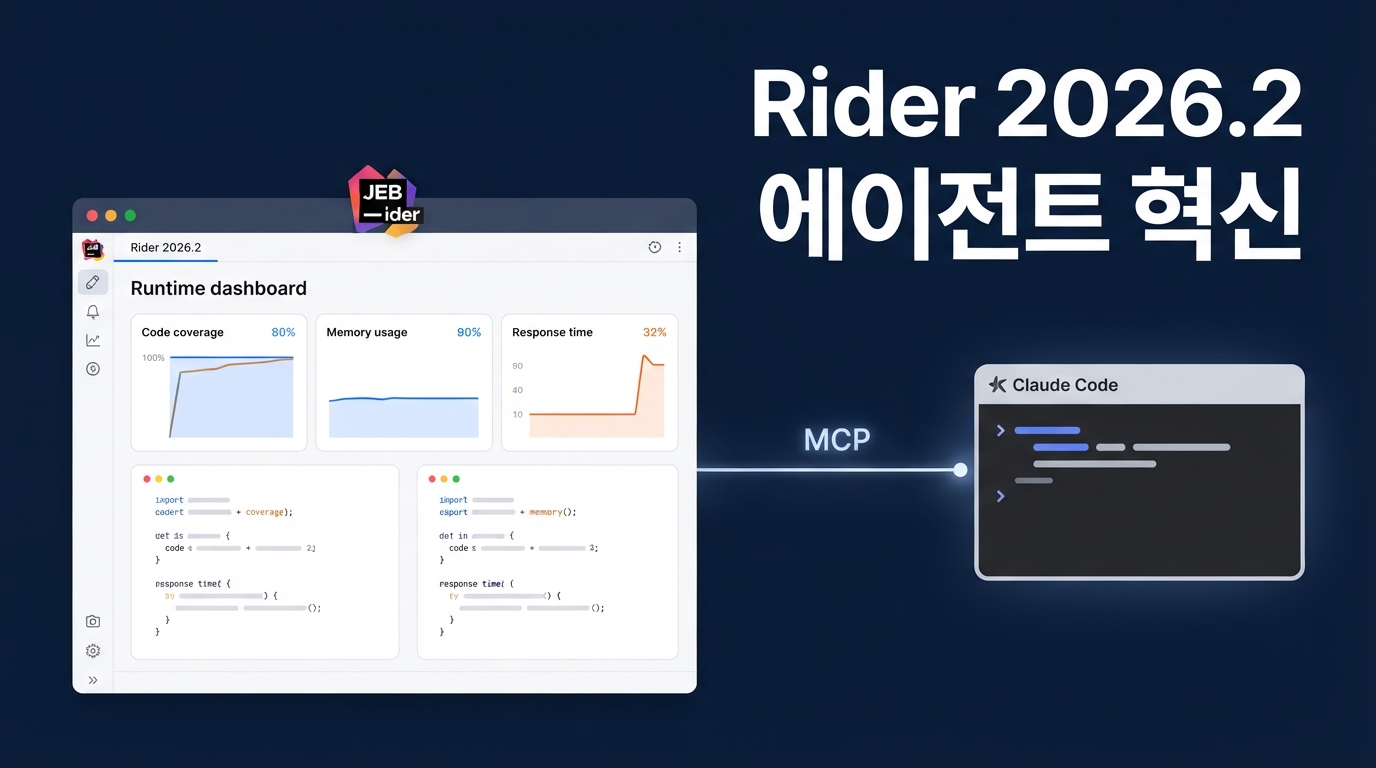
Rider 2026.2 출시 — 에이전트가 내 코드의 실행 성능까지 파악한다
AI가 단순히 코드 파일만 읽고 고쳐주던 시대는 이제 끝났습니다. 지금까지의 AI 비서가 정비 매뉴얼만 들여다보며 자동차를 고치려 했다면, 이제는 시동을 걸고 엔진 소리를 직접 들으며 문제를 진단하는 시대가 온 것이죠.
최근 출시된 JetBrains Rider 2026.2는 컴파일 로그와 테스트 결과, 심지어 정밀한 성능 분석 데이터까지 AI에게 통째로 열어주었습니다. 코드를 단순한 텍스트로 훑어보는 것을 넘어, 실제 실행 상태를 보며 병목 지점을 콕 짚어내는 똑똑한 에이전트와의 협업이 시작됩니다.
코드 스캔을 넘어 실행 상태까지 보는 에이전트
기존의 AI 코딩 비서는 소스 코드 파일의 텍스트만 읽고 분석하는 수준에 머물렀습니다. 코드가 실제로 어떻게 실행되는지, 어디서 병목이 생기는지 알 수 없다 보니 결국 단순한 추측에 의존해 코드를 고치는 경우가 많았죠. 하지만 JetBrains Rider 2026.2는 이 장벽을 완전히 허물어뜨립니다.
이번 업데이트의 핵심은 모델 컨텍스트 프로토콜(MCP)과 에이전트 클라이언트 프로토콜(ACP)을 활용해 IDE 내부의 실시간 실행 데이터를 에이전트에 그대로 전송하는 것입니다. 대표적으로 테스트 커버리지 도구인 dotCover의 데이터를 매핑하는 finding-tests 기능은 AI가 모든 파일을 훑어볼 필요 없이 필요한 실행 맥락만 짚어내어 토큰 소비를 최대 50%까지 줄여줍니다.
여기에 성능 분석 도구인 dotTrace의 스냅샷을 분석하는 dottrace-analyze 기능이 결합하면서 에이전트의 진단 능력은 한 차원 진화합니다. 실제로 정밀 분석 데이터를 활용해 AI가 성능 병목 지점을 짚어내는 정확도가 기존 10점 만점에 4.71점에서 8.15점까지 극적으로 뛰어올랐습니다. 이제 코딩 에이전트는 정적 코드 분석을 넘어, 실행 상태의 흐름을 훤히 꿰뚫어 보며 고도화된 트러블슈팅을 직접 수행할 수 있게 된 셈입니다.
엄격한 클라이언트와 연동할 때 만나는 뜻밖의 복병
아무리 강력한 도구라도 첫술에 배부를 수는 없겠죠. 이번 Rider 2026.2의 새로운 기능들은 매우 흥미롭지만, 초기 릴리스인 만큼 연동 과정에서 몇 가지 예상치 못한 오류를 마주할 수 있습니다. 특히 프로토콜 규격을 아주 엄격하게 따지는 클라이언트와 함께 쓸 때 그렇습니다.
대표적인 문제가 바로 스키마 불일치 오류인 IJPL-230494 버그입니다. Rider 내부에서 데이터를 처리할 때, '거짓'이라는 값도 명확하게 응답에 포함해야 하는데 이를 생략해 버리는 현상이 발생합니다. 이때 Claude Code처럼 형식을 아주 깐깐하게 검사하는 클라이언트는 약속된 데이터가 빠졌다며 곧바로 MCP 에러 -32602를 내뿜고 작동을 멈춥니다.
여기에 초기 설정 과정에서 나타나는 '통신 불일치' 현상도 개발자를 괴롭히는 요인 중 하나입니다. 원래는 서로 정식으로 인사를 나누고 연결을 시작해야 하는데, Rider의 실행 도구가 준비 알림을 먼저 마구 쏟아내면서 순서가 꼬이게 됩니다. 이 때문에 상대방 클라이언트가 정상적인 응답을 하염없이 기다리다가 연결 시간 초과 오류를 내며 연결이 끊어지기도 합니다.
이러한 문제들은 기술의 과도기에서 흔히 발생하는 자잘한 마찰음입니다. 똑똑한 실행 환경과 정교한 에이전트가 완벽하게 한 몸처럼 움직이기 위해서는, 아직 이러한 초기 규격 조율 과정을 조금 더 지켜보고 다듬어갈 시간이 필요해 보입니다.
실행 맥락을 공유하는 에이전트 협업의 시작
Rider 2026.2의 이번 시도는 개발 도구가 단순한 코드 편집기를 넘어, 에이전트와 실행 맥락을 완벽히 공유하는 협업 공간으로 진화하고 있음을 잘 보여줍니다. 비록 초기 연동 과정의 자잘한 버그들은 해결해야 할 과제이지만, 실행 데이터를 직접 공유해 불필요한 토큰 낭비를 획기적으로 줄이는 방향성은 매우 명확합니다.
앞으로 이러한 방식이 주류로 자리 잡는다면, 개발자가 버그 원인을 찾기 위해 수십 줄의 로그를 직접 복사해 붙여넣는 수고도 크게 줄어들 것입니다. 에이전트가 알아서 테스트와 정밀 분석 도구를 실행하고 해결책을 제시하는 워크플로우가 얼마나 빠르게 실제 개발 환경에 안정적으로 녹아들지 지켜보는 것도 흥미로운 관전 포인트가 될 것입니다.