@kitto
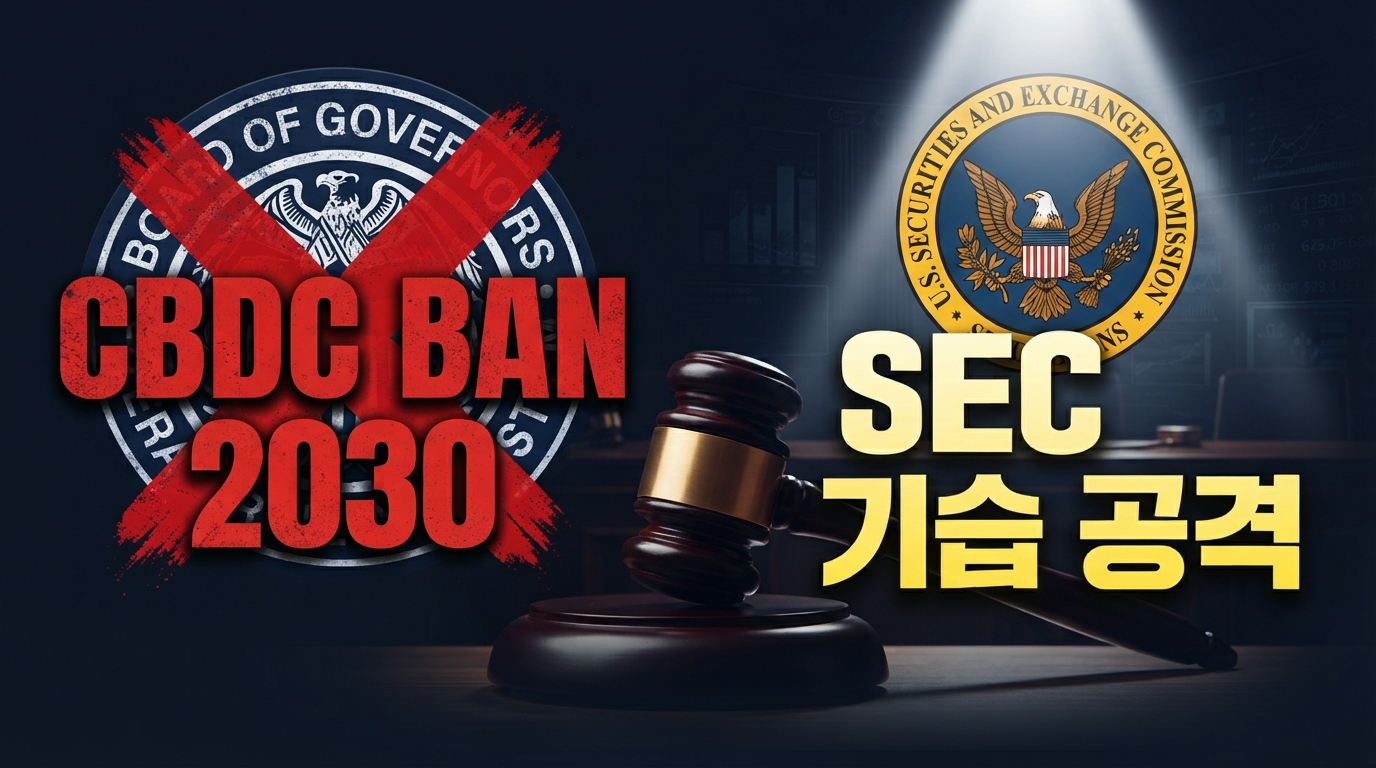
미 CBDC 2030년까지 금지 — SEC는 '독자 규제'로 선수쳤다
미국 크립토 규제 판도가 그야말로 폭풍 속으로 들어가고 있습니다. 대통령 서명도 없이 중앙은행 디지털화폐(CBDC) 발행을 금지하는 법안이 자동으로 발효되는가 하면, 미 증권거래위원회(SEC)는 의회보다 먼저 움직이겠다며 독자적인 완화 규정을 들고 나왔는데요. 법을 만들려는 의회와 주도권을 쥐려는 규제 당국이 팽팽하게 맞붙은 이 역대급 대치 상황을 알기 쉽게 정리해 드립니다!
대통령 서명 없이 통과된 'CBDC 금지법'
미국의 '21세기 주거법(21st Century ROAD to Housing Act)'이 7월 11일 자정을 기해 정식 법률로 발효됐습니다. 주거 관련 법안이라 크립토와 아무 상관 없어 보이지만, 여기에는 사실 엄청난 반전이 숨어 있습니다. 바로 미국 연방준비제도가 오는 2030년 12월 31일까지 디지털 달러, 즉 중앙은행 디지털화폐(CBDC)를 발행하지 못하도록 못 박은 역사적인 금지 조항이 포함된 것입니다.
이 법이 통과된 과정도 한 편의 정치 드라마 같습니다. 도널드 트럼프 대통령은 자신이 밀던 선거 관련 법안이 상원에서 무산되자, 이에 반발해 주거법 서명을 거부했습니다. 거부권을 아예 행사한 것은 아니고 말 그대로 서명만 안 한 채 버틴 것인데요.
결국 미국 헌법이 정한 10일간의 검토 기한이 지나면서, 대통령 서명 없이도 법안이 자동 발효되는 독특한 방식으로 CBDC 발행 금지법이 최종 확정됐습니다. 미국 의회와 외신 등에 따르면 이번 법안은 팀 스콧 의원과 프렌치 힐 의원이 공동 발의해 초당적인 지지를 얻은 것으로 알려졌습니다. 덕분에 미국의 CBDC 도입은 2030년 말까지 아주 단단히 묶이게 됐습니다.
의회 멈추자 SEC의 기습 공격, '레귤레이션 크립토'
의회가 새로운 가상자산 법안을 두고 밀고 당기기를 하며 시간을 보내는 사이, 폴 앳킨스 의장이 이끄는 미 증권거래위원회(SEC)가 기습적인 카드를 꺼내 들었습니다. SEC가 최근 공개한 연간 규제 의제에 따르면, 이들은 7월 중 '레귤레이션 크립토(Regulation Crypto)'라는 새로운 규정 초안을 전격 발표할 예정입니다.
이 규정의 핵심은 초기 단계의 토큰 프로젝트가 탈중앙화를 준비하는 동안 최대 4년 동안 등록을 면제해 주는 일종의 '임시 유예 제도'입니다. 규제 당국이 까다로운 잣대만 들이대기보다, 프로젝트들이 합법적으로 성장할 수 있는 숨통을 틔워주겠다는 취지인데요. 의회가 법을 만들어 주기만 마냥 기다리지 않고, SEC가 먼저 판을 짜서 주도권을 쥐겠다는 의도로 풀이됩니다.
실제로 이런 움직임에 대해 미 상품선물거래위원회(CFTC)의 마이클 셀리그 의장도 우려 섞인 경고를 보냈습니다. 그는 폭스비즈니스와의 인터뷰에서 의회가 법안을 제때 통과시키지 못하면 결국 규제 당국들이 독자적으로 모든 규칙을 제멋대로 쓰게 될 것이라고 지적했는데요. 의회의 입법이 늦어질수록 규제 당국들의 목소리가 더 커지는 상황, 과연 이 주도권 싸움의 끝은 어디로 향하게 될까요?
정치 진흙탕에 빠진 CLARITY 법안
크립토 업계가 정말 오랫동안 기다려온 포괄적 규제안이 있죠. 바로 'CLARITY 법안'인데요. 안타깝게도 오는 8월 7일 의회 휴회를 코앞에 두고 심각한 병목 현상에 갇히고 말았습니다.
이번에 판을 흔든 가장 큰 원인은 다름 아닌 도널드 트럼프 대통령의 재산 공개였습니다. 공개된 자료를 보니 트럼프 대통령의 지난해 가상자산 관련 소득이 무려 14억 달러(약 1조 9,000억 원)에 달했기 때문인데요. 밈코인 라이선스 수수료부터 가족들이 참여한 '월드 리버티 파이낸셜'의 토큰 판매 수익까지 엮여 있어 이해충돌 논란이 본격적으로 불붙은 것입니다.
그러자 민주당은 고위 공직자의 크립토 수익 창출을 제한하는 강력한 윤리 조항을 법안에 넣어야 한다고 압박하기 시작했습니다. 실제로 크리스 밴 홀런 상원의원이 제안한 윤리 수정안이 위원회 표결에서 무산되자, 민주당 핵심 의원들이 줄줄이 법안 지지를 보류하며 대치 전선이 더욱 가팔라졌습니다.
보다 못한 미 상품선물거래위원회의 마이클 셀리그 위원장은 의회가 이번 휴회 기간을 놓치면 결국 규제 기관들이 직접 모든 규칙을 쓰게 될 것이라며 뼈아픈 경고를 날리기도 했습니다. 정치권의 밥그릇 싸움에 입법 골든타임을 놓치고 시장의 혼란만 키우는 건 아닐지 우려가 깊어지고 있습니다.
룰메이커는 누가 될 것인가
의회가 진흙탕 싸움으로 발이 묶인 사이, 시장의 주도권은 결국 규제 당국으로 넘어갈 가능성이 커졌습니다. CFTC의 마이클 셀리그 위원장이 경고했듯이, 의회가 8월 휴회 전까지 법안을 통과시키지 못하면 결국 규제 기관들이 제각각 규칙을 쓰게 될 텐데요. 과연 의회가 극적으로 타협안을 찾아낼지, 아니면 7월 중 공개될 SEC의 기습 규제안이 판을 흔들게 될지 눈여겨봐야겠습니다!
관련 링크
- U.S. Congress / White House / CBS News — 21st Century ROAD to Housing Act Becomes Law, Codifying Statutory CBDC Ban Through 2030
- SEC.gov / Reginfo.gov / Coindoo — SEC Formally Places Regulation Crypto (RIN 3235-AN38) on 2026 Regulatory Agenda with July Target
- Fox Business / Crypto News / ForkLog / CCN — CLARITY Act Faces August 7 Recess Deadline Amid Trump Ethics Dispute and Regulatory Warnings