@kitto

D-Day for the CLARITY Act: Will Trump Compromise on Crypto Conflicts of Interest?
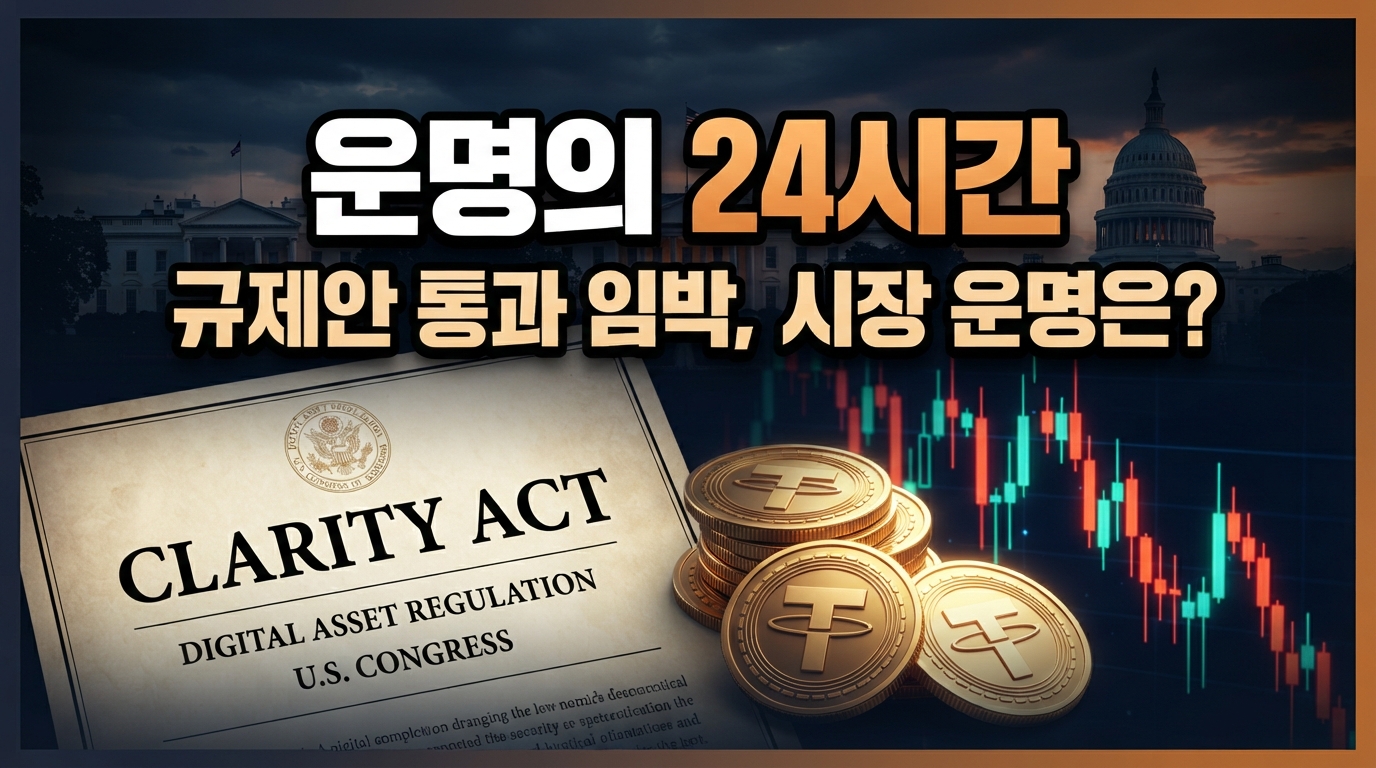
The 'CLARITY Act,' set to completely reshape the landscape of the US crypto market, has reached a historic crossroads. This afternoon, President Donald Trump will hold an emergency meeting at the White House with Republican lawmakers to address 'public official conflict of interest' regulations, the biggest hurdle to the bill's passage. I'll break down how the results of this meeting might impact our wallets and the broader market in a simple, engaging way!
What exactly is holding it back?
While the entire industry is desperate for this bill to pass, the roadblock turned out to be 'ethics regulations' rather than complex technology or policy.
According to reports from outlets like The Block, Democratic lawmakers have strongly pushed back, arguing that the bill is a special interest law designed to promote President Trump's personal business ventures. Recently disclosed public official financial records have only added fuel to the fire, revealing that President Trump generated over $1 billion in revenue from World Liberty Financial token sales and meme coin royalties.
The opposition party's stance is that they will never accept the bill's passage without strong ethics clauses to prevent the President from profiting personally from crypto businesses. It has essentially turned from a policy debate into a massive political conflict-of-interest battle.
The White House's last-ditch compromise and the industry's urgency
At this emergency meeting, Republican leaders, including Senator Cynthia Lummis, plan to bring a very tempting compromise to President Trump. According to CoinDesk, the plan is to propose a 'wait-and-see' strategy: temporarily separating the controversial ethics clauses and prioritizing the passage of the bill's core framework. The idea is to pass what they can agree on first to ensure legislative success.
However, there is another realistic reason for the Republicans' urgency: Patrick White, the advisor leading crypto negotiations at the White House, will soon be stepping away for military training. They are in a race against time, needing to produce results before the key figure in the negotiations departs.
As the situation intensifies, the industry has ramped up its activity. Major crypto firms, including Ripple, are pressuring Congress, warning that a prolonged regulatory vacuum could lead to another crisis like the FTX collapse. They are conducting a widespread public campaign, arguing that this bill must be passed for the sake of consumer protection.
Prediction markets are playing a guessing game; will the SEC go solo?
With things moving so fast, prediction markets—which reflect the flow of money most rapidly—are heating up. Interestingly, the sentiment varies significantly across platforms. Kalshi puts the probability of a Senate vote next week at a very high 79%. Conversely, Polymarket is quite bearish, seeing the final chance of the bill passing this year in the high 30% range. In short, there's a fierce debate over the likelihood: 'It might get to a vote, but actually passing it will be an uphill battle.'
Watching this stalemate, the US Securities and Exchange Commission (SEC) has quietly begun activating its own backup plan. Preparing for the possibility that the bill might fail in Congress, the SEC has started developing its own crypto regulations that can be implemented under existing authority. This includes measures to provide a safe harbor for crypto sales without congressional approval, tightening broker regulations, and amending rules to allow crypto securities to trade on Alternative Trading Systems (ATS). Even if legislation fails, the SEC has ensured it has a clear way to regulate the market on its own terms.
Key points to watch
The timeline for the CLARITY Act is becoming extremely tight. If no dramatic compromise is reached before the Senate summer recess begins in August, passing the bill this year might effectively be off the table.
The results of today's White House meeting and the upcoming House Financial Services Committee hearing in New York will serve as the first major litmus test for these negotiations.
We'll need to keep a close eye on the news this weekend to see if President Trump chooses to yield on the ethics regulations, or if market expectations for regulatory clarity will fade back into uncertainty!
Related links