@kitto

EU Blacklists HTX for Russia Sanctions — Will It Block Workarounds?
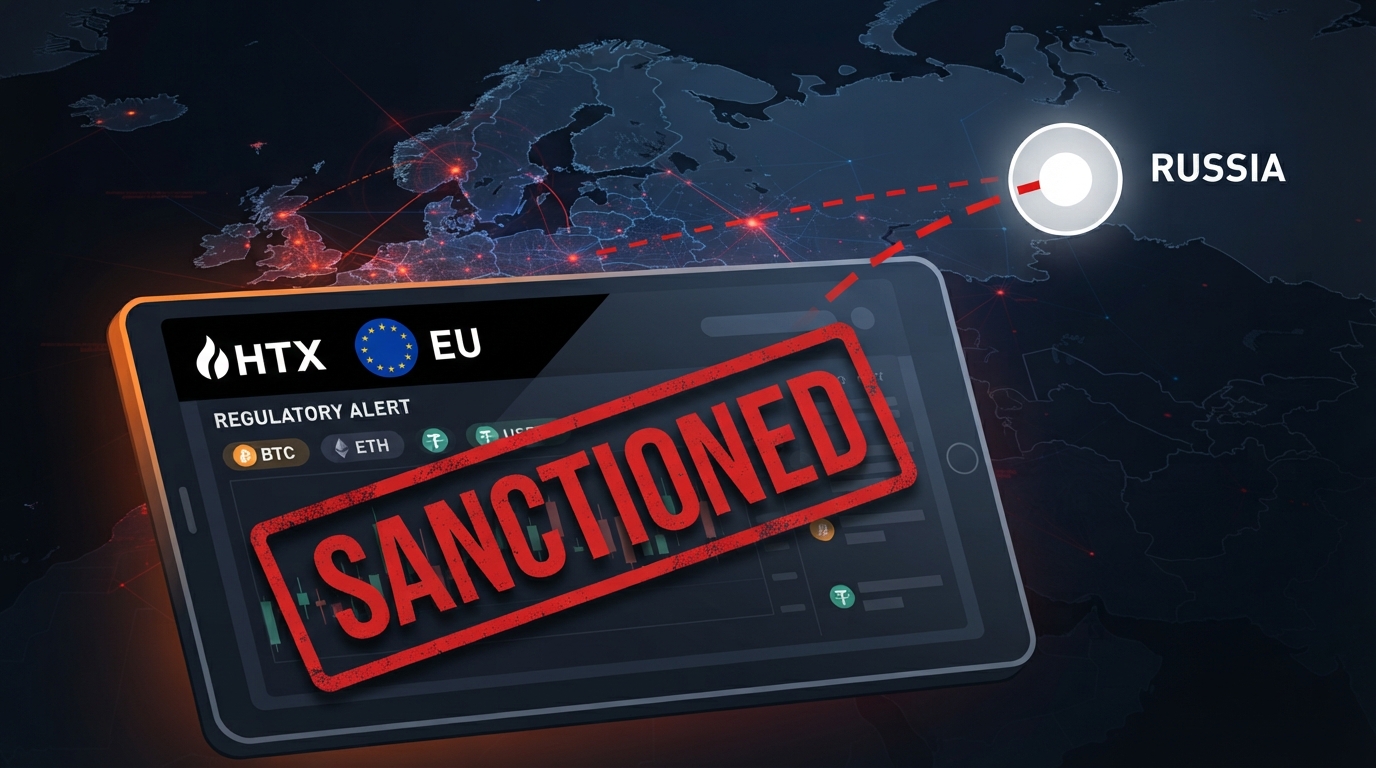
A high-stakes chase is unfolding between those using the crypto market to evade financial sanctions and the regulators determined to track them down. The European Union has recently ramped up the pressure by officially adding global crypto exchange HTX to its Russia sanctions list. This is being seen as more than just a ban on a single exchange; it is a signal of a larger geopolitical battle playing out in the on-chain world.
Following the UK, the EU Joins In: Why HTX Was Sanctioned
According to a report by Finance Magnates, the European Union has officially added global cryptocurrency exchange HTX to its sanctions list. The move stems from allegations that the exchange helped Russian users move funds to evade existing sanctions.
This action is a strong follow-up to the regulatory measures taken by the UK about two months ago. It clearly shows that Western nations have begun to target cryptocurrency platforms directly in a bid to effectively cut off Russia's funding sources.
With major global exchanges becoming direct targets of regulation, there is palpable tension throughout the industry. Now that on-chain financial networks have become the front line of geopolitical conflict, other offshore exchanges can no longer afford to feel safe.
The Tense Standoff: EU’s Containment vs. Russia’s Evasion
Europe is currently building its crypto regulatory barriers higher than ever. The market atmosphere shifted completely after MiCA, Europe's comprehensive cryptocurrency regulation, went into full effect on July 1st. As reported by BeInCrypto, platforms that fail to strictly comply are likely to find it difficult to maintain a foothold in the European market.
Russia, meanwhile, is taking the opposite approach. To breathe easier by bypassing Western sanctions, the state itself has begun embracing cryptocurrency. Russia recently passed a law legalizing the use of crypto and stablecoins for cross-border trade settlements under the supervision of its central bank.
Essentially, a fierce battle of wits has begun: the West is trying to cast a tight regulatory net, while Russia is attempting to carve out new financial detours through the on-chain world.
Adaptation or Isolation? Divided Opinions Among Experts
Experts are sharply divided in their predictions regarding these heavy-handed sanctions.
Some point to the inherent flexibility and resilience of the crypto market. They analyze that users will quickly adapt by shifting to new blockchain networks or peer-to-peer (P2P) OTC channels that remain beyond the reach of regulations.
Conversely, there are urgent warnings. Critics point out that as bridges to mainstream financial networks are completely severed, not only will isolation deepen, but dangerous, unregulated 'grey markets' could expand in a distorted way.
As noted in the expert analysis shared by BeInCrypto, the true key to shifting the future market landscape will be the extent to which these sanctions are actually applied and enforced.
Key Points to Watch
Ultimately, the global crypto market is at a major crossroads. The divide between the 'transparent institutional sphere' that strictly follows regulations like the EU's MiCA or US laws and the 'non-institutional sphere' used for geopolitical workarounds is becoming much sharper than before.
The key things to watch moving forward are whether other large offshore exchanges will face similar regulatory pressure and where regulated stablecoin capital will move. Let’s keep a close eye on this intense game of hide-and-seek between stringent authority surveillance and capital seeking a way around it!
Related Links