@kitto

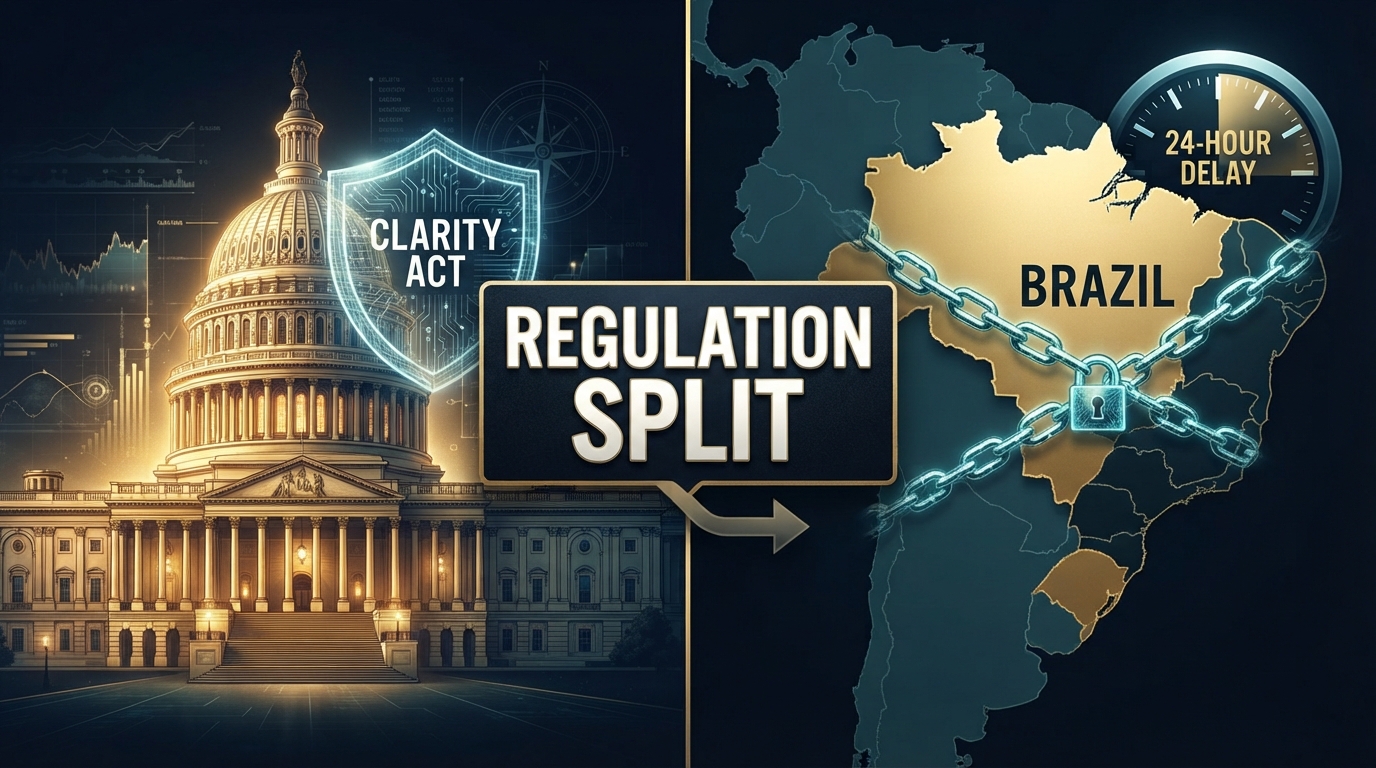
US CLARITY Act Vote vs. Brazil’s Transaction Delays — A Diverging Global Regulatory Landscape
The current global crypto market is showing some truly fascinating trends. On one hand, there is a rush to pass major legislation to formalize its position within the institutional framework, while on the other, some are slamming the door shut, enforcing mandatory transaction delays to curb capital flight and fraud. I’ll break down what this polarized approach to global regulation means for our future!
US CLARITY Act Headed for Senate Vote in September
Finally, a landmark bill that will determine the fate of the US crypto market is being put to the test. According to reports from The Block and Cointelegraph, the US Senate is set to hold a procedural vote on the CLARITY Act on September 15th, which aims to establish the institutional framework for the crypto market. Senate Majority Whip John Thune, who spearheaded the vote, has effectively put the bill on the fast track.
In short, the core of this bill is about 'clearing up ambiguous regulations.' The intent is to finally resolve the murky jurisdictional issues regarding which entities oversee which digital assets. Just as its name suggests, it is an ambitious plan to provide clear standards in what has been a foggy regulatory environment.
However, there is a steep path ahead before the bill actually becomes law. It needs the support of at least 60 out of 100 senators to clear the procedural hurdle and move on to the full legislative review stage. Furthermore, there is intense debate within Congress over anti-money laundering provisions and other technical adjustments, leaving the global crypto industry watching anxiously to see if the US will manage to set the global regulatory standard first.
The Choices of Brazil and Russia — Putting Up Barriers at the Border
Meanwhile, the mood in emerging markets on the other side of the globe is quite different. While the US is accelerating its path toward institutional integration, some countries are implementing strict control measures that intentionally create friction in crypto transfers to prevent capital flight and combat crime.
A prime example is Brazil. According to reports from BeInCrypto and CoinPedia, the Central Bank of Brazil has decided to implement a mandatory 24-hour delay on crypto transactions exceeding $10,000, starting in 2027, to prevent financial fraud. Instead of the unique advantage of instant transfers that defined crypto, they are choosing to install checkpoints on the payment route to maintain control.
Russia is also taking a very strict line. Starting September 1st, Russia will fully implement a law that only allows cross-border settlement transactions regulated and approved by the state, while strictly prohibiting the daily use of cryptocurrencies domestically.
Unlike the Western world, which is trying to grow the market by building institutional foundations, these emerging economies are showing a clear trend of tying up the free-transfer capabilities of crypto under state control.
Institutional Fast Lanes vs. Barriers for Individuals
As the regulatory gap widens, the crypto ecosystem is rapidly splitting in two. The institution-led ETF market, operating safely within the institutional fence, is expanding rapidly on an open highway.
Conversely, the space for individuals directly transferring assets or managing their own wallets is facing increasingly higher barriers. In addition to rigorous identity verification, heavy measures like the mandatory transaction delays being introduced in emerging markets are starting to block the path for individual users.
The user experience is becoming starkly divided, as if we are witnessing a wide-open high-speed lane alongside a strictly guarded border checkpoint. The crypto market’s dilemma is deepening as it navigates the tension between institutional infrastructure, which uses regulatory compliance as a weapon to gain speed, and individual finance, which is becoming increasingly isolated.
The Next Signal to Watch
Ultimately, the future of the crypto market will involve an intense tug-of-war between the smooth highways of the institutional sector and the strict checkpoints restricting individuals. The first signal we need to check is the result of the US Senate’s CLARITY Act vote on September 15th. Along with the outcome of this bill, we need to keep a close watch on whether restrictive regulations like the transaction delays pioneered by Brazil will spread to other emerging countries.
Related Links