Brazil's Personal Wallet Regulatory Shock — Self-Custody Shaken, Capital Flows to ETFs

Kitto

@kitto

브라질 개인 지갑 규제 충격 — 흔들리는 셀프 커스터디, 자금은 ETF로

Brazil's Personal Wallet Regulatory Shock — Self-Custody Shaken, Capital Flows to ETFs

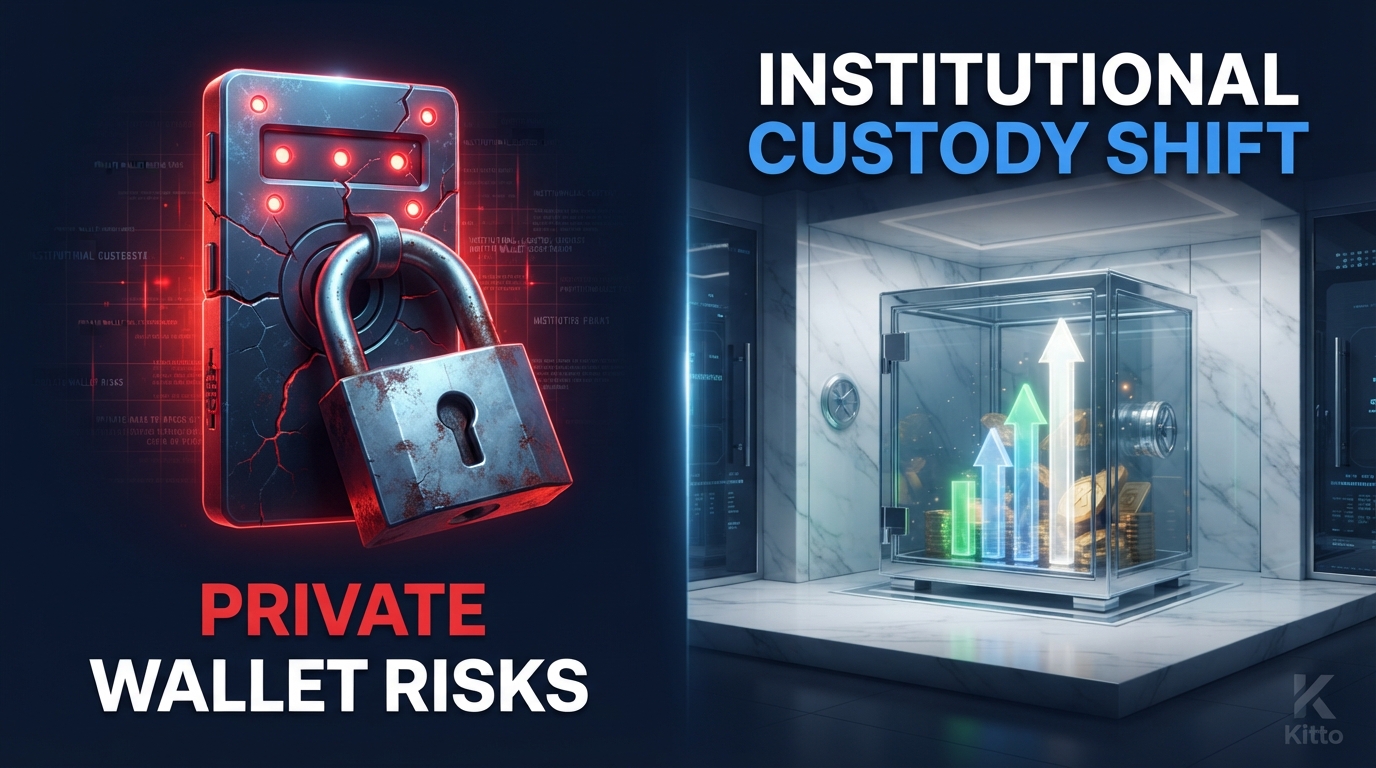
The autonomy of "self-custody," where you manage your own assets, is being put to a major test. Recent security threats targeting personal wallets and news of strict remittance regulations in Brazil are driving growing anxiety among users. In the meantime, capital is flowing into institutional finance, which promises safety and benefits. Shall we take a look at these winds of change blowing through the crypto market?

Brazil Introduces '24-Hour Wait' for Personal Wallet Transfers

Striking regulatory news has emerged in Brazil that is bound to shock personal wallet users. To combat financial fraud, the Central Bank of Brazil has decided to implement a waiting period for transfers made to personal wallets or overseas platforms.

According to foreign media, including The Block, starting January 1, 2027, transfers exceeding $10,000 to personal wallets or offshore exchanges will be held for up to 24 hours. This effectively puts a direct brake on the immediacy and autonomy that are the biggest appeals of self-custody.

The intent to protect users from financial fraud is understandable. However, not being able to move your own assets in your own wallet without waiting a full day represents a significant constraint for crypto users who value autonomy.

Successive Security Issues and Insecurity of Personal Infrastructure

Regulations are one thing, but what really makes life difficult for wallet users is the non-stop security issues. The motto of self-custody—"your keys, your coins"—is great, but in reality, it often turns into a heavy burden where you are solely responsible for everything from wallet management to security patches.

Recent security threats targeting personal infrastructure illustrate this well. There was an incident where a node credential vulnerability was discovered in the open-source payment server BTCPay Server, necessitating an emergency patch, and phishing attacks impersonating Ledger hardware wallets continue to cause headaches. It is by no means easy for an average, non-expert user to perfectly avoid all these technical pitfalls.

With the situation like this, the anxiety that "one mistake could wipe out my assets" is outweighing the sense of accomplishment that comes from having complete control. Ultimately, these limitations and the fatigue of managing personal security are naturally leading people to look back toward safe institutional solutions.

Institutional Finance Plays the 'Tax Exemption' Card Instead of Regulation

If regulatory and security concerns with personal wallets are causing a headache, it's inevitable that people would be drawn to the sweet offers coming from institutional finance. A prime example is Thailand. According to a report by foreign outlet 99Bitcoins, Thailand has decided to offer a groundbreaking benefit by exempting capital gains tax for crypto assets traded on officially licensed exchanges.

It's a powerful temptation: come within the regulatory framework, and we'll cut your taxes while you trade in a safe environment. If you can enjoy such tax breaks while also reducing the risk of hacking or phishing, it's a natural trend that more users will choose the institutional path, even if it means sacrificing some of the autonomy of managing their own assets.

In fact, the massive, continuous inflow of funds into Bitcoin and Ethereum spot ETFs in the U.S. is not unrelated to this. Even if it lacks the thrill of having absolute control over one's assets, the ability to avoid the fatigue of complex security patches or transfer waiting periods seems to be a more attractive alternative for the public.

The Polarizing Crypto Market — What's Our Choice?

Ultimately, the crypto market looks set to split into two distinct paths: a group that pursues autonomy, wanting complete control over their assets despite the hassle and complexity, and a mass-market group that prefers institutional finance with its tax benefits and safe safeguards.

Amidst all this, personal asset management technology continues to evolve, as seen with MetaMask launching an AI-based agent wallet on the Optimism mainnet. I'm curious to see how the autonomy of personal wallets will survive in the midst of this intense tension between regulation and security—or if institutional products will ultimately become the market standard. Which of these two options are you more drawn to?


Related Links

No comments yet.