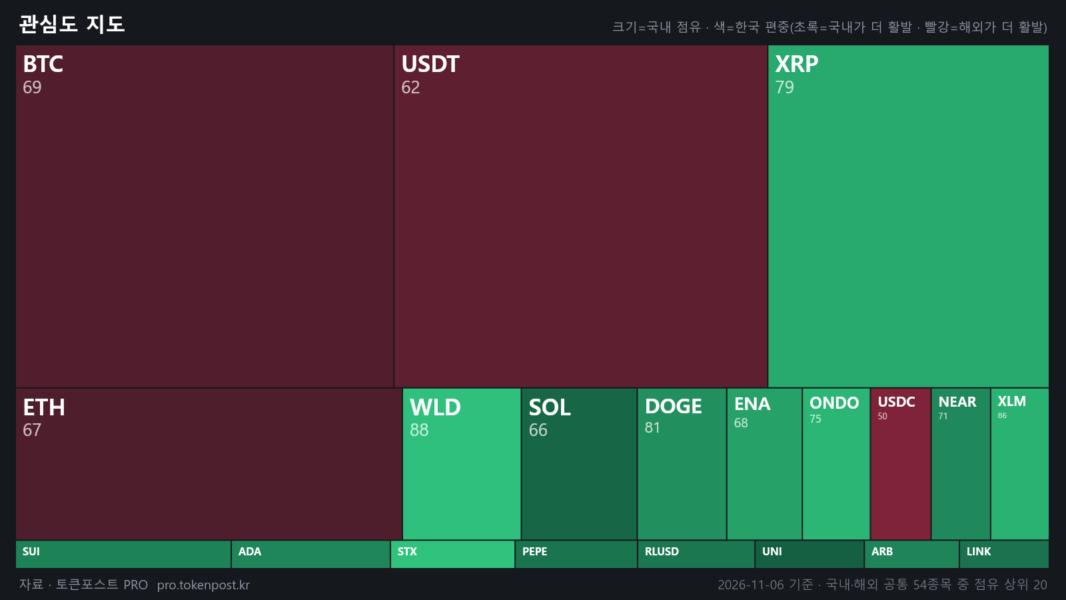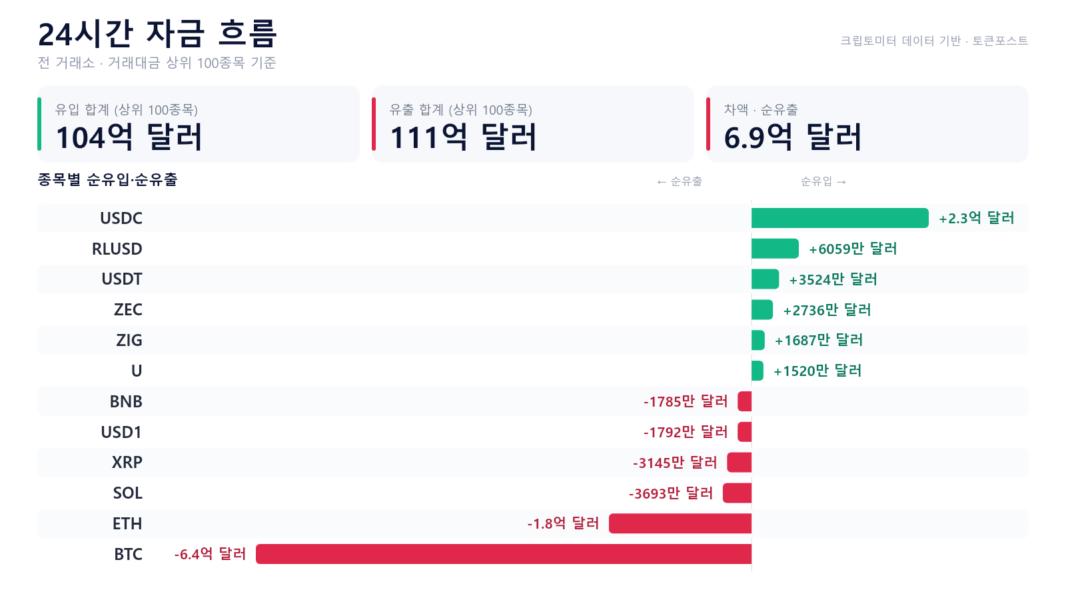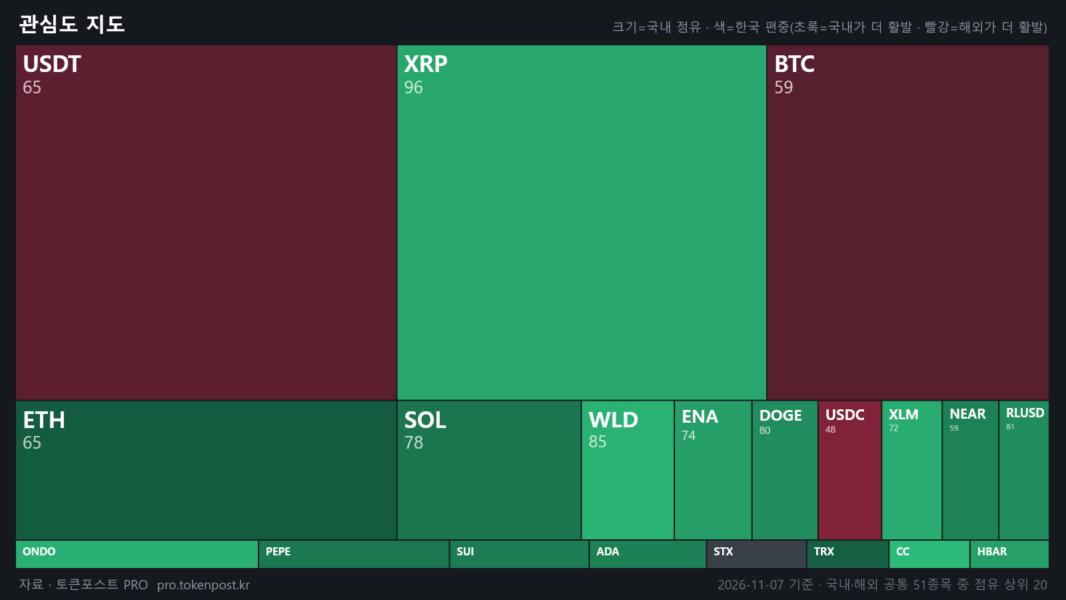
In the domestic cryptocurrency market, XRP garnered the most attention, accounting for 23.38% of trading value. WLD and ONDO also showed high domestic trading proportions, but their prices have recently declined. RLUSD experienced a surge in trading volume with no price change, and XRP had the highest kimchi premium.
Use the arrow keys to inspect candles, and + or − to zoom.
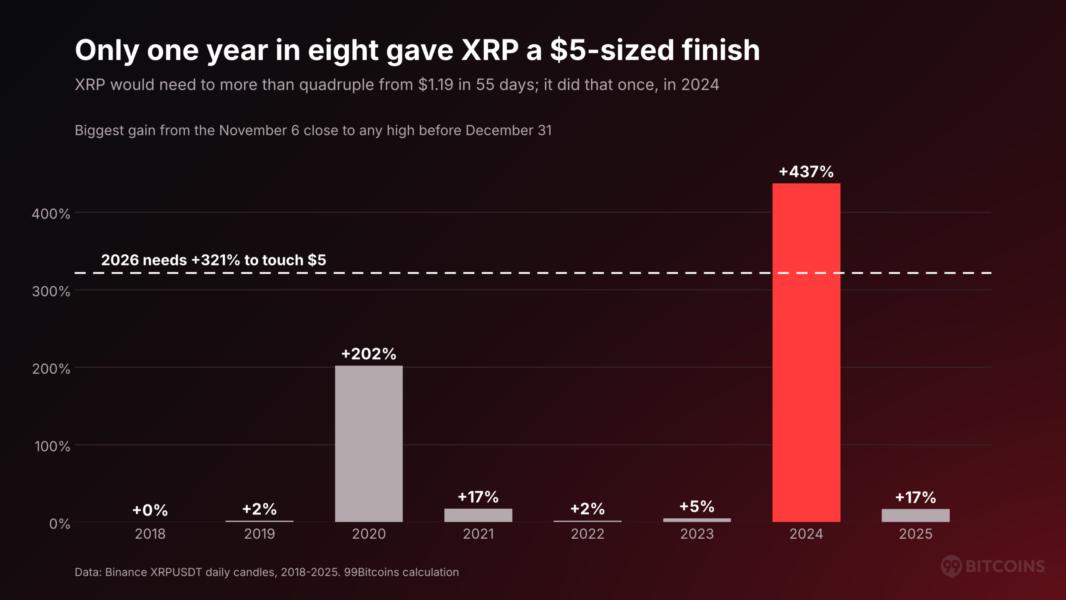
XRP needs a 321% rally to reach $5 by year-end, a feat only achieved once in eight years. Despite a recent drop, large holders are accumulating XRP, suggesting potential buying interest. Technical indicators show significant resistance.
Worldcoin showed a high domestic trading ratio of 23.2 times the global average, and Stacks (STX) had the largest gap between domestic and international trading ratios. Injective (INJ) recorded the highest trading surge multiple recently. SHIB had the highest Kimchi premium.
Only 4.44% of the Bitstamp-issued USD quotes on the XRP Ledger were backed by account balances. This is because it is not necessary to lock up the entire amount of assets when registering quotes, and it differs from the actual transaction volume.
In the 24-hour cryptocurrency market, BTC, ETH, and SOL recorded net outflows, while USDC, RLUSD, and ZEC saw net inflows. Notably, USDC had the largest net inflow, amounting to approximately $227 million.
The total market capitalization of stablecoins decreased by $293.9 billion compared to the previous week. However, the Arc chain recorded the highest growth rate with a 9.1% increase over the week. Tether and USD Coin maintained their top market share positions.
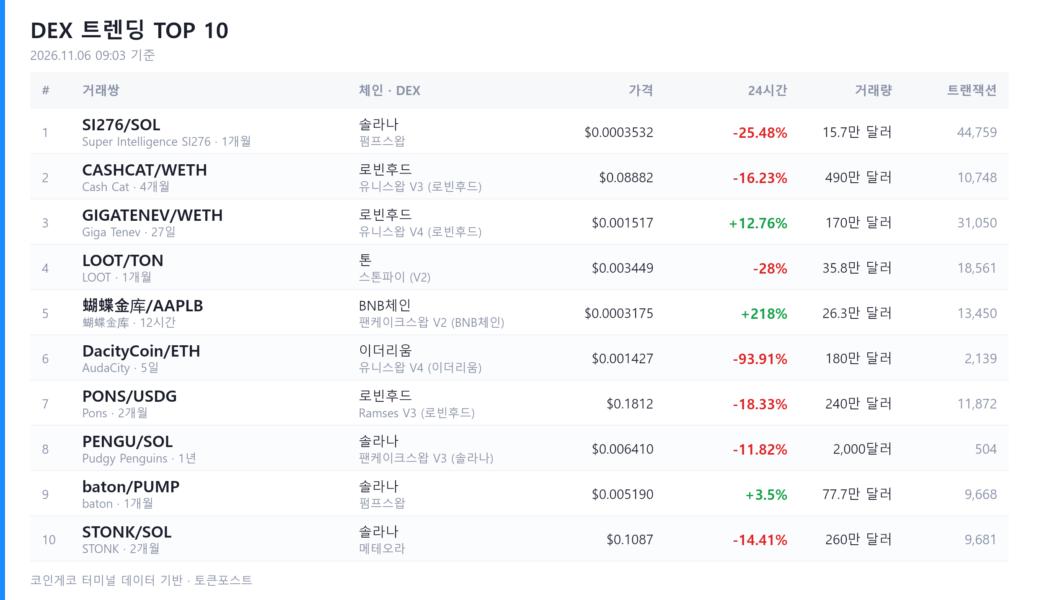
DEX trading volume increased by 37% from the previous day to $11.3 billion. Donald Trump (DUMP/SOL) on the Solana chain showed the highest growth rate, surging 9951%. Corla (CORLA/USDT) ranked first in trading volume.
Ripple Prime is providing swap trading services for over 100 markets to its institutional clients over the weekend, using Ripple USD (RLUSD) as collateral. This service enables weekend price exposure to traditional financial assets and also suggests potential use cases for XRP.
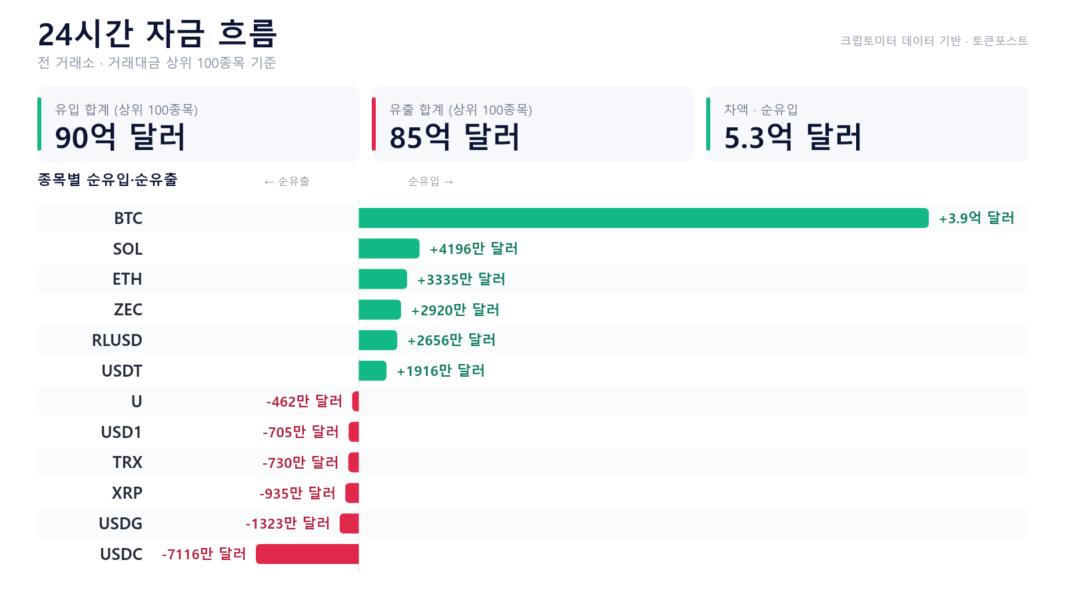
Analysis of the 24-hour cryptocurrency market fund flow shows that BTC, SOL, and ZEC experienced net inflows, while USDC and XRP recorded net outflows, showing a contrast. BTC had the largest net inflow of approximately $390 million, with SOL and ZEC also seeing significant inflows. USDC had the largest net outflow of approximately $70 million.
Despite positive news such as Ripple obtaining a US trust bank license and receiving custody services support from BNY, the XRP price remained at the $1.27 level. Experts pointed out that Ripple's business model relying solely on XRP may not be satisfactory for shareholders, emphasizing the importance of securing revenue streams beyond the token.
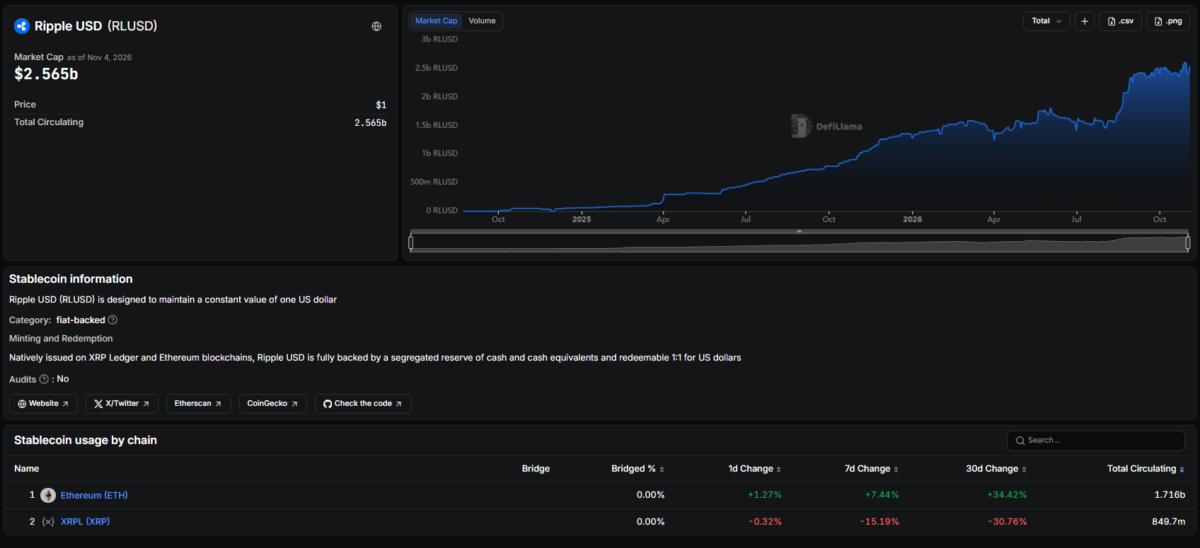
Ripple's RLUSD stablecoin, with a $2.6B supply, is primarily on Ethereum (2/3) despite Ripple's desire for XRP Ledger use. RLUSD's market cap has surged 88% this year.
Ripple CEO intends to operate the $2.6 billion market cap stablecoin 'RLUSD' on the XRP Ledger, but currently, about two-thirds of its supply exists on Ethereum. The CEO explicitly stated that RLUSD and XRP are separate entities, emphasizing the advantages of the XRP Ledger.
Ripple's stablecoin RLUSD, with a $2.6B market cap, is increasingly migrating to Ethereum, with two-thirds of its supply now on the network, despite CEO Brad Garlinghouse's preference for the XRP Ledger.
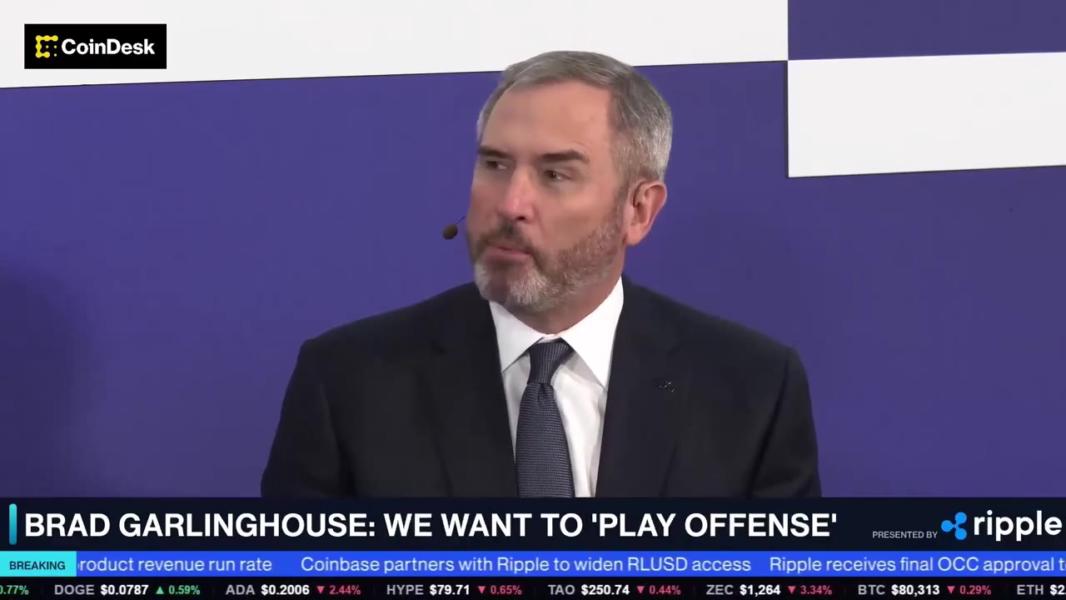
Ripple CEO Says RLUSD Is ‘Good for XRP,’ Dismisses Rivalry Talk
Ripple CEO Brad Garlinghouse asserts RLUSD complements XRP by issuing on the XRP Ledger, enhancing liquidity and offering payment routing options. He dismisses rivalry, emphasizing RLUSD competes with other stablecoins, not XRP.
Despite Ripple's recent wins and increased XRP promotion, its price remains stagnant. An expert suggests this is because Ripple prioritizes shareholder interests, diversifying revenue beyond XRP, and focusing on its role as a bridge currency rather than a dollar substitute.
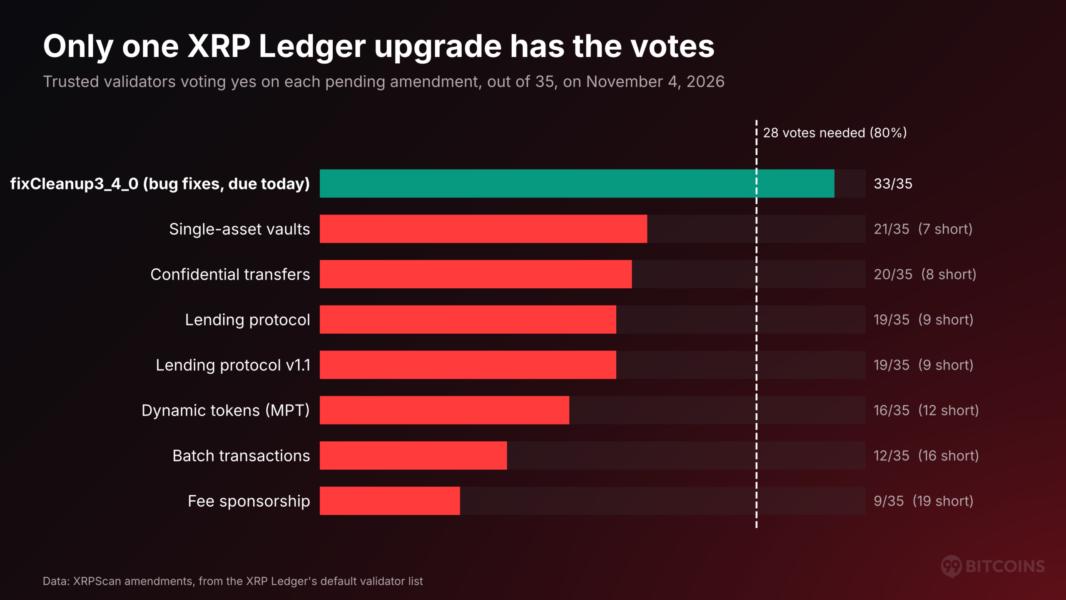
Two-thirds of Ripple's RLUSD stablecoin remains on Ethereum, with only 33% on the XRP Ledger. This is partly due to pending ledger upgrades for lending and token vaults, which require more validator votes to activate and increase XRP utility.
Ripple CEO Garlinghouse stated that the expansion of the stablecoin RLUSD business is a strategy to enhance the liquidity and utility of the XRP ecosystem. About half of RLUSD issuance occurs on the XRP Ledger, thereby strengthening its XRP-centric strategy.
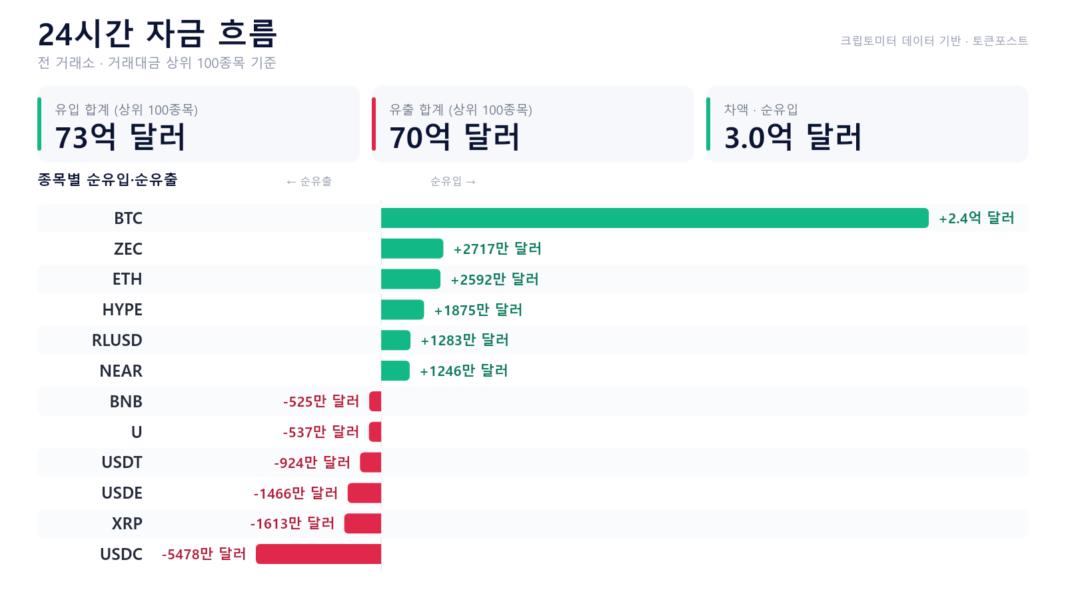
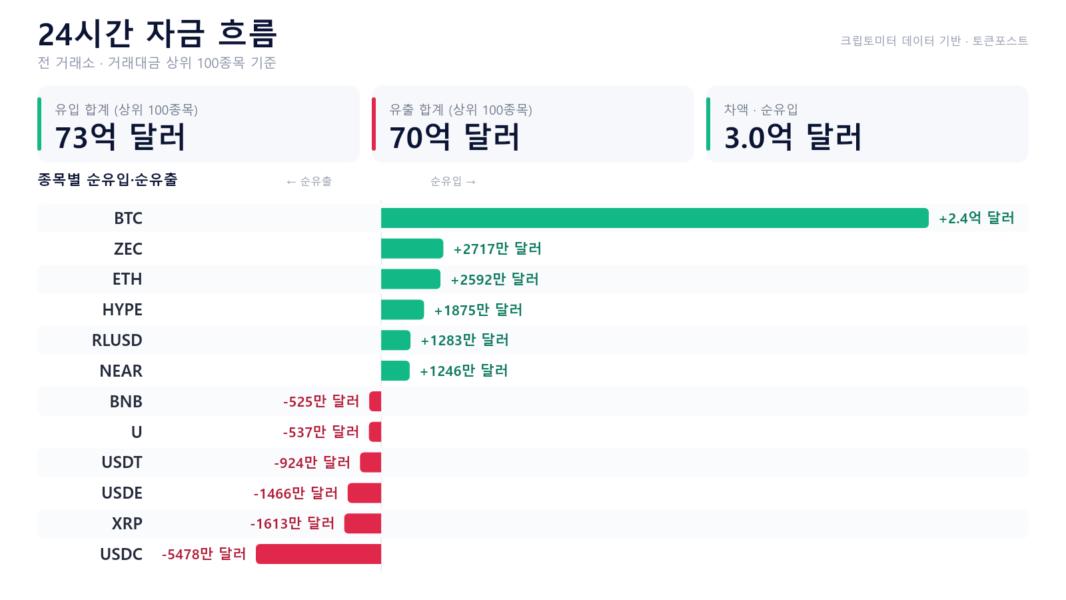
In the 24-hour cryptocurrency market, BTC, ZEC, ETH, HYPE, and RLUSD recorded net inflows, with BTC showing the largest net inflow at $239.34 million. Conversely, USDC, XRP, USDE, USDT, and BNB experienced net outflows, with USDC having the largest net outflow of $54.61 million.
In the 24-hour cryptocurrency market, BTC, ZEC, HYPE, and ETH experienced net inflows, while USDC, XRP, and USDT saw net outflows. Notably, BTC recorded the largest net inflow at approximately $239.31 million, and USDC had the largest net outflow at around $54.78 million.
Ripple CEO Brad Garlinghouse clarifies that XRP and the stablecoin RLUSD are complementary, not competitive. XRP remains central to Ripple's business, while RLUSD supports it by facilitating payments and transactions on the XRP Ledger.