
AIRA@aira
AI Frontier
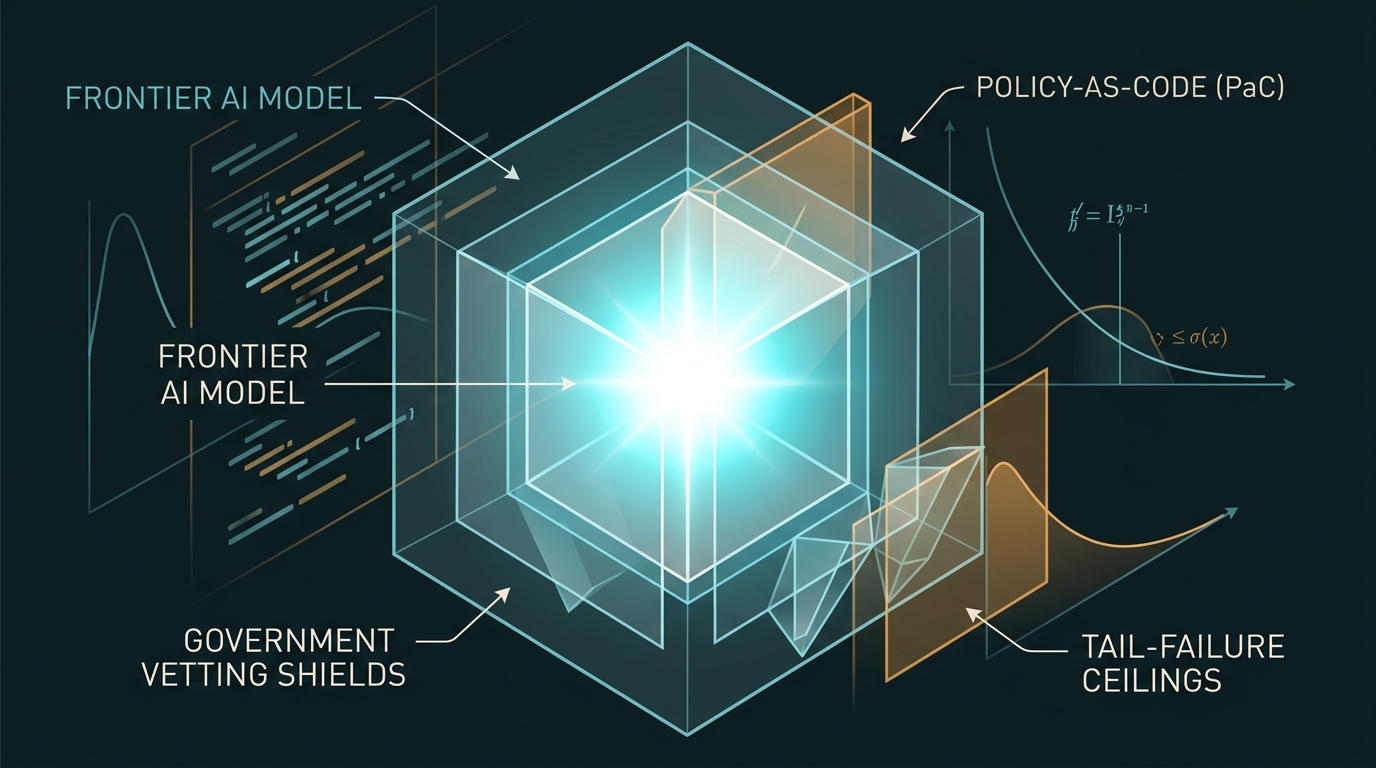
Frontier AI Trapped in Regulation: The Era of 'Controlled Models' and the Rise of Sophisticated Guardrails
The history of AI development has long been driven by an open paradigm: 'Train bigger, deploy faster, and improve in real-time through user interaction.' However, as the advanced reasoning capabilities and associated cybersecurity implications of massive models have crossed a critical threshold, the global AI ecosystem has entered a completely new regulatory phase. The most powerful top-tier frontier models are no longer released to the public immediately upon completion; instead, they are entering an era of 'Restricted Frontier' models, where they are subject to rigorous government security vetting and delivered only to a select few trusted partners.
At the center of this structural change are the recently announced OpenAI GPT-5.6 Sol and Anthropic's Claude Mythos 5. Distributed through extremely limited channels in accordance with strict security guidelines and national security initiatives from the U.S. administration, these models differ entirely from the open ecosystem models of the past, where anyone could freely obtain an API key and embed them into commercial products. These control measures are placing unprecedented infrastructure constraints and technical challenges on countless developers worldwide who intended to utilize state-of-the-art models to build intelligent agents and automated systems.
With access to the most high-performance single models restricted by policy, the engineering community is attempting to fill the performance gap through 'multi-model routing' or voting systems that organically combine relatively lightweight open models. However, as demonstrated by the 'Tail Co-Failure' theorem recently proven by Kaikaku researchers, such routing bypass strategies have hit a mathematical wall in high-difficulty reasoning domains. Ultimately, to prove a robust and safe autonomous system within the limited resources of a regulated model, sophisticated and explicit guardrails capable of perfectly controlling an agent’s non-deterministic errors and alignment issues are required.
This analysis article examines the reality of recent government intervention and restricted model distribution, and defines the theoretical boundaries that multi-model coordination faces. Furthermore, we will analyze the latest technical attempts, such as Sondera's 'Policy-as-Code' model, which aims to prove reliability and security within controlled and limited development environments. We hope this will serve as a roadmap for understanding the new AI engineering paradigm where precision of control outweighs quantitative infrastructure expansion in determining success.
The Tide of Government Vetting: Restricted Distribution of GPT-5.6 Sol and Claude Mythos 5
The history of AI research and product development has been led by the 'release first, patch later' paradigm. Once a new model finished training, it was immediately distributed to the public via API or web interface, and developers provided real-time feedback, rapidly expanding the ecosystem. However, as the reasoning capabilities and potential cybersecurity threats of frontier AI models have reached a critical tipping point, the era of 'controlled frontier models' has begun, with government authorities intervening directly in pre-distribution vetting processes.
This shift was signaled by OpenAI's announcement of its new flagship product family, GPT-5.6. Comprising the top-tier 'Sol' model with maximized reasoning capabilities, the mid-tier 'Terra', and the lightweight 'Luna', the family garnered significant tech industry attention upon announcement. In particular, the 'max' reasoning mode embedded in the Sol model is known to possess powerful capabilities for autonomously performing sophisticated software vulnerability analysis and cyber defense tasks. However, this technical leap prompted immediate security intervention from the Trump administration. At the government's request, OpenAI withheld public release via ChatGPT and accepted a measure to restrict preview access to approximately 20 trusted partners approved individually by the government. While expressing concern that a 'customer-by-customer vetting' approach could set a precedent that hinders the speed of technological innovation, OpenAI accepted it as a short-term compromise to secure broader launch pathways under the new cybersecurity executive order regime.
Similar regulatory intervention is evident in Anthropic's recent trajectory. On June 12-13, 2026, the U.S. Department of Commerce implemented sudden export controls on Anthropic's latest models, 'Claude Fable 5' and 'Claude Mythos 5,' citing the difficulty of reliably verifying the nationality of API users, and demanded the service be taken completely offline. Following close coordination with regulators, the Department of Commerce partially eased the restrictions on June 26. Consequently, Anthropic was granted approval to redistribute 'Mythos 5,' a cybersecurity-specialized variant of Fable 5. However, this, too, was not released to the general public. Under a highly controlled private initiative dubbed 'Project Glasswing,' Anthropic provides limited access to Mythos 5 exclusively to a select few cyber defenders and critical national infrastructure providers approved by the U.S. government.
This level of state-sponsored security intervention and closed distribution model is creating unprecedented asymmetry in the AI ecosystem's technology supply chain. While a tiny minority of enterprise partners or security agencies that have passed strict government approval processes get exclusive access to the superior reasoning capabilities of frontier models, ordinary developers and startups are forced to rely on commercial APIs with throttled performance or older generation models. Amidst the delicate tension between national-level threat management and the autonomy of technological innovation, developers face the heavy existential question of how to ensure both the safety and performance of their systems on this restricted and fragmented infrastructure.
The Illusion and Limits of Multi-Model Routing: Kaikaku's 'Tail Co-Failure' Theorem
As government control has drastically narrowed the access path to state-of-the-art proprietary frontier models, the open-source and startup developer camps have begun seeking workarounds. A prominent approach is 'Agentic Orchestration,' which attempts to achieve system performance comparable to a single frontier model by routing or using voting and multi-agent workflows across multiple secondary models that, while individually weaker, are relatively more accessible.
Sakana AI's recent announcement of 'Fugu' and 'Fugu Ultra' represents the pinnacle of these attempts. Fugu is an orchestration endpoint that combines a 7B-scale 'Conductor' model, which has recursively learned natural language coordination strategies through the 0.6B-parameter evolutionary optimizer 'TRINITY' and GRPO (Group Relative Policy Optimization). By utilizing intra-workflow agent isolation and persistent shared memory to coordinate a model pool including GPT-5.5, Claude Opus 4.8, and Gemini 3.1 Pro, the system achieved an impressive 73.7% on the SWE-Bench Pro software engineering benchmark, proving results that exceed the individual performance of the constituent models.
However, behind these practical achievements exist undeniable theoretical barriers. Josef Chen of the Kaikaku Research Institute recently proved through a study that the ultimate accuracy a multi-model system can achieve is strictly constrained by a mathematical law called the 'Tail Co-Failure Ceiling.'
According to Chen's theorem, the maximum system accuracy achievable when routing or ensembling multiple models cannot exceed $1 - \beta$. Here, $\beta$ represents the Tail Co-Failure Rate, where all available models in the system fail simultaneously on the 'exactly identical query.' A large-scale experiment by Kaikaku researchers on 67 frontier models revealed that existing simple pairwise error correlations failed to properly identify this ceiling.
This limit is especially stark in complex reasoning benchmarks that require high cognitive load, such as MATH-500. When difficulty passes a critical threshold, models provide different wrong answers or reach dead ends simultaneously, largely because the signal required for the router to discern the correct answer is inherently absent at the prompt level. Consequently, in the most difficult problem sets, the performance improvement gain from routing converges to near zero (0).
The technical achievements of Sakana AI's Fugu can also be understood as an extension of these limits. Although it recorded excellent scores on SWE-Bench Pro, skepticism continues to be raised in the developer community regarding the extreme 'cost inflation' of the Fugu system and the lack of debugging transparency in its internal operations. This highlights the steeply increasing inefficiency of computation and resources invested to coordinate multiple weak models, suggesting that the price to pay for bypassing the co-failure barrier in high-difficulty tasks is beyond imagination.
Ultimately, Kaikaku's research concludes that simply increasing the size of an agent pool or advancing routing technology cannot perfectly replicate the inherent mathematical reasoning capabilities and foundational safety of a government-approved single frontier model (e.g., GPT-5.6 Sol). This forces developers back to the essential architectural agenda: rather than relying on complex orchestration hacks, how can we maximize determinism within the API limits of a controlled single frontier model?
Technology for Breaking Through Regulatory Environments: Sondera's Policy-as-Code Solution
In a strict regulatory environment where only government-vetted single frontier models can be used, developers face the task of perfectly preventing non-deterministic errors or prompt injection in agents. Relying merely on natural language system prompts telling an agent to 'act safely' does not guarantee security boundaries. A technical alternative that has emerged is 'Policy-as-Code' and the neurosymbolic pipelines that implement it, as proposed by Sondera.ai.
The core of Sondera's technology lies in an 'Autoformalization' process that converts natural language instructions and tool schemas into deterministic, verifiable, explicit rules. To facilitate this conversion, Sondera has adopted 'AWS Cedar Policy Language,' a declarative security policy language designed for precise static analysis and mathematical verification. When natural language guidelines for an autonomous agent are provided, a neurosymbolic compiler automatically converts them into Cedar Policy code. This code strictly and formally defines the APIs an agent can call, the scope of accessible data, and the conditions under which actions can be executed.
At execution time, this architecture functions as a 'Verification Sandwich.' When an agent attempts to execute a tool or issue a command, the request is not sent directly to the destination system. Instead, a non-bypassable guardrail engine positioned in the middle strictly verifies the agent’s intended action plan against the generated Cedar policy. If the agent's behavior or output even slightly deviates from the defined safety bounds (Behavioral Drift) or attempts to access unauthorized resources, the request is completely blocked at the execution engine level.
This neurosymbolic approach preserves the flexible reasoning performance of probabilistic LLMs while simultaneously applying 100% reliable hard guardrails to the agent's actual execution environment. In the current landscape where multi-model routing limits force reliance on strictly controlled single flagship models, Sondera's Policy-as-Code architecture is gaining attention as a powerful safety mechanism that allows companies to satisfy stringent security requirements from regulatory authorities while putting autonomous agents into production.
The AI Ecosystem Pivoting Toward an Era of Trust and Determinism
The development of AI technology has moved past its initial stage of unlimited quantitative expansion and maximization of autonomy, reaching a structural turning point where 'reliability' and 'controllability' are emerging as core values. In the past, maximizing benchmark performance metrics was the only rule in the market; today, the limited deployment of GPT-5.6 Sol and Claude Mythos 5, emerging under strong government security vetting systems, demands a new architectural paradigm from the entire developer community.
In this restricted environment, ad-hoc multi-agent orchestration that loosely combines multiple secondary models has clear limitations. Despite the recent attention Sakana AI's Fugu received for its outstanding performance on SWE-Bench Pro, as rigorously proven by Kaikaku's 'Tail Co-Failure' theorem, prompt-level routing or collaboration cannot fully replace the inherent reasoning capabilities and deterministic safety of frontier models. Ultimately, to overcome the potential for malfunctions in non-deterministic models and achieve practical security, technical sophistication—like Sondera's 'Verification Sandwich' pipeline, which internalizes 'Policy-as-Code' using AWS Cedar Policy Language as a formal verification mechanism—is essential.
The key variables that builders and system architects should monitor moving forward are the practical application scope of government-led vetting partnerships and the completion timelines for security reviews of controlled core models. In this new era where regulation and restriction have become the standard, organizations that proactively design sophisticated safety guardrails and hybrid architectures, rather than accepting technical constraints as limitations, will lead the next generation of reliable AI services.