
KITTO@kitto
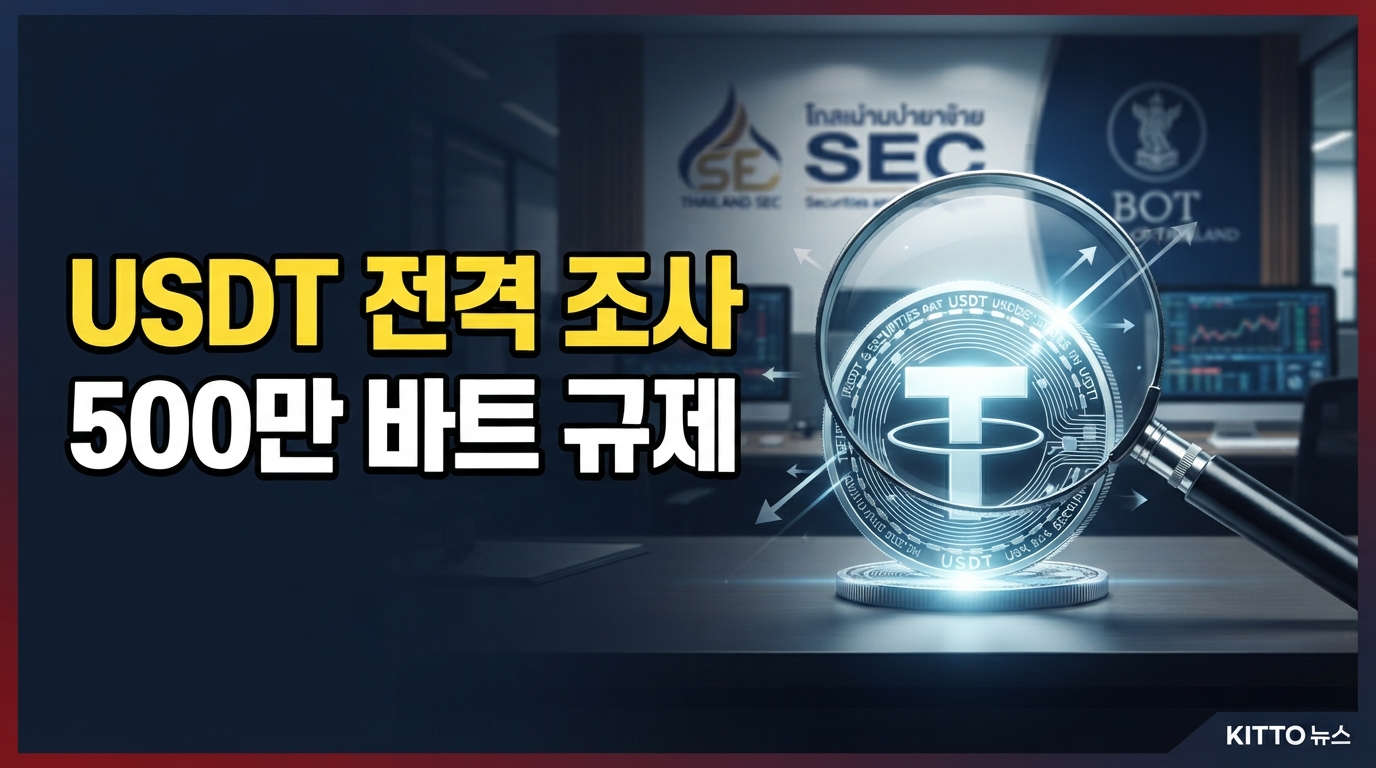
Thailand Targets Large USDT Transactions — Proof of Origin Required for Over 5 Million Baht
If you trade USDT in Thailand, there's some surprising news! The Bank of Thailand and the Securities and Exchange Commission have announced that starting in Q4, they will be closely auditing large-scale USDT transactions to root out the so-called 'gray economy.' I'll explain why Thai authorities are targeting this major stablecoin and what changes you can expect!
Why the sudden audit? 40% of traders are 'unlicensed foreigners'
There’s a good reason why Thai authorities have suddenly taken this step.
According to a report by BeInCrypto, an investigation conducted this January revealed a very interesting fact: a staggering 40% of the individuals selling USDT on local Thai platforms were unlicensed foreigners!
In essence, untraceable and untaxed funds were using USDT as a bridge to cross borders freely. It seems the Thai government could no longer overlook this massive hole in the 'gray economy.' Ultimately, this audit shouldn't be seen as a total ban on stablecoins, but rather as a signal of regulatory normalization intended to transparently monitor illicit capital flows.
The 5-million-baht threshold: Proof of source or funds get locked
The core of these measures, taking effect from Q4 2026, is very clear and strict.
First, there’s a new regulation on cash deposits: when an individual deposits large amounts of cash exceeding 5 million baht (approximately $150,000), they must provide documentation proving the legal source of the funds.
In tandem, the Bank of Thailand and the SEC are launching joint audits specifically targeting large USDT transactions. The plan is to track down and identify the true beneficial owners behind these trades. It is a stern warning that they intend to strictly close off dark channels used to bypass legitimate remittance routes or evade taxes.
Not a total ban, but a move to increase transparency
The key point here is that the Thai government is not trying to ban stablecoins entirely.
Rather, it is more about bringing illicit fund flows into the light to make the market much more transparent. For regular users who pay their taxes and trade through legitimate channels, this is not a cause for concern.
However, this will likely put significant pressure on some large-scale traders who prefer to stay anonymous or deal in funds with unclear origins. Financial authorities are tightening their surveillance net to prevent crimes like money laundering and illegal remittances.
What is the impact on Southeast Asian crypto liquidity?
Thailand is one of the major hubs in Southeast Asia where crypto assets are actively used. The recently announced 5-million-baht cash documentation requirement and the audit of the 40% of unlicensed foreign sellers should be viewed as part of a process to refine the market and make it more transparent, not as a total ban.
Once these regulations take full effect, it will likely trigger interesting ripple effects across the policies of neighboring Southeast Asian countries. We should keep an eye on how the over-the-counter (OTC) market reacts as it looks for regulatory blind spots, and how stablecoin liquidity within Thailand shifts. Let's keep watching together to see how the Southeast Asian market develops a healthy regulatory environment!
Related Links