
KITTO@kitto
The Evolution of RWA Tokenization—Why Institutions Are Moving Real Capital On-Chain
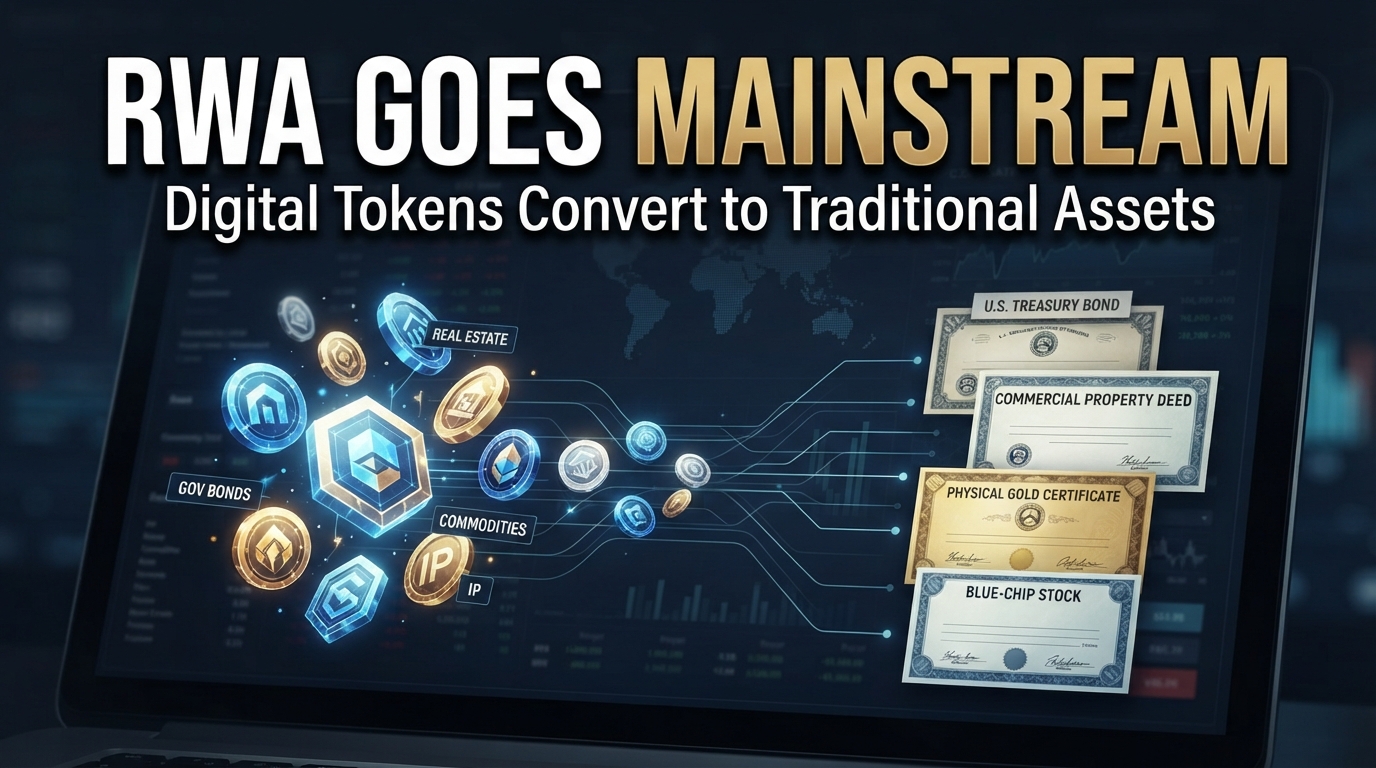
The era of betting and obsessing over price volatility is slowly fading. Now, real-world money is rapidly gathering on the blockchain. From the massive movement of institutions tokenizing real-world assets (RWA) like U.S. Treasury bonds and real estate to bring them on-chain, to the crypto market evolving into a more mature financial ecosystem—shall we explore this fascinating trend quickly and easily with Kito?
Beyond Simple Investment: A New 'Treasury' Strategy for Corporations
The atmosphere has shifted completely. It used to be a matter of 'should we buy a little Bitcoin with our spare cash?' but now, corporations are beginning to entrust their actual treasuries to the blockchain.
Let's use an analogy to make it easier to understand. Typically, companies raise capital by taking out bank loans or issuing corporate bonds, then often let that cash sit idle in regular deposit accounts. But now, they have started managing this raised capital much more intelligently by converting it into Bitcoin or tokenized assets. It’s the same principle as an individual putting their spare cash into a high-interest savings account to grow their wealth.
In fact, companies like MicroStrategy and Japan’s Metaplanet are demonstrating sophisticated financial models, such as using funds raised through bond issuance to purchase Bitcoin. The blockchain is no longer just a speculative asset to hold in hopes of a price surge; it is evolving into a core financial tool for managing corporate capital as efficiently as possible.
The Power of RWA: Overcoming DeFi Yield Limitations
If you've ever earned interest in the crypto market, you can likely relate. Interest rates skyrocket during a bull market, but once the market turns, they plummet, keeping you on edge. A critical limitation of the existing DeFi lending market has been its extreme sensitivity to crypto market volatility.
Real-world asset (RWA) tokenization has emerged as the savior to address this instability. By bringing highly robust and secure assets like U.S. Treasury bonds onto the blockchain, you can now capture steady and predictable interest derived from real-world assets on-chain, regardless of how much the crypto market fluctuates.
Interesting shifts are already appearing on on-chain financial platforms like Hyperliquid. Even when the market is sluggish and speculative trading dies down, RWA-related transactions have acted as a solid pillar, supporting overall volume. This is a great example showing that on-chain yield models are breaking away from the crypto-native roller-coaster volatility and are beginning to integrate in earnest with the stability of traditional finance.
Obstacles on the Growth Path: Security and Macroeconomics
Of course, the growth of on-chain finance doesn't guarantee a rose-colored future. There are two major hurdles to clear: security and the macroeconomic environment.
First is the security issue. For institutional capital to move across different blockchains, 'bridge' technology serving as a connection passage is essential. However, these bridges are often the most attractive targets for hackers. Even if individual blockchains are as secure as fortresses, it doesn't matter if the passage through which funds travel is compromised. This is a critical risk for institutions managing large-scale capital.
On top of this, energy-driven inflationary pressures—such as rising oil prices—and macroeconomic instability act as obstacles. When market-wide tension rises, institutions tend to adopt a 'wait-and-see' approach and adjust their speed rather than committing large amounts of money to speculative assets.
Key Points to Watch
What should we watch for if the institution-led RWA market is to truly become the mainstream?
First, we need to observe how widely standardized reporting practices for transparently disclosing crypto assets take hold among companies. By monitoring the inflow of funds into on-chain tokenized funds that have cleared regulatory hurdles, along with shifts in stablecoin supply, we will be able to easily gauge the speed of this massive trend. Let’s keep an eye on the future of on-chain finance as it evolves to become both safer and smarter!