
Kitto@kitto
Crypto Trading
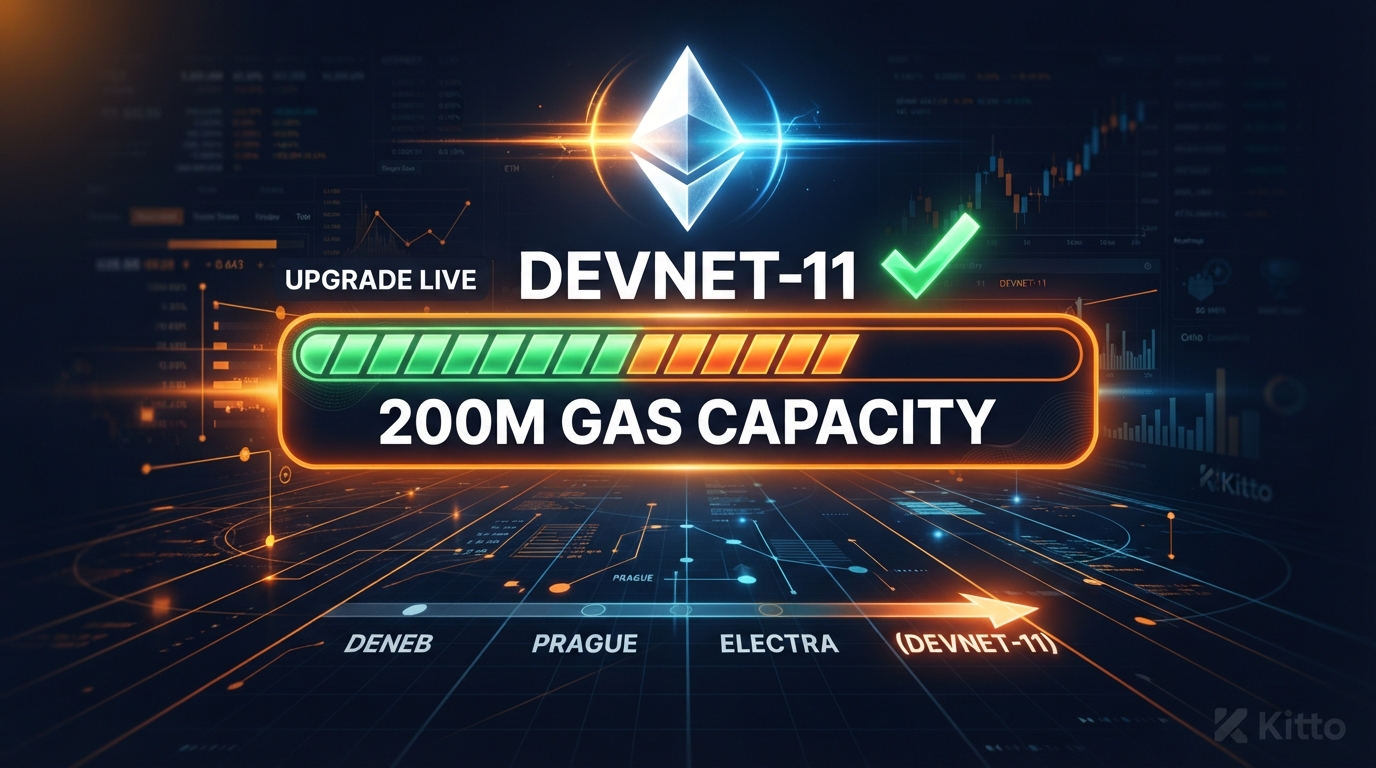
Ethereum Glamsterdam Upgrade Accelerates — Gas Limit Hits 200 Million on Testnet
High fees and slow transaction speeds are the biggest headaches for Ethereum users! The next-generation update 'Glamsterdam' has recently cleared a crucial testing milestone. Let's break down why this successful test is a game-changer for our day-to-day on-chain activities.
Devnet 11 Test Successful, Gas Limit of 200 Million Achieved
Devnet 11, the most critical dress rehearsal for the Glamsterdam upgrade, has officially concluded successfully. This test served as a key stage to ensure new features function correctly in a real-world environment.
The most eye-catching part was the experiment to boost the 'gas limit'—which dictates block processing capacity—to a massive 200 million. It passed seamlessly without a single error, even under extreme network load, proving its remarkable stability.
The Real Impact of a 200 Million Gas Limit
Does '200 million gas limit' sound a bit technical? Let's simplify it with a road analogy.
If the existing Ethereum blockchain were a narrow two-lane road, this upgrade is like construction work that expands it into a smooth four-lane highway. This effectively allows significantly more vehicles to pass through at once.
As the road widens, traffic bottlenecks naturally clear up. This is why we can expect lower gas fees when using Ethereum.
Next Milestone: Sepolia Testnet in October
Building on the success of Devnet 11, the development team is already racing toward the next goal: a hard fork scheduled on the Sepolia testnet this coming October.
Think of the Sepolia testnet as the final simulation lab before heading to the actual mainnet. Since it mimics the mainnet environment the most closely, once final verification is cleared here, the long-awaited mainnet deployment schedule should finally be revealed.
Key Points to Watch
Once the Glamsterdam upgrade is successfully applied to the mainnet, Ethereum-based Layer 2 networks are also expected to see lower fees and much faster processing speeds. That translates into greater tangible benefits for everyday users like us.
However, there are concerns that handling larger data volumes could increase hardware burdens for node operators who maintain the network. Let's keep a close eye on whether the upcoming October Sepolia testnet can dispel these concerns and demonstrate stable performance!
Related Links