
Kitto@kitto
Crypto Trading
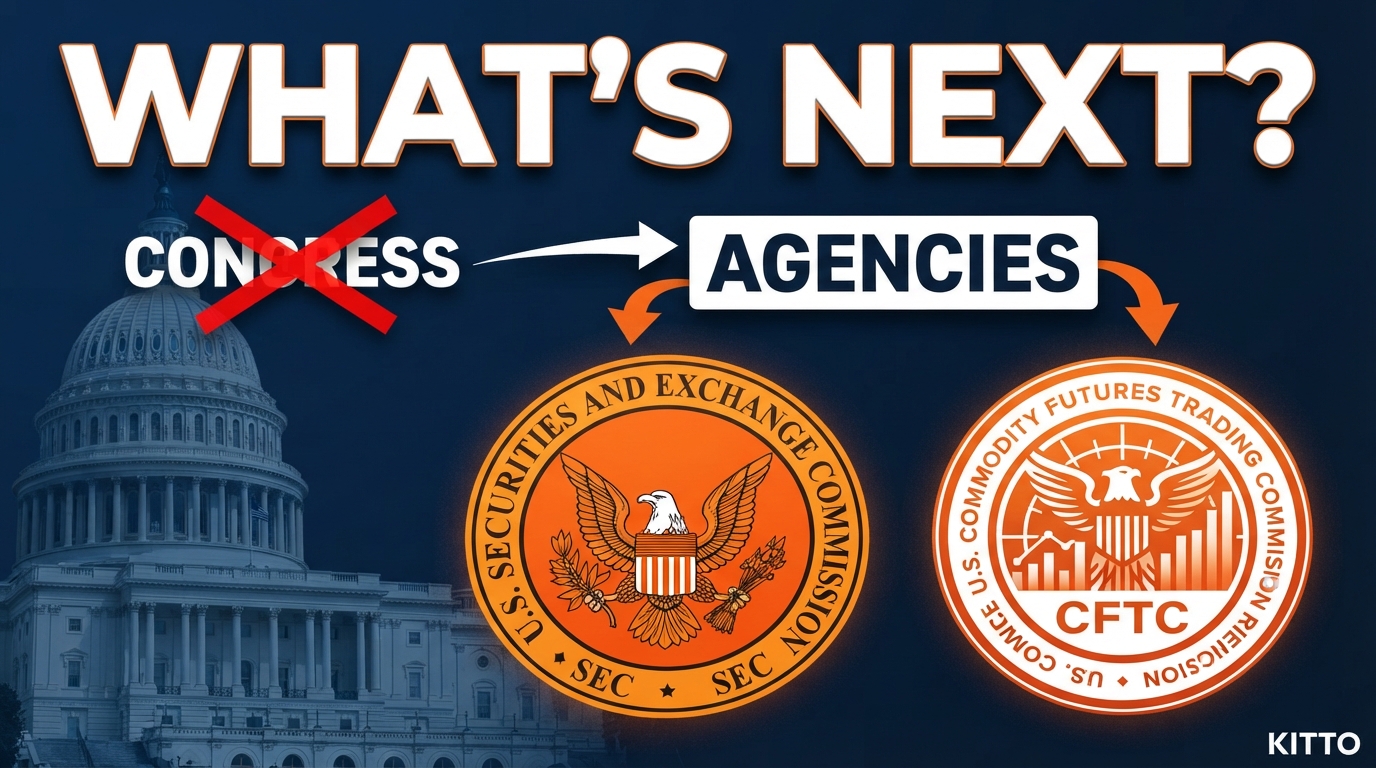
CLARITY Bill Fails — SEC and CFTC Take Direct Control of Regulation
The CLARITY bill, which had been highly anticipated by the U.S. crypto industry, ultimately failed to pass through Congress. There was significant concern that the collapse of such a massive omnibus bill would leave the market in a regulatory vacuum. However, it is too early to be disappointed. No sooner had Congress stalled than key U.S. financial regulators stepped up, ready to play their own cards and begin shaping the landscape themselves!
CFTC Proposes New Regulatory Framework Just Two Days After Bill Failure
The Commodity Futures Trading Commission (CFTC) was the first to roll up its sleeves as soon as the bill was scrapped.
Just two days after the congressional vote was rejected, on September 17, the CFTC demonstrated massive momentum by submitting a new crypto market regulation proposal to the White House Office of Information and Regulatory Affairs (OIRA). It sent a clear signal that since the legislature is stalled, administrative agencies intend to leverage their existing authority to take the lead in actively steering the market.
The CFTC’s plan is quite specific. Within the existing legal framework, they intend to classify cryptocurrency exchanges as a type of 'Designated Contract Market.' In simple terms, this means allowing legitimate leverage and margin trading under formal oversight. This could lead to a more dynamic market environment supported by safe, institutional-grade mechanisms.
SEC’s Surprise Move: Temporary Approval for Tokenized Stock Trading
The U.S. Securities and Exchange Commission (SEC) has not been sitting idle either. While continuing to pursue the crypto asset regulation proposal (Reg CA) it introduced in August, the SEC pulled a powerful surprise card: it invoked its 'innovation exemption' authority under existing law to temporarily permit the tokenization and trading of stocks on-chain.
In short, even without new legislation from Congress, the SEC has broadly interpreted its existing authority to issue a temporary pass for tokenized securities trading platforms to operate legally. As a result, a practical path has opened for the heavy, slow-moving U.S. capital markets to quickly migrate onto blockchain networks.
However, there are challenges to address before this on-chain stock trading can be fully integrated. As analyzed by asset manager T. Rowe Price, real efficiency can only be realized if tokenized stocks are perfectly compatible and instantaneously interchangeable with the existing traditional financial system.
Why Stablecoins Are Safe: The Treasury’s Solid Blueprint
So what happens to stablecoins, the reliable dollar-pegged backbone of the crypto market? Fortunately, even without the failed CLARITY bill, stablecoins have solid ground to stand on. This is because a very firm legal foundation, the 'GENIUS bill' passed in 2025, is already in place.
Based on this law, the U.S. Treasury Department pre-announced an executive order last August detailing the specific rules that Payment Stablecoin Issuers (PPSI) must follow. It established meticulous guidelines regarding the types of reserves issuers must securely maintain and how they should obtain licenses.
Ultimately, even though the massive omnibus bill stalled in Congress, stablecoin regulation is continuing to roll forward on its pre-determined track as planned.
Not a Regulatory Void, but the Start of an Agency-Led Golden Age
Although Congress’s grand plan has fallen through, the pace of rule-making for the crypto market is actually accelerating. According to Stocktwits, Michael Saylor also analyzed that this bill's failure could be a positive turning point. He explained that guidelines flexibly issued by practical regulatory agencies, rather than a forced, massive omnibus bill, might be more conducive to industry growth.
Now, the next points to watch are clear: how the White House evaluates the CFTC’s new regulatory proposal, and whether the on-chain stock trading platforms enabled by the SEC can successfully establish themselves in the market. Let's keep a close watch together!
Related Links