
Kitto@kitto
Crypto Trading
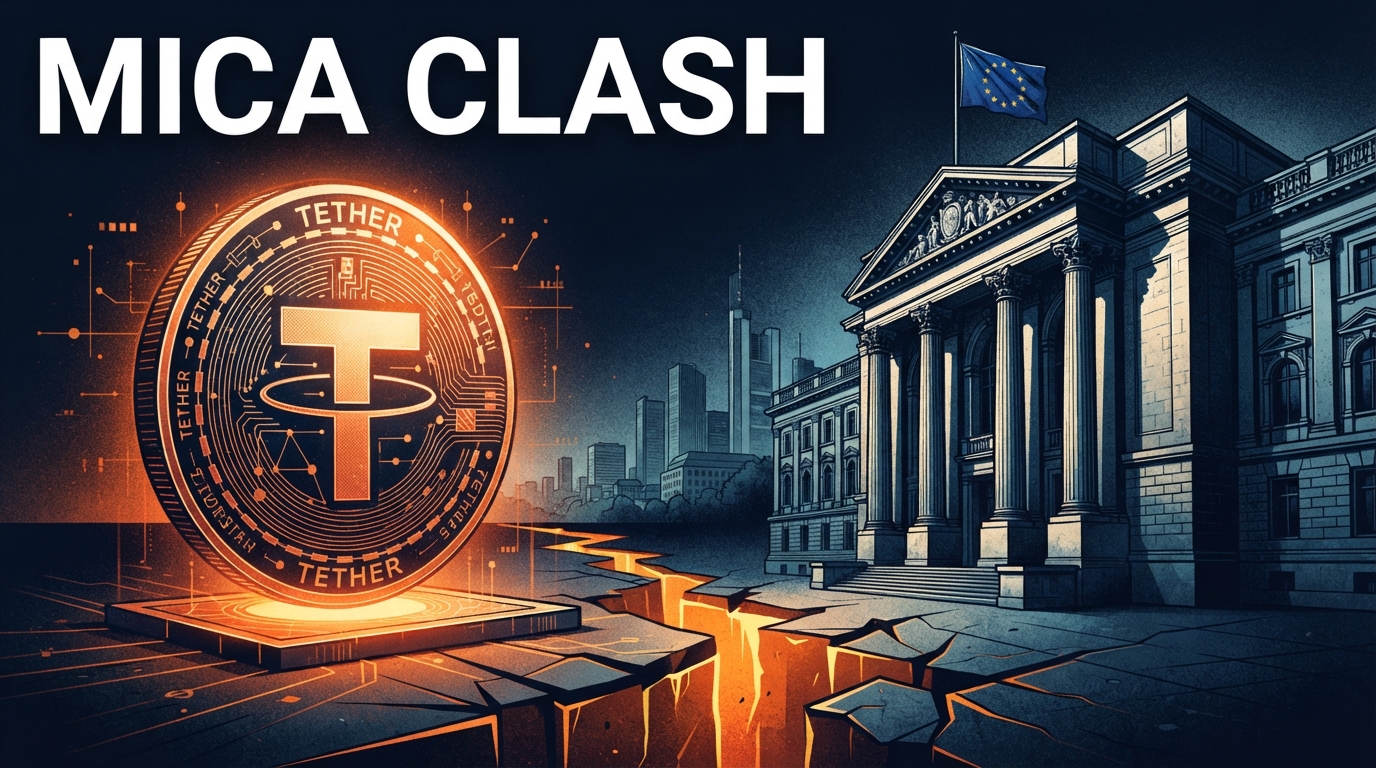
Tether Rejects EU MiCA Regulations — Head-on Collision with ECB Exit Demands
The market is heating up as Tether, the world's number one stablecoin issuer, declares it will not comply with the European Union's crypto regulation, MiCA. The European Central Bank (ECB) has taken a hardline stance, stating that those who fail to meet these regulations must be removed from the European market. We'll give you a quick and easy breakdown of why this tense tug-of-war between regulators and Tether, the heartbeat of the crypto market, has begun.
It Starts with the 'Reserve Deposit' Ratio — What Exactly is the Problem?
The core of this conflict is quite simple: it's about where to keep the 'reserves' that guarantee the value of stablecoins.
According to reports from BeInCrypto, the EU's MiCA regulation requires stablecoin issuers to keep a significant portion of their reserves in commercial banks. From the regulators' perspective, they can only rest easy if the money is safely locked away in authorized banks.
However, Tether sees it quite differently. Tether has refused to seek a license, pointing out that the traditional banking system itself is unstable. Their logic is that if a bank holding the reserves were to go bankrupt, the entire stablecoin ecosystem could collapse along with it.
ECB's Warning — We Must Protect the Banking System
However, policymakers, including the European Central Bank, have the exact opposite view. According to BeInCrypto, they are worried that if massive stablecoins like Tether operate in regulatory blind spots, any potential bank run could spark a contagion that spreads to the traditional banking system.
The ECB maintains that the safety of the financial market is the top priority. That is why they are proposing to tighten regulations by adjusting bank deposit ratios more strictly. Effectively, they are taking a hardline stance that issuers unable to meet these standards must exit the European market.
Ultimately, a very intense tug-of-war has begun between the central bank, which wants to ensure they are firmly within a regulatory framework, and Tether, which is keeping its distance by citing the instability of the traditional financial system.
Future Impact — Where Will European Users Go?
If the standing of USDT, the undisputed #1 in the European market, is shaken, who will fill that void?
European users are highly likely to turn their attention to other stablecoins that strictly comply with regulations. This opens up a tremendous opportunity for competitors that have met MiCA requirements and secured licenses. In fact, predictions are already circulating that other regulation-friendly assets will benefit from this in the European market.
At the end of the day, this conflict is not just about regulation. It is a landmark case that demonstrates the deep divide in values between regulators aiming to preserve financial system stability and the crypto industry aiming to push beyond the limitations of legacy financial networks. How the European market landscape changes remains to be seen, and the staring contest between existing players and new challengers is expected to intensify.
Signals to Watch Going Forward
There are two key points we need to keep an eye on. Can Tether find a clever workaround to keep its European users? And when MiCA regulations are fully enforced, will European exchanges actually take the plunge and completely stop supporting the trading of the flagship stablecoin, USDT? We will have to wait and see.
This conflict is not just a problem for the European market. The precedent set here could become an important benchmark for global stablecoin regulations in the future. Let's keep watching together to see how this intense standoff between Tether and the EU ultimately shifts the crypto market!
Related Links