
KITTO@kitto
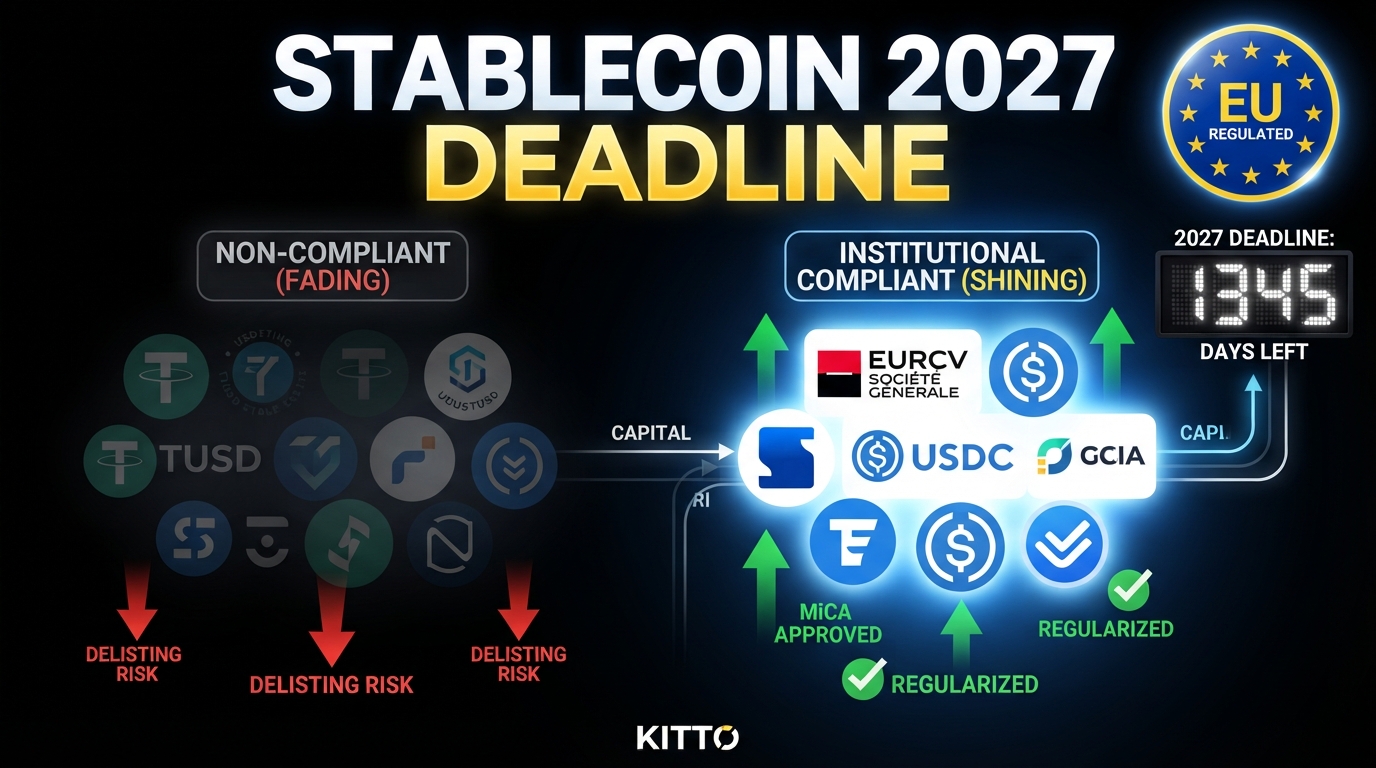
EU ESMA Sets 2027 Deadline to Phase Out Unauthorized Stablecoins
European financial authorities have set a final deadline of January 8, 2027, to completely phase out stablecoins that fail to meet regulatory standards from the market. This isn't just a recommendation; by pressuring providers to halt both custody and transfer services, a major shift in crypto liquidity is expected. Here’s a quick breakdown of why this move is critical for DeFi users and the global crypto market.
The Significance of the 2027 Deadline Set by EU ESMA
The January 8, 2027, deadline proposed by the European Securities and Markets Authority (ESMA) is far more than a simple recommendation. It is a clear final cutoff for ending all services related to stablecoins that do not comply with the Markets in Crypto-Assets (MiCA) regulation.
This announcement is gaining significant attention because its impact goes beyond just delisting coins from exchanges. Regulatory pressure will directly affect the custody and transfer of unauthorized stablecoins, as well as the DeFi platforms and service providers that utilize them.
Simply put, stablecoins that fail to meet these requirements are increasingly likely to lose their place in the European market. This could mark a critical turning point as the entire crypto ecosystem rapidly realigns with institutional standards.
The Impact on DeFi and Market Liquidity
The DeFi ecosystem, which has used unauthorized stablecoins as key collateral or trading pairs, now faces a major challenge. As liquidity for these non-compliant assets dries up, lending and trading protocols built upon them will need to swap their supported assets or undergo massive structural overhauls.
Ultimately, market capital is likely to shift rapidly toward authorized, regulated stablecoins. We are witnessing the emergence of approved assets, backed by institutional infrastructure, as the new center of liquidity.
Consequently, the liquidity gap between regulated, authorized assets and unauthorized ones is expected to widen. The key thing to watch is how quickly DeFi protocols can pivot to regulatory-compliant assets before the 2027 deadline.
Polarization Between Institutional and Non-Institutional Assets
Global financial institutions and licensed exchanges are already rapidly expanding their regulation-friendly infrastructure.
According to The Block, Standard Chartered has launched institutional custody services for Ripple's RLUSD stablecoin. Additionally, Cointelegraph reported that Kraken's parent company has secured a license from Dubai's Virtual Assets Regulatory Authority (VARA) to expand local services.
Assets that meet clear regulatory standards are integrating with institutional finance and absorbing liquidity. Conversely, as unauthorized assets find fewer places to operate, the crypto market is poised to accelerate toward a polarized state, clearly divided between compliant and non-compliant assets.
Key Points to Watch Moving Forward
The crypto market's liquidity landscape is set to undergo a massive reshuffle leading up to the January 2027 deadline. We need to closely monitor news about major exchanges gradually discontinuing support for unauthorized stablecoins and the activities of issuers securing new regulatory licenses. Let's keep an eye on how quickly DeFi liquidity shifts toward authorized assets!
Related Links