
KITTO@kitto
Crypto Trading
How Tokenized Equities Work: Inside Securitize's Push on Solana
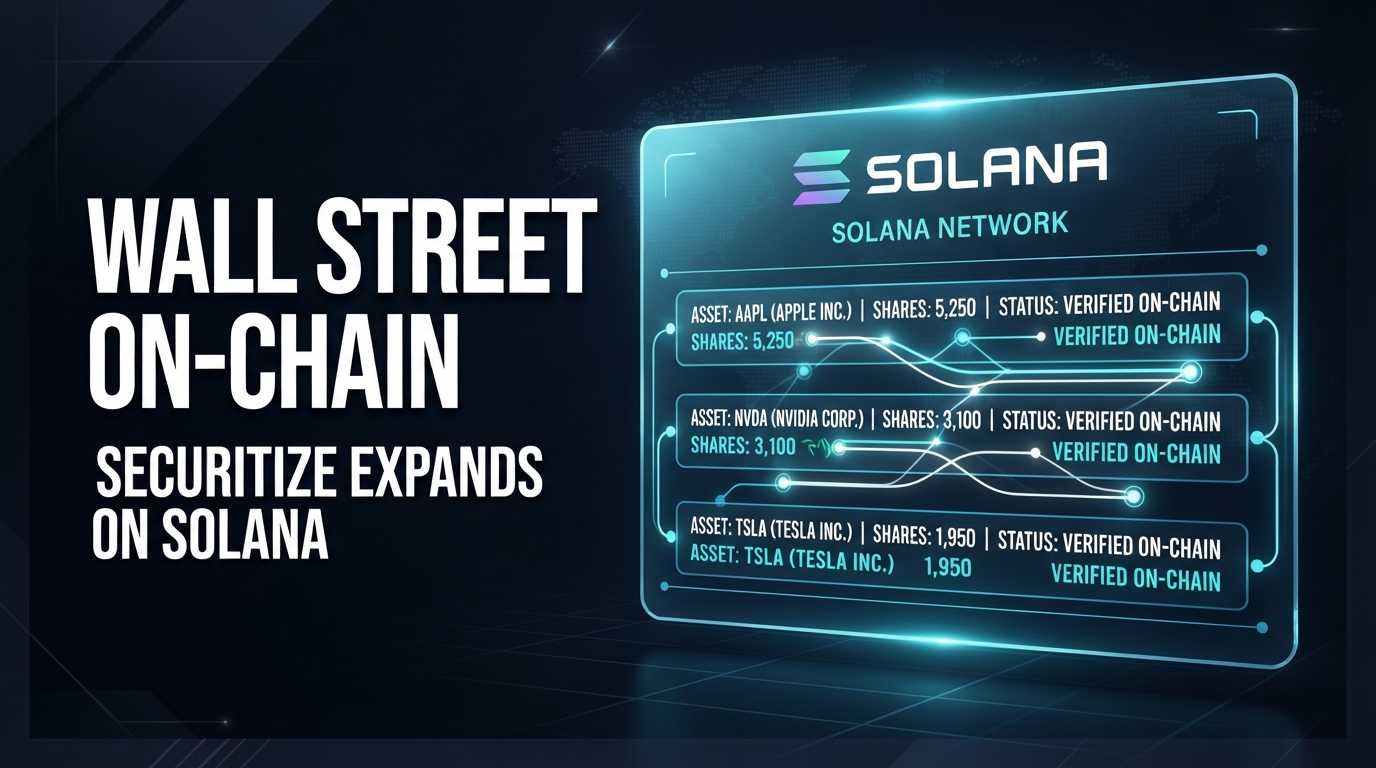
Real-world asset tokenization is moving past yield-bearing Treasuries and stepping directly onto public order books. Securitize launched "Securitize Stocks" on Solana, issuing 1:1 share-backed security entitlements for 12 major U.S. corporate giants, including Apple, Nvidia, Tesla, SpaceX, and Circle. Settled in USDC with institutional market making handled by Jump Trading, the deployment brings around-the-clock equity settlement into the high-speed decentralized finance arena.
On-chain data indicates that Solana addresses holding tokenized shares have already crossed 1.4 million, representing roughly $485 million in total balances. As institutional tokenization accelerates across major ecosystems, understanding how this infrastructure operates—and where its structural boundaries lie—has become essential.
What Securitize Stocks Actually Are
Unlike synthetic price trackers or perpetual contracts pegged to stock quotes, these tokens represent legal security entitlements anchored by actual custodial shares under Uniform Commercial Code Article 8. When an investor purchases a tokenized share of Apple or Nvidia, a regulated custodian holds the underlying physical equity in traditional storage while minting an equivalent on-chain certificate.
Transactions settle instantly in USDC instead of waiting for standard two-day equity clearing cycles. Because trading executes on the Solana blockchain, global qualified market participants can theoretically move into or out of blue-chip positions at any hour of the day or night, bypassing standard trading floor bells.
The Broader Shift: Turning Stocks into Composable Capital
Securitize's launch arrives alongside a wider industry push to embed real-world collateral directly into decentralized money markets. On BNB Chain, infrastructure provider De¹ rolled out "Tokenized Asset World," an execution framework designed to plug tokenized equities and real assets into automated lending, collateralization, and borrowing across protocols like PancakeSwap, Venus, and ListaDAO.
Institutional researchers are tracking this migration closely. In an October analysis, Tiger Research projected that South Korea's tokenized asset and stablecoin market could swell to 360 trillion KRW (roughly $253 billion) by 2030, driven by declining retail spot exchange revenues and financial institutions preparing asset settlement networks ahead of formal 2027 regulatory rollouts.
Bull Case vs. Bear Case
From a bullish perspective, moving equities onto public rails solves chronic frictions in legacy finance: rigid banking windows, delayed settlement times, expensive cross-border wire transfers, and siloed collateral. If tokenized shares become accepted margin across DeFi protocols, capital efficiency could rise dramatically for global investors seeking 24/7 liquidity.
From a cautious viewpoint, tokenized stocks remain tied to centralized custody, legal jurisdictions, and compliance gatekeeping. A token holder does not hold raw private equity certificates in a cold wallet; they hold a claim against a centralized custodian. Regulatory scrutiny also introduces friction: while institutional rails expand with planned connections toward exchange systems like NYSE digital initiatives, consumer protection agencies in several jurisdictions, including recent alerts from Shenzhen authorities, continue warning investors about fraudulent schemes masking as legitimate real-world asset platforms.
What to Monitor Next
The most important signal to monitor is secondary market liquidity. While more than a million wallets hold tokenized equity positions, aggregate balances remain modest compared to traditional equity desk volumes. Market watchers should track whether daily on-chain volumes continue to scale beyond initial distribution spikes, how quickly traditional clearing venues integrate digital share rails, and whether major DeFi lending pools formally whitelist regulated equities as borrowing collateral.