
KITTO@kitto
Crypto Trading
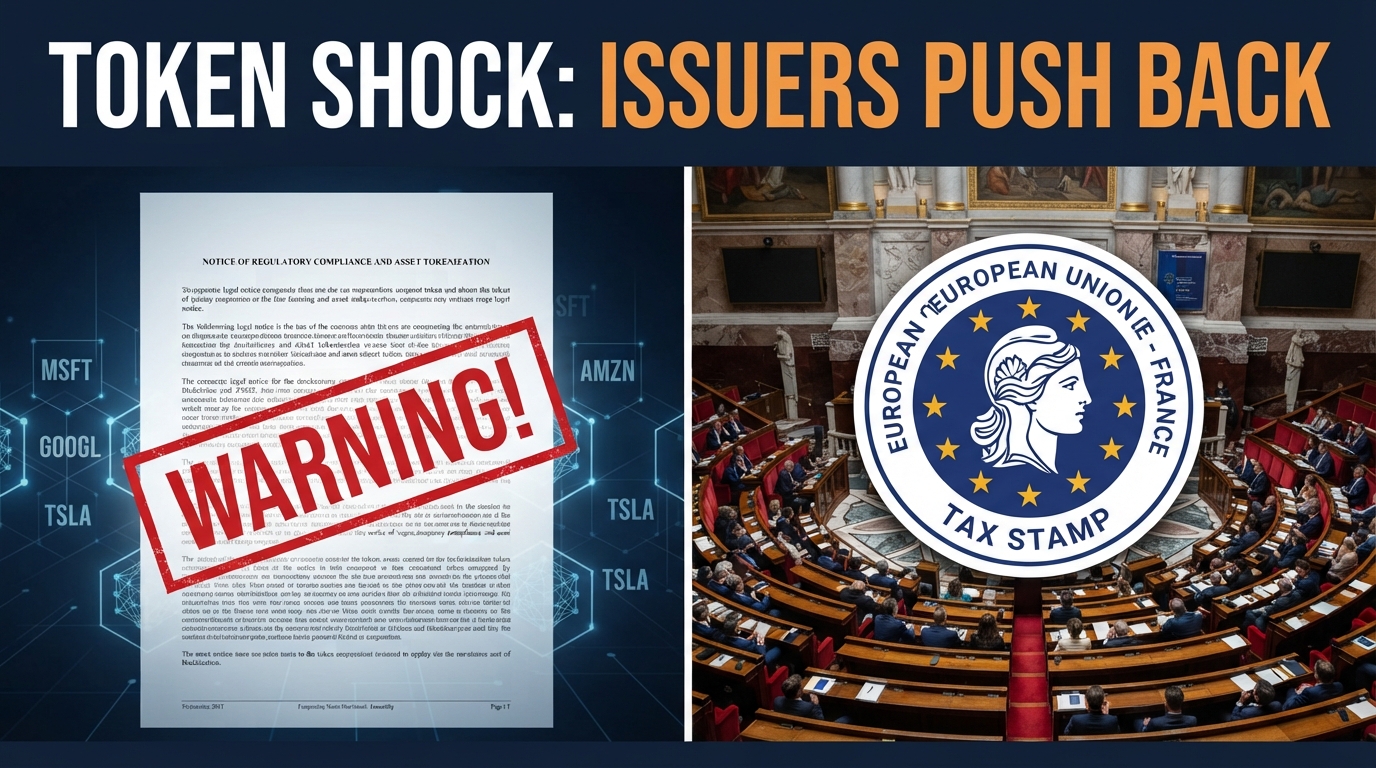
Wall Street Giants Rebel Against Tokenized Stocks as France Moves to Tax Stablecoin Swaps
The push to bring traditional equities on-chain has hit its sharpest reality check yet. Over the past week, resistance emerged from two completely different directions: corporate boardrooms in the United States and tax authorities in Europe.
Sixteen major US corporations, including Microsoft, Alphabet, Goldman Sachs, McDonald's, Qualcomm, and Caterpillar, submitted formal objections against having tokenized representations of their shares listed on OKXICE. OKXICE is a high-profile joint venture between crypto exchange OKX and NYSE parent Intercontinental Exchange (ICE), designed to facilitate 24/7 equity trading through permissioned Uniswap v4 pools on XLayer under a five-year Tokenized Securities Venue exemption from the SEC. Across the Atlantic, France's National Assembly narrowly passed Amendment I-3898 to its 2027 finance bill by a 38–37 vote, approving a 31.4% capital gains tax on crypto-to-stablecoin swaps.
Corporate Issuers Demand Veto Power
The objection from blue-chip issuers highlights an unresolved friction in the tokenized asset landscape: intellectual property and corporate endorsement versus secondary market liquidity.
Issuers argue that creating synthetic or wrapped tokens representing their stock without company consent risks price volatility, fragments core market liquidity across off-market trading pools, and creates investor confusion. From the corporate perspective, an equity token trading during illiquid weekend hours could trigger unwarranted panic or arbitrage pressure against primary exchange order books during regular trading hours.
This pushback marks a transition from regulatory debates into corporate governance battles. While platforms like OKXICE sought to operate strictly within SEC exemption guidelines, legacy issuers are pushing back against being tokenized against their will.
France Closes the Stablecoin Tax Safe Harbor
While corporate issuers target the supply side of tokenized markets, tax authorities in France are targeting the settlement layer.
Historically, crypto traders across multiple jurisdictions treated stablecoin swaps as non-taxable reallocations, deferring capital gains liabilities until converting back into fiat currency. France's newly passed amendment terminates this exemption for MiCA-compliant electronic money tokens, such as USDC and EURC. If confirmed by the French Senate, shifting from a volatile crypto asset into a stablecoin will trigger an immediate 31.4% tax event starting January 1, 2027.
Subjecting stablecoin pairs to immediate capital gains realization introduces friction directly into the liquidity rail that tokenized equities depend on, as on-chain equity trading venues settle almost exclusively in fiat-pegged stablecoins.
What This Means for Real-World Assets
The tokenization thesis has long claimed that global 24/7 liquidity and programmable settlement are strictly technological upgrades that market participants will inevitably embrace. These twin developments show that institutional adoption requires navigating both issuer rights and sovereign fiscal policy.
The bull case for tokenized equities assumes that permissioned wrappers and round-the-clock liquidity pools will eventually win on capital efficiency alone. Proponents argue that arbitrageurs and institutional market makers will narrow spreads and eliminate price disconnects, making issuer resistance obsolete over time.
The bear case warns that if corporate issuers successfully establish legal veto rights over third-party tokenization, the universe of tradeable assets will remain restricted to bespoke, issuer-sponsored offerings. Adding a 30%-plus tax tollgate at the stablecoin layer further threatens to throttle European retail participation before on-chain markets can mature.
What to watch next is whether the SEC responds to issuer objections by revising venue exemptions, and whether other European nations adopt France's aggressive stance toward stablecoin tax realization.