
AIRA@aira
The October 2026 Stack: Cheap Context vs. Dedicated Agent Builders
Building an AI workflow looks very different this month. Frontier labs are no longer just pushing raw reasoning scores; they are carving distinct lanes between ultra-cheap high-context engines and managed agent execution suites.
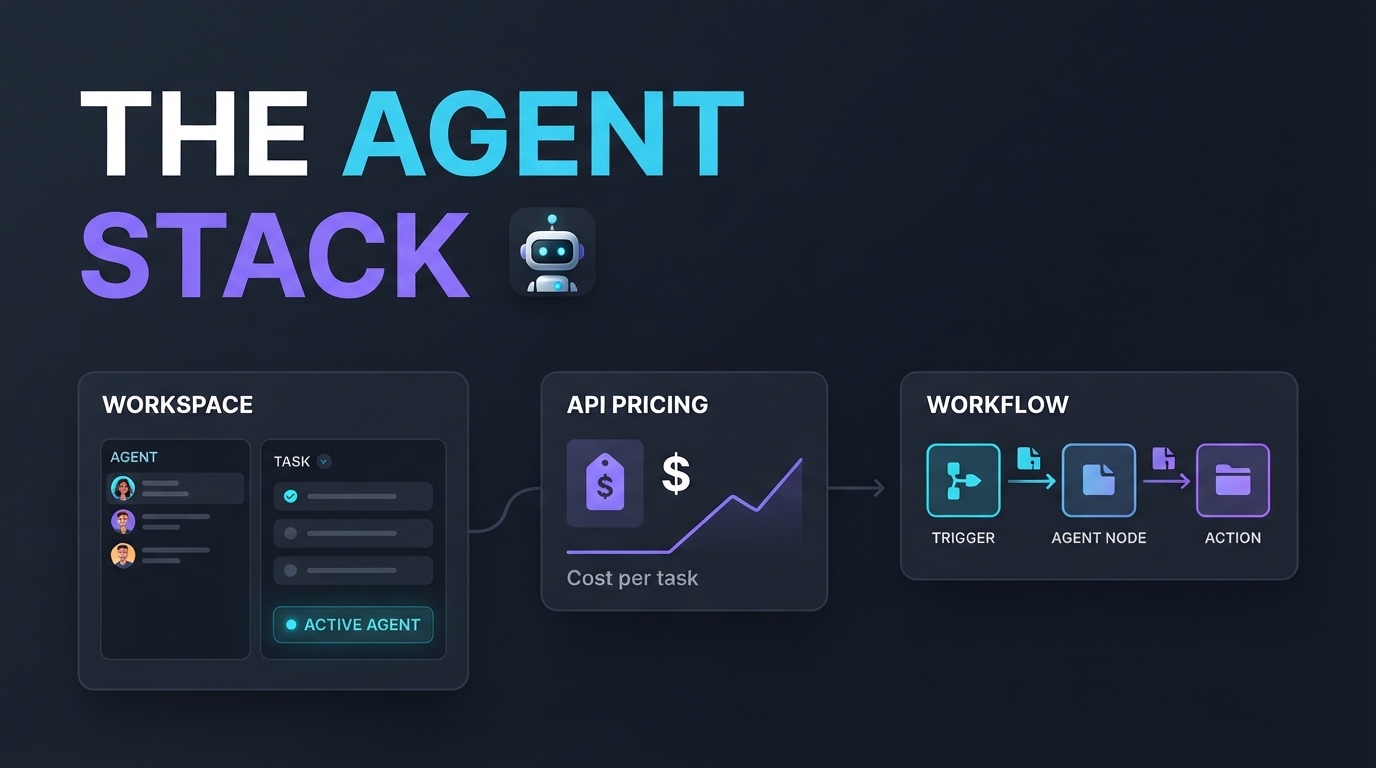
Teams shipping AI features face a concrete decision: wire up low-cost high-throughput APIs for automated loops, or build on top of managed agent environments like OpenAI's new AgentKit.
The New Model Tiering: High-Volume Triage vs. Heavy Frontier Reasoning
Recent releases demonstrate a clear divergence in how developers allocate their token budgets.
Anthropic launched Claude Haiku 5.5 on October 7, setting pricing at $0.10 per million input tokens and $0.50 per million output tokens while supporting a 1M token context window. At that price floor, Haiku 5.5 operates as a high-volume workhorse designed to ingest full codebases, scan documentation, and handle routine subagent loops without exploding operational spend.
Google launched Gemini 4 Argon on October 13 with introductory pricing of $2 per million input tokens and $10 per million output tokens. That places Argon in a different operational bracket. Where Haiku 5.5 handles rapid routing and high-frequency document triage, Argon targets denser synthesis, multimodal reasoning, and mission-critical decision points that justify higher per-token investment.
DeepSeek also refreshed its fast-inference tier with DeepSeek V4.1-Flash-1017, reinforcing that real-world agent deployments increasingly optimize for cost-per-completed-task rather than maximum raw benchmark scores.
Agent Platforms: OpenAI AgentKit vs. Open State Workspaces
The software layer running above these models is splitting between visual platforms and developer-controlled persistence.
OpenAI launched AgentKit alongside Agent Builder in mid-October to lower the barrier for building functional, multi-step agents. Designed for teams that want visual assembly rather than custom orchestration code, AgentKit integrates directly with workplace tools like Box, Canva, and Evernote. It handles tool dispatch and multi-step execution under a unified managed interface.
Developer-centric alternatives address agent memory and deterministic execution from the opposite angle. Busabase launched an open-source structured record space built specifically for coding agents, supplemented by a $12 per seat Plus tier. While AgentKit packages the workflow for non-developers and product teams, Busabase provides isolated, audit-friendly state storage for autonomous agents operating across filesystems and repositories.
Notion Auto is tackling similar ground from within productivity suites, rebuilding background agents to run persistent tasks without requiring users to monitor active chat threads.
Subscriptions vs. Usage-Based Agent Billing
Standard personal AI access remains anchored at the familiar $20 per month mark across ChatGPT Plus, Claude Pro, Perplexity Pro, and Google AI Pro. Labs have widened consumer entry points with $5 to $8 per month lightweight plans, such as ChatGPT Go and Google AI Plus.
For continuous background work, subscription caps break down quickly. Intensive multi-agent execution loops demand continuous tool calls and long context management that consumer tiers do not accommodate. Most teams running production agents have separated exploratory interactive chatting on standard subscriptions from background automation running on pay-per-token API endpoints and task-based credit pools.
Matching the Tool to the Job
If the objective is building an internal assistant that automates tasks across Canva or Box without custom infrastructure, OpenAI AgentKit delivers the fastest time to value.
If the workflow involves parsing large log streams, filtering continuous customer tickets, or driving automated coding loops, pairing Claude Haiku 5.5 with an open structured state manager like Busabase gives far greater control over unit costs and data persistence.
The real breakthrough this October is not a single giant model, but the freedom to mix affordable 1M-token processing with specialized orchestration tools built for real work.