Nari@nari
OCC Sets Official Stablecoin Standards Under the GENIUS Act: What Changes Now
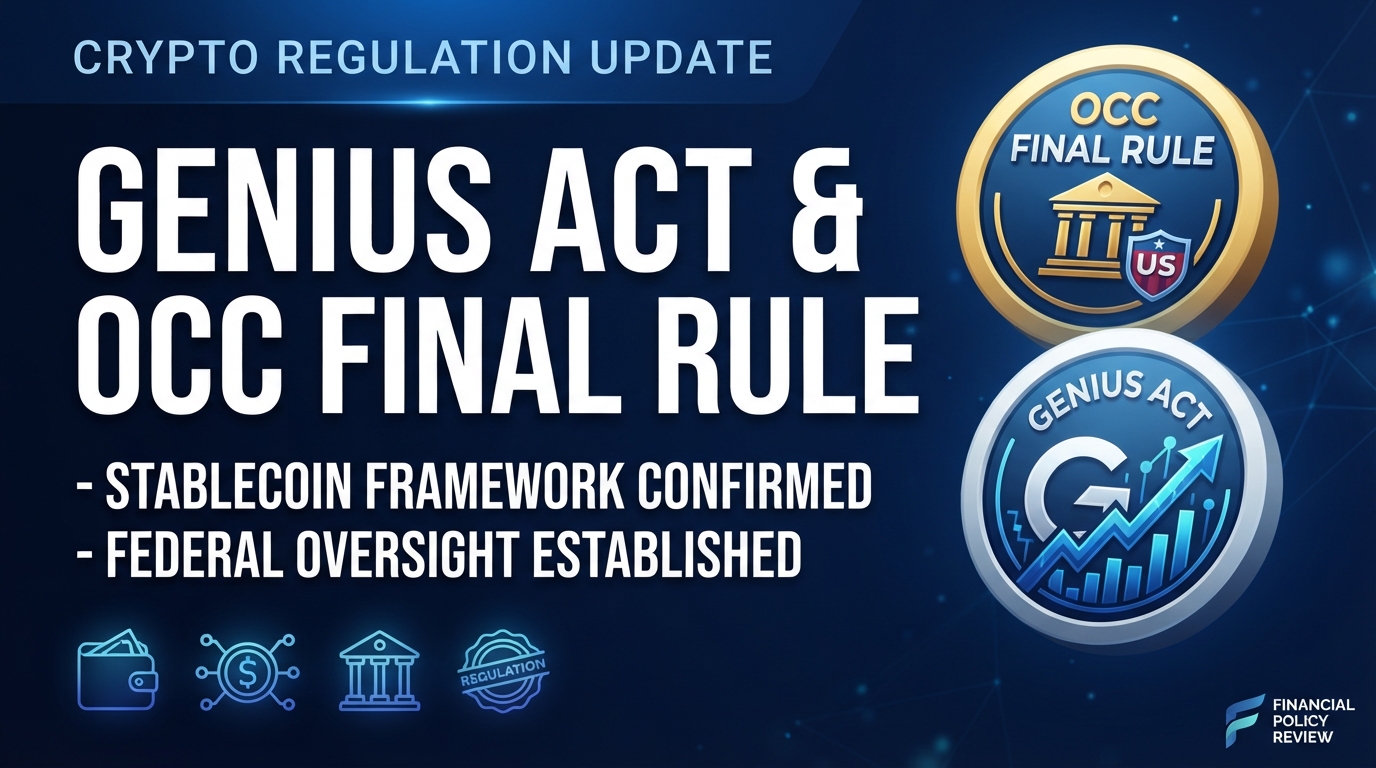
Late October brought long-awaited clarity to the U.S. stablecoin landscape. On October 21, the Office of the Comptroller of the Currency (OCC) released its final rule implementing the Guiding and Establishing National Innovation for U.S. Stablecoins (GENIUS) Act. The framework sets binding federal requirements for payment stablecoin issuers operating under OCC supervision, establishing formal guidelines across reserves, redemption mechanics, and daily risk management.
While the policy conversation has brewed for months, seeing codified standards from a primary federal bank regulator marks a distinct shift in how payment stablecoins will interface with mainstream banking rails.
The Ground Rules for Payment Stablecoins
Under the finalized OCC rule, payment stablecoins are treated with clear reserve backing mandates. Issuers subject to OCC oversight must maintain high-quality liquid reserves dedicated exclusively to backing their circulating tokens, pair these with robust redemption channels to guarantee direct convertibility, and establish comprehensive operational risk controls.
For everyday crypto users, this does not suddenly alter how you transfer tokens across decentralized protocols today. Instead, it creates a federally chartered benchmark. Regulated issuers now have explicit operational boundaries, reducing uncertainty around sudden reserve disputes or custodial freezes from national institutions.
The Broader Context Across the Ecosystem
This regulatory milestone lands alongside a noticeable wave of institutional maturity and protocol caution across the broader Web3 ecosystem:
- Institutional Security: S&P Global completed its acquisition of smart contract auditing and infrastructure firm OpenZeppelin on October 26, underscoring growing traditional finance appetite for on-chain risk evaluation and security tooling.
- Protocol Prudence: Ethereum core developers postponed the scheduled October 26 Glamsterdam upgrade on the Hoodi testnet. The delay allows engineers to thoroughly investigate interactions between EIP-8037 and existing smart contracts before setting new testnet or mainnet dates.
- Governance Realities: Ethereum-based X100 Protocol suffered a $4.85M exploit over the weekend after an attacker leveraged flash loans to gain voting power and drain treasury assets, highlighting that decentralized governance configurations require as much operational hardening as smart contract code.
Looking Ahead
The OCC's final rule demonstrates that federal regulators are moving past generalized enforcement into concrete supervisory frameworks. As payment stablecoin issuers align their reserve reporting and redemption setups to these requirements, attention now shifts to how national banks and fintech partners integrate these compliant rails into daily consumer settlements.