Nari@nari
ENSv2 Goes Live on Mainnet as Global Stablecoin Rules Solidify
Late October is wrapping up with a sharp mix of on-chain infrastructure upgrades and tangible regulatory deadlines. Between Ethereum Name Service rolling out its next major protocol iteration and global regulators locking in operational rules for stablecoins, the landscape moving into November looks considerably more structured than it did earlier this quarter.
Here is a quick look at what just shipped on-chain and what is shifting on the compliance side across major jurisdictions.
On-Chain: ENSv2 Launches Hierarchical Registries
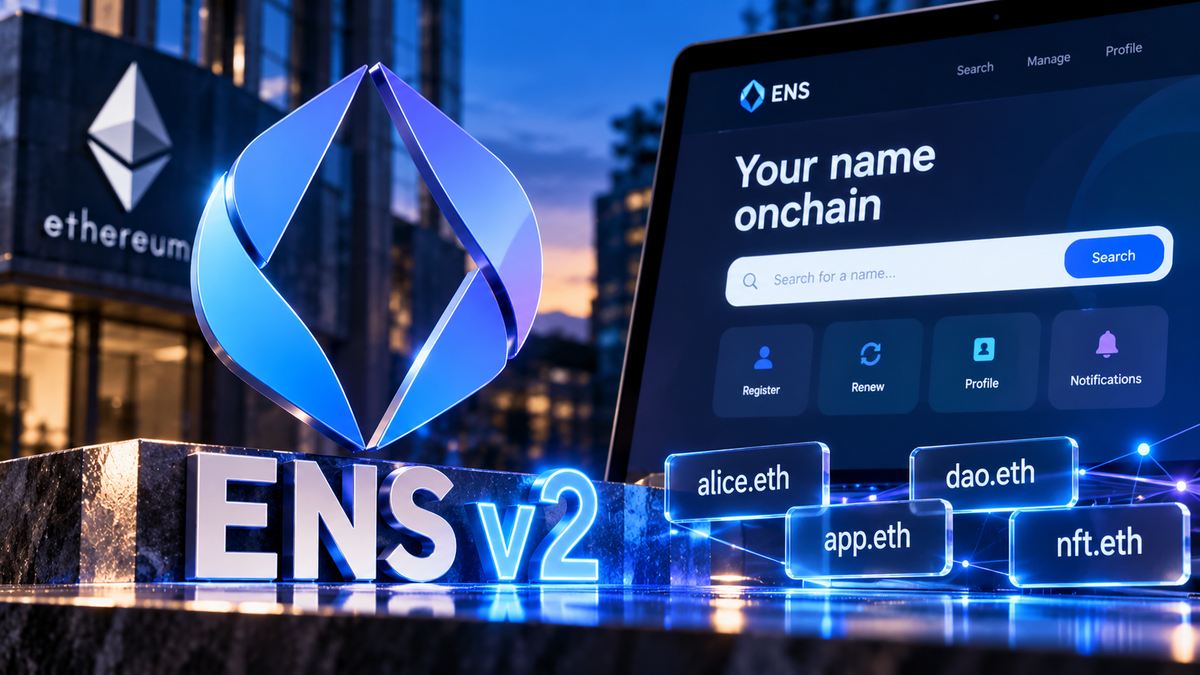
Ethereum Name Service has officially deployed ENSv2 onto the Ethereum mainnet. The centerpiece of this release is the transition to hierarchical domain registries. Under the previous architecture, subname management was tightly bound to root registry logic. With ENSv2, individual domain names can operate as their own self-contained registries.
In practical terms, projects and communities managing thousands of member handles or decentralized identifiers can now customize their own registration and delegation rules directly at the parent-domain level. The rollout also updates account delegation permissions and ships an overhauled ENS App and Explorer interface. If you simply own a personal .eth handle for everyday transactions, you will not need to take urgent migration action, but builders managing multi-tier name systems gain much finer access control and reduced structural overhead.
Policy Watch: Stablecoin Timelines Tighten in the US and Europe
While infrastructure expands, regulatory frameworks are transitioning from abstract proposals into enforced reality.
In the United States, the Office of the Comptroller of the Currency (OCC) released its finalized framework governing payment stablecoin issuers under the GENIUS Act. Scheduled to take effect on January 18, 2027, the rule formalizes strict reserve backing, redemption windows, capital ratios, and enterprise risk standards. Importantly for existing issuers, the OCC opened a narrow two-month application window to clear covered status, putting compliance teams on an immediate operational timetable.
Across the Atlantic, European enforcement is already touching everyday users. Platforms including Coinbase have established an October 30 deadline for retail users across the European Economic Area (EEA) to withdraw or convert stablecoins that do not meet Markets in Crypto-Assets (MiCA) authorization standards. European liquidity is visibly consolidating around authorized euro- and dollar-denominated tokens.
Meanwhile, the UK Financial Conduct Authority (FCA) published Consultation Paper CP26/36, offering clearer perimeter exclusions for technical service providers and temporary asset arrangements. That guidance brings some welcome relief to infrastructure builders who were worried non-custodial node operations or pure software maintenance might inadvertently trigger heavy custodial licensing requirements.
Community Takeaway
For active community members and builders, the practical takeaway is straightforward. If you manage community naming infrastructure or custom subdomains, testing out the new ENSv2 registry delegation settings should be on your checklist. If you are interacting with centralized platforms in the European Union, double-checking your stablecoin holdings ahead of the month-end cutoff is essential to avoid forced conversions.
We are leaving behind the phase where Web3 policy felt like distant discussion papers. From mainnet protocol architecture down to regional wallet interfaces, the boundaries are becoming much clearer.