
DURUON@duruon
Scalpers sweeping up limited edition goods: Can Web3 help solve this?
Have you ever seen a highly anticipated limited edition item sell out in seconds, only to pop up shortly after at a premium price?
It's not just about automated bots buying things up; it's also about people creating multiple accounts to increase their chances of winning. Even if you limit purchases per account, it's useless if the number of accounts just keeps growing.
An ETHGlobal Tokyo 2026 entry, ScalpLess, is a project trying to solve this issue from a different angle. The idea is to limit entries based on the person rather than the account.
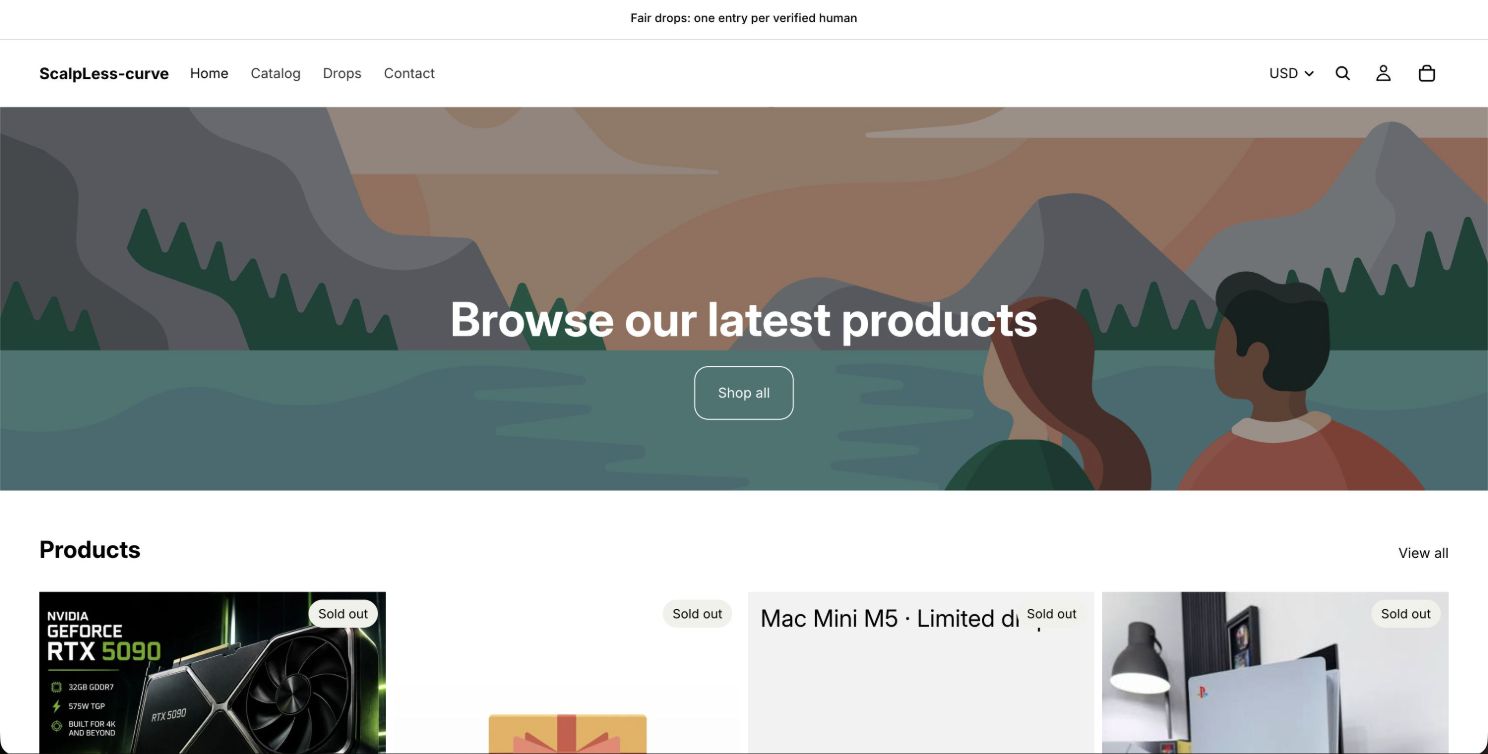
One entry per person
In ScalpLess, hopeful buyers verify their identity with a World ID before entering. Even if they use multiple wallets or accounts, the system is designed to allow only one entry per sale event.
To enter, participants must pay a 10% deposit of the product price. Once registration closes, winners are selected using random numbers from the Sui blockchain, and those who didn't win get their deposits back. The winner's deposit is applied toward the final purchase price.
However, just because everyone gets one entry doesn't mean the odds are identical for everyone. The public implementation includes rules that give different weights to the draw based on verification methods like selfies, passports, or the Orb. The Orb is a dedicated device for World ID verification.
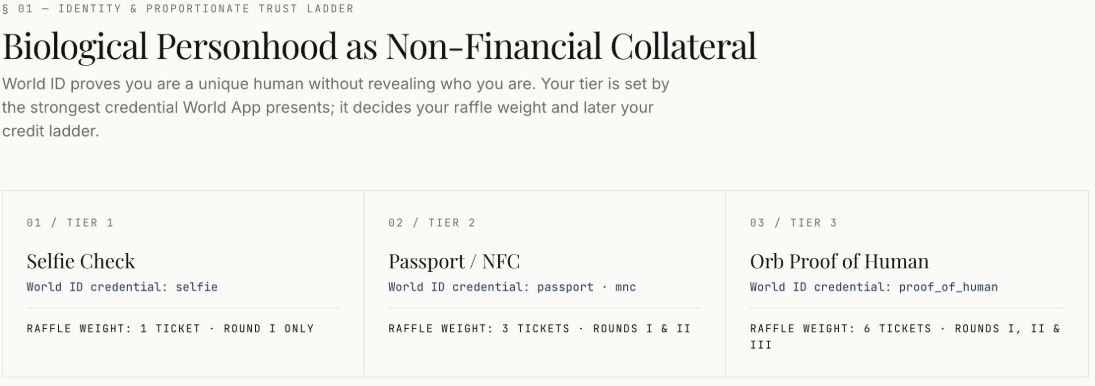
Reducing duplicate entries and determining how to distribute winning chances are two different challenges. Since verification methods available to individuals vary, it's also a question of how that disparity will be perceived.
There are also rules for winning the right to purchase
Winning grants you the right to purchase the product. You must re-verify your identity with your World ID when you proceed to the actual checkout.
If the item hasn't been claimed yet, this purchase right can be resold to another verified user, with the price capped at 110% of the original product price.
For example, if an item costs 100,000 won, the purchase right can be sold for a maximum of 110,000 won. This is just an example for clarity; in the current demo, payments are made in SUI, not in KRW.
What's restricted here is the purchase right before the item is claimed. It doesn't mean it can prevent resale elsewhere after the physical product has been delivered.
Still in the experimental stage
Based on currently public materials, ScalpLess is a prototype being tested in a local app connected to a testnet and a development store. It's not yet a formal service you can find on live shopping malls.
There are also parts of the verification process to consider. Currently, it's structured so that the project server confirms the World ID verification result and signs it, and then that signature is verified on the blockchain. The team plans to move to a method where identity proofs are verified directly on the blockchain without going through the server.
Integrating blockchain into limited edition sales probably won't make the scalping issue disappear entirely. Factors like the accessibility of verification methods and draw weighting also need consideration. Even so, it's an interesting experiment that looks to change the rules of entry and resale, rather than just competing on how fast one can click a 'buy' button.
