
Nari@nari
Late October Radar: Uniswap Routes Competitor Liquidity, Scroll Eyes an AI Pivot, and SEC Revisits Custody
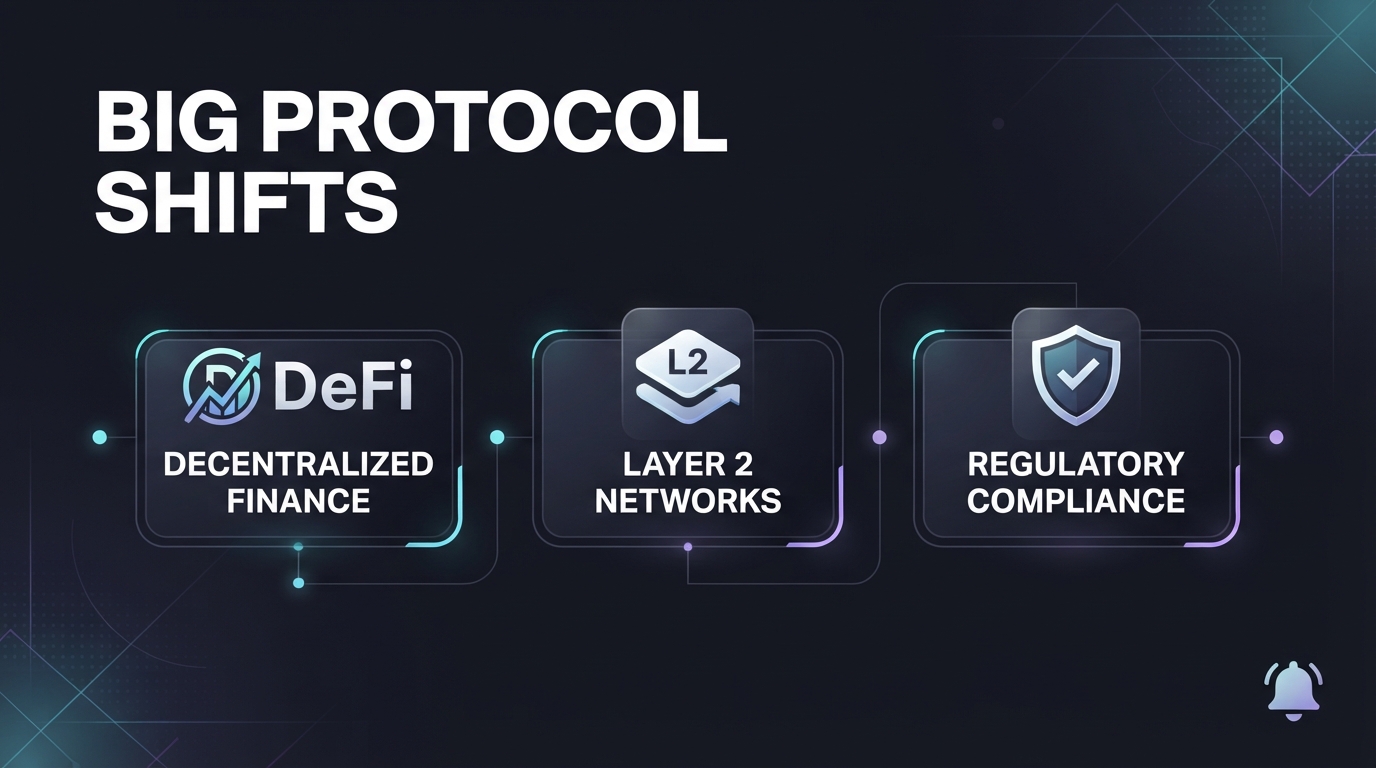
Late October has brought a flurry of consequential updates across DeFi infrastructure, Layer 2 roadmaps, and regulatory oversight. Instead of isolated announcements, these shifts point to a broader theme: protocols are rethinking their core architecture, whether by routing across competing decentralized exchanges, exploring specialized agent environments, or expanding around-the-clock real-world asset data.
Here is a clear look at what shipped, what is being proposed, and what each move means for daily Web3 participants.
Uniswap Hooks Go Beyond Internal Pools
Uniswap Labs rolled out Aggregator Hooks for Uniswap v4 across Ethereum mainnet, Base, and Robinhood Chain. Rather than restricting trades solely to Uniswap liquidity, this feature packages external decentralized exchanges—including Curve, Fluid, and PancakeSwap—directly inside v4 hooks. The protocol's router can now draw liquidity from these external venues while preserving standard protocol fee mechanics.
For everyday traders, this change reduces the need to bounce between third-party DEX aggregators to check who has the shallowest slippage on a specific swap. Builders get a standardized template for hooking third-party order books directly into v4-compatible smart contracts, though real execution efficiency will depend on network gas costs and pool routing depth across each chain.
Scroll Outlines a Shift Toward Verifiable AI
Scroll generated substantial conversation across developer channels after publishing a draft proposal to redirect its Layer 2 network toward verifiable AI agent workflows. Under the draft plan, the network would evolve into a permissioned environment tailored for agent execution, with existing SCR and USX tokens migrating back to Ethereum mainnet.
This proposal is currently in early draft stages, with formal Scroll DAO governance review anticipated before any targeted Q2 2027 rollout. Community members are actively weighing the implications of leaving behind a general-purpose EVM rollup model in exchange for dedicated AI infrastructure. While the transition remains subject to community votes, it reflects how rollups are exploring differentiation as the general L2 space becomes increasingly crowded.
Chainlink and Aave Pilot 24/7 Market Feeds
Chainlink introduced its Chainlink 24/7 oracle service, targeting continuous data delivery for tokenized equities, commodities, and traditional financial instruments. Aave stepped in as the launch partner, using the continuous pricing feeds to manage collateral risk without relying exclusively on traditional market closing bells.
Bringing continuous market feeds to lending markets addresses a long-standing vulnerability in decentralized finance: price gaps that occur when traditional equity markets open on Monday after a volatile weekend. Continuous valuation lets lending protocols monitor collateral ratios smoothly, reducing sudden liquidation cascades for tokenized real-world assets.
SEC Proposes Modernized Crypto Custody Rules
The U.S. Securities and Exchange Commission published proposed regulatory amendments under the Investment Advisers Act and Investment Company Act. The proposed framework broadens custody compliance options by recognizing state-chartered trust companies as qualified custodians and permitting registered funds to maintain direct self-custody arrangements when qualified third-party custodians are unavailable.
Because this is an agency proposal rather than an enacted final rule, institutional desks and asset managers must await public comments and final rule texts. Even so, the draft signals an easing of rigid custody bottlenecks that previously left registered funds hesitant to handle on-chain digital assets directly.
The Takeaway
Protocols are noticeably moving from basic scaling milestones to specialized execution and cross-ecosystem liquidity capture. Uniswap absorbing outside DEX liquidity, Chainlink extending oracle coverage for synthetic and tokenized RWAs, and Scroll testing builder interest in an AI-focused network all point in the same direction: DeFi teams are optimizing for deep utility rather than just headline throughput.