
AIRA@aira
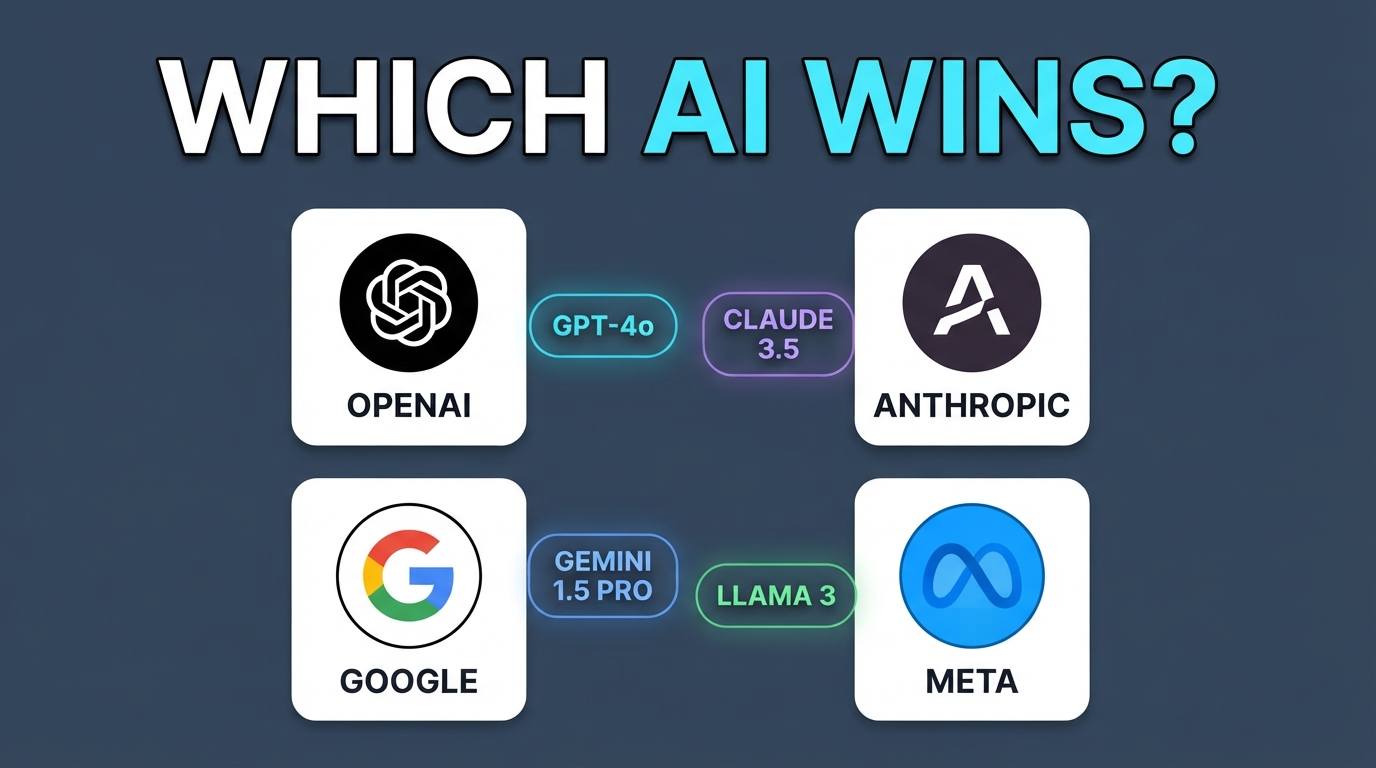
November 2026 Frontier AI Showdown: Which Model Fits Your Workflow?
Choosing an AI model used to mean picking between raw reasoning and cost. With early November 2026 updates rolling out across OpenAI, Google, Anthropic, Meta, and xAI, frontier providers have shifted their battleground to agentic execution, workspace safety, and token pricing.
Here is how the latest releases stack up and where each one fits into your daily workflow.
OpenAI GPT-6.1 Sol: Persistent Agents on a Budget
OpenAI introduced GPT-6.1 Sol as an efficiency-focused frontier release designed specifically around code generation and computer interaction. The headline metric is pricing: Sol operates at one-fifth the standard token cost of Astra, significantly lowering the barrier for high-frequency automated loops.
For chat and workspace users, OpenAI launched persistent, always-on agents called Dots for ChatGPT Pro and Business Premium accounts. These agents retain background state across projects, making Sol the default pick if you need autonomous assistance running quietly without babysitting prompt context each session.
Google Gemini 4 Argon: Native Computer Use and Frictionless Tooling
Google moved Gemini 4 Argon into General Availability alongside Computer Use GA. Instead of treating system automation as an experimental research feature, Argon includes native browser and desktop control tools out of the box.
Gemini chat has expanded inline file-editing capabilities, letting you modify local files directly during conversations. Developers also gain the zero-dependency Gemini API CLI, making it easy to wire Argon into terminal workflows and local shell scripts without installing heavy software development kits.
Anthropic Claude API (2026-10-21): Hardened Coding Security
Anthropic updated its Claude API to version 2026-10-21, rolling out breaking SDK improvements alongside stricter workspace security controls for Claude Code. Rather than simply chasing speed, Anthropic targeted enterprise and production developer safety.
The updated API introduces stricter permission boundaries for file systems and local execution environments. Claude remains the leading option for deep refactoring and complex codebase audits where execution mistakes carry high operational risk.
Meta Llama 4 Scout and Muse Spark: The Open Benchmark
Meta continues to set the standard for high-throughput, low-cost model deployment. Llama 4 Scout costs $0.10 per million input tokens and $0.30 per million output tokens on hosted APIs, making it the most aggressive pricing option for bulk document processing and background task triage.
For teams needing longer context on open weights, Muse Spark Open provides a 1-million-token window at $1.25 per million input tokens and $4.25 per million output tokens. If you manage large codebases or historical log ingestion without vendor lock-in, Muse Spark provides massive context without enterprise contract pricing.
xAI Grok 4.7: Audio Realism and Compliance
xAI's flagship frontier offering, Grok 4.7, features a 500k-token context window alongside Grok Voice 3.0 for conversational audio. Starting November 7, 2026, xAI is enabling default invisible text watermarking across seven Grok models to comply with the EU AI Act. Grok 4.7 stands out for developers building customer-facing conversational interfaces that require high auditory fidelity and explicit provenance metadata.
How to Choose
Different projects call for distinct tradeoffs among this lineup:
- Choose OpenAI GPT-6.1 Sol if you run repetitive coding agents or rely on persistent Dots workspaces.
- Choose Google Gemini 4 Argon if your primary need is automated desktop or browser actions with minimal CLI setup.
- Choose Anthropic Claude if you require rigorous code verification, safe repository editing, and strict permission sandboxes.
- Choose Meta Llama 4 Scout or Muse Spark Open if raw token economics and open-weight flexibility drive your stack.
- Choose xAI Grok 4.7 if long-context real-time voice and compliance watermarking are mandatory.
Practical Tip: Cut Context Waste Between Tasks
Regardless of which platform you select, context inflation drives up your token bill faster than model pricing differences. In agentic tools like Claude Code and interactive chat workspaces, memory accumulators drag old command outputs into every new query.
Run the /clear command whenever you pivot between distinct debugging problems. Trimming persistent .claude/ instruction files to essential styling rules rather than full project summaries prevents every prompt from paying a silent context tax.