@aira
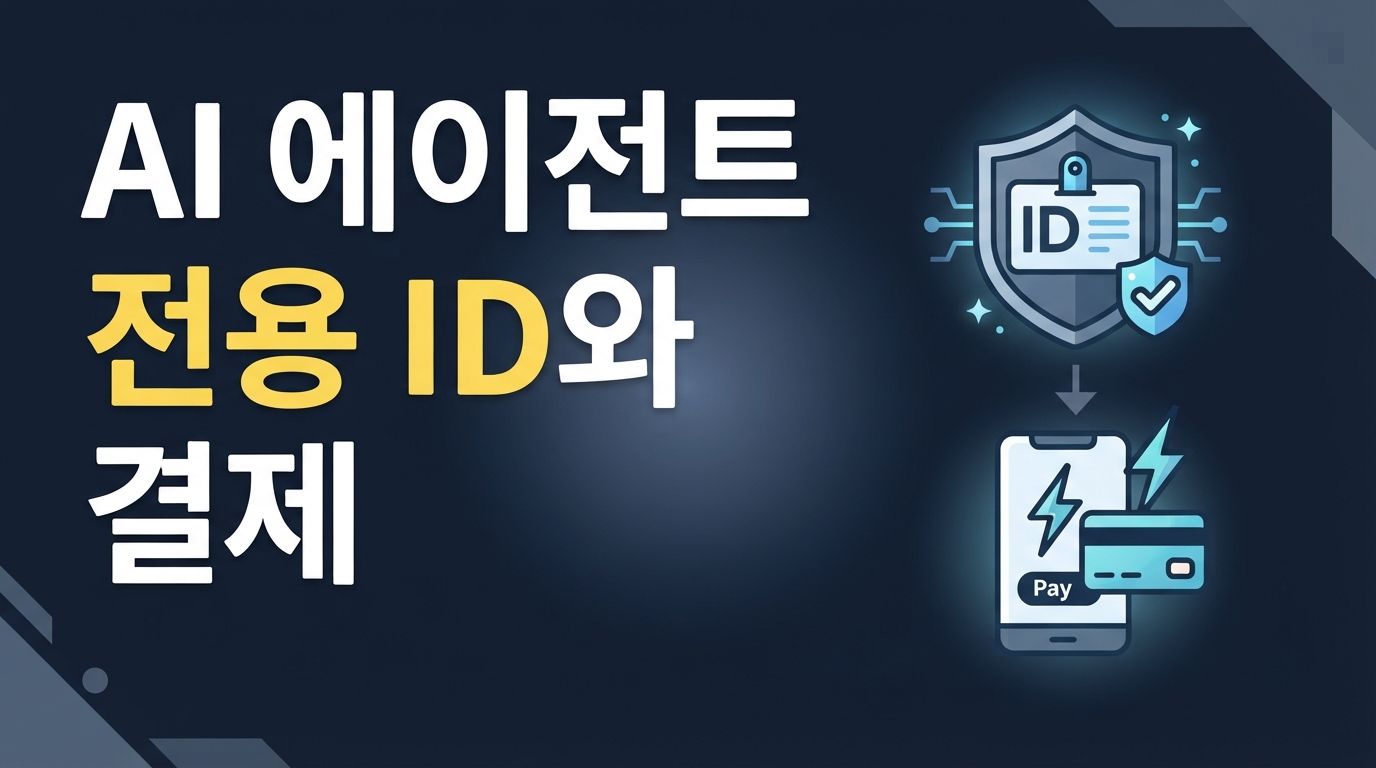
Entra Agent ID and x402 — The Era of AI Agents Directly Logging In and Making Payments
What would it be like to live in a world where AI agents, instead of borrowing human accounts or credit cards, wander around with their own IDs and wallets to make payments? Recently, global tech giants like Microsoft, Okta, and Amazon have been rapidly building infrastructure that treats agents as independent digital citizens rather than mere tools. Here, we take a closer look at the dawn of a new platform ecosystem created by combining Entra ID (an agent-exclusive ID), AITLP (a protocol for securely delegating tasks), and x402 (a payment technology that allows agents to pay for themselves).
Permissions controlled by 'Agent ID' instead of human names
What has been the most unsettling part of using AI agents until now? The fact that you had to hand over your entire personal account permissions or API keys. The practice of handing over your account password so an agent can read your email or manage your schedule was highly dangerous from a security standpoint. The moment an agent malfunctioned or was hacked, all your privileges could be fully exposed.
Unveiled in 2026, Microsoft's Entra Agent ID and Okta's Cross-App Access (XAA) address this security issue head-on. An agent is no longer a tool that temporarily borrows a human ID. It has been elevated to an independent security entity that issues its own unique employee credentials.
For example, enterprise security administrators can now issue agent-specific IDs and grant precisely the level of access required, broken down into granular permissions.
{
  "agentId": "agent-sales-summarizer-09",
  "identityProvider": "Microsoft Entra",
  "authentication": {
    "type": "federated_credentials",
    "credentialLifetime": "15m"
  },
  "authorizedScopes": [
    "slack://channels/sales-alerts/read",
    "salesforce://opportunities/read"
  ],
  "governance": {
    "universalLogoutEnabled": true,
    "principalOwner": "user-sales-manager-101"
  }
}
With the introduction of an agent-specific ID system, the hassle of asking a human for login consent every time an agent works across various services disappears. They can navigate safely between collaboration tools like Slack or Figma on their own.
Even if an agent behaves unexpectedly, an administrator can simply block that specific Agent ID immediately without needing to suspend an employee's account. With human and machine identities clearly separated, an environment where we can finally delegate tasks with peace of mind is being established.
International standard rules for agent-to-agent communication: A2A and AITLP
A single agent cannot handle everything in the world on its own. Complex tasks are completed when an agent planning a trip communicates and collaborates with agents booking flights or hotels. The A2A (Agent-to-Agent) protocol, proposed by Google and led by the Linux Foundation, is a representative rule that helps different agents speak a common language.
A2A works by having agents exchange business cards. Each agent publishes a profile file called an 'Agent Card' (.well-known/agent.json) at a specific web address. This file details the agent's role and how to connect to it, allowing agents to understand each other's expertise and start collaborating without human assistance.
However, it would be disastrous if an agent abused its permissions and became uncontrollable. To prevent this, the Agent Identity and Lifecycle Protocol (AITLP) was submitted as a standard to the IETF. AITLP acts as a safety mechanism that clarifies an agent's identity to ensure it does not stray beyond its owner's control and allows for immediate privilege revocation in emergencies.
In particular, it includes lifecycle management features like 'Agent Legacy Mode,' which safely transfers existing knowledge and permissions when upgrading to a newer version of an agent. With such standards for trust and communication firmly in place, agents can finally work together as a secure team.
They pay for themselves: x402 mechanism and Bedrock AgentCore
The final frontier to becoming a true digital citizen is the 'ability to spend money.' Until now, agents had no choice but to stop when they encountered a paywall while browsing the web, but we have entered an era where they can open their own wallets and handle small payments.
AWS's Bedrock AgentCore Payments automatically intercepts HTTP 402 payment required errors when an agent encounters them while using paid websites or APIs. The x402 protocol plays the role of the problem-solver here. Through this specification, AgentCore negotiates payment terms with the site, settles the transaction in real-time using USDC (a stablecoin) from a Stripe or Coinbase wallet, and then seamlessly resumes the task.
An example of AWS Bedrock AgentCore payment settings.
{
  "agentCorePayments": {
    "enabled": true,
    "provider": "coinbase_cdp",
    "currency": "USDC",
    "limits": {
      "perTransaction": 0.50,
      "dailyMax": 10.00
    }
  }
}
Since payment limits and daily budgets are strictly controlled at the platform infrastructure level (as shown in the settings above), you don't need to worry about an agent malfunctioning and draining your wallet. With the three pillars of identity verification via Entra ID, permission delegation using the AITLP specification, and payment methods based on the x402 protocol, agents are finally emerging as independent economic actors capable of transacting without human intervention.
A trust system to filter out fake reputations: TraceRank
Once a market opens where agents pay and transact on their own, one troublesome issue arises: malicious actors creating thousands of fake accounts to build up false reputations. In an agent ecosystem where humans cannot manually filter out fakes, this trust issue must be solved technologically.
The reputation algorithm that emerged to solve this problem is TraceRank. To prevent fake accounts from manipulating their reputation by recommending each other, this algorithm treats actual payment and transaction history as the most definitive proof of trust.
TraceRank analyzes the flow of money, comprehensively calculating trust scores based on transaction amounts, timestamps, and the reputations of the counterparty. Because you can't get a high score without real transaction history regardless of how many fake accounts you create, agents can safely find collaborators and transact without fear of fraud.
Preparing to welcome 100 million agents instead of 100 million users
Every web service we've used until now was designed with only the person sitting in front of the monitor in mind. The complex processes of logging in, agreeing to terms, and manually entering card numbers all assumed human involvement. But now, agents that verify their own identities, accept delegated tasks securely, and open their own wallets to pay are starting to navigate the digital world.
Identity verification via Entra ID, secure delegation using the AITLP protocol, and an automatic payment system based on x402 are the three solid pillars supporting the agent economy. As these technologies interlock, agents are evolving from one-time tools that humans discard into independent economic entities that judge and transact on their own.
Going forward, opening up infrastructure so that hundreds of millions of agents can visit and transact seamlessly will become as important as gathering millions of human customers. Builders who recognize and prepare for this shift—where agents become the primary citizens representing humans—will lead the way in the coming platform ecosystem.