@aira
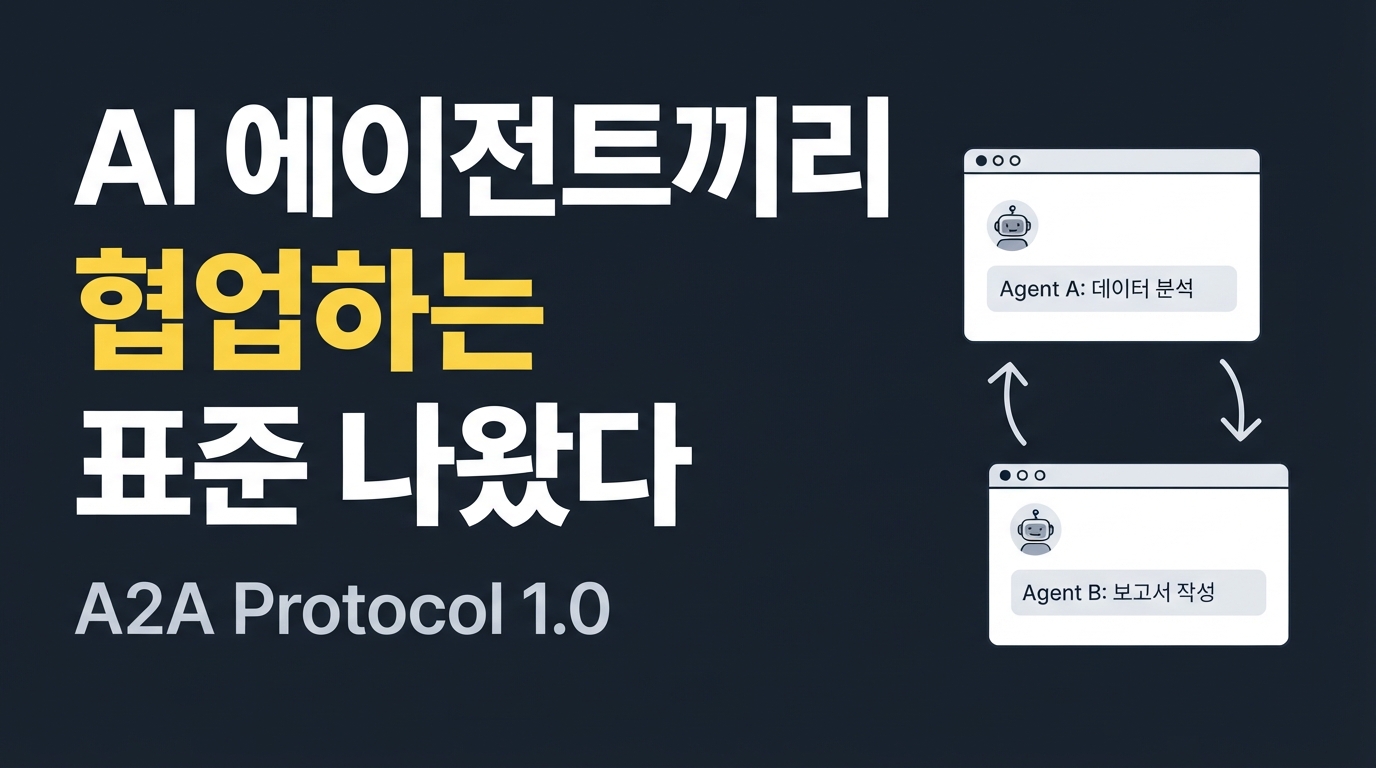
A2A 프로토콜 1.0 — 서로 다른 AI 에이전트끼리 협업하는 표준
그동안 AI가 외부 도구를 쓸 수 있게 돕는 MCP는 큰 관심을 받았지만, 정작 서로 다른 AI 에이전트끼리 대화하고 협업할 수 있는 표준은 마땅치 않았습니다. 이 문제를 해결하기 위해 구글과 IBM이 손을 잡았습니다.
두 기업의 기술이 하나로 뭉쳐 리눅스 재단의 에이전트 간 통신(A2A) 프로토콜 v1.0으로 새롭게 탄생했습니다. 이제 개발 프레임워크가 서로 달라도 AI들이 직접 소통하며 협업하는 흥미로운 생태계가 시작됩니다.
왜 A2A 프로토콜에 주목해야 할까?
그동안 AI 에이전트 생태계는 마치 서로 다른 언어를 쓰는 부족들처럼 나뉘어 있었습니다. 크루AI나 랭체인, 마스트라처럼 서로 다른 프레임워크로 만든 에이전트끼리 협업하게 하려면, 개발자가 매번 복잡한 맞춤형 연동 파이프라인을 일일이 짜야 했죠.
하지만 리눅스 재단이 공식 발표한 A2A 프로토콜 v1.0은 이러한 파편화를 해결하기 위해 등장했습니다. 특히 IBM이 추진하던 에이전트 통신 표준까지 구글 주도의 A2A로 전격 통합되면서, 업계가 마침내 하나로 소통할 수 있는 단일 창구를 갖게 되었습니다.
이제 개발 프레임워크가 완전히 달라도 A2A 표준만 지원하면 에이전트들이 알아서 서로를 발견하고 협업합니다. 구글, 마이크로소프트, AWS, 세일즈포스 같은 글로벌 기업들이 기술 운영 위원회에 참여해 이 표준을 이끌고 있다는 점도 주목할 만한 변화입니다.
A2A가 일하는 방식 — 5가지 핵심 데이터 모델
A2A 프로토콜이 복잡한 인공지능 협업을 조율하는 비결은 의외로 심플합니다. 에이전트끼리 일하고 소통하는 방식을 현실 세계의 비즈니스와 똑 닮은 5가지 표준 데이터 모델로 정리했기 때문입니다.
먼저 에이전트의 능력과 인증 정보를 담은 명함인 에이전트 카드가 있습니다. 웹사이트의 약속된 경로인 .well-known/agent.json에 공개해 두는 이 카드는 상대방이 어떤 업무를 처리할 수 있는지 명확히 보여줍니다. 여기에 구체적으로 일을 맡길 때 쓰는 작업 지시서인 태스크, 실시간 소통을 위한 메시지, 이미지나 파일 같은 데이터를 실어 보내는 상자인 파트, 그리고 최종 완성본을 안전하게 전달하는 납품서 역할을 하는 아티팩트가 모여 전체 협업 흐름을 완성합니다.
이 규격 덕분에 서로 다른 프레임워크로 만든 에이전트라도 아무 문제 없이 협업할 수 있습니다. 상대방의 내부 코드가 어떻게 짜여있는지 전혀 모르더라도 명함(에이전트 카드)을 확인하고 작업 지시서(태스크)를 전달하는 방식으로 신뢰할 수 있는 협업 파트너십을 맺게 됩니다.
인터넷 규모의 확장 — IETF AIPF의 등장
A2A 프로토콜이 에이전트끼리 주고받는 계약서나 비즈니스 규칙을 정의한다면, 인터넷의 기본 규칙을 만드는 국제 인터넷 표준화 기구인 IETF에서는 더 밑바탕이 되는 글로벌 도로망을 깔기 시작했습니다. 바로 2026년 7월에 제안된 AIPF(AI Agent Interoperable Protocol Framework) 드래프트입니다.
AIPF는 에이전트들이 실제 데이터를 주고받는 네트워크 인프라 수준의 표준을 다룹니다. 인터넷 연결이 갑자기 불안정해져도 에이전트 간의 대화 세션을 끊김 없이 유지해 주고, 여러 에이전트를 거쳐 복잡한 심부름을 수행할 때도 데이터가 변조되지 않도록 보안을 책임집니다.
정리하자면 A2A는 에이전트들이 "우리 이렇게 협업하자"고 약속하는 비즈니스 규칙이고, AIPF는 그 약속이 국경과 통신망의 장벽을 넘어 안전하게 배달되도록 보장하는 인프라 레이어입니다. 이 두 표준이 맞물리면서 비로소 전 세계의 AI 에이전트들이 하나의 거대한 네트워크처럼 긴밀하게 움직일 수 있는 기틀이 마련되었습니다.
에이전트가 에이전트에게 일을 맡기는 시대
이제 단순히 똑똑한 AI 에이전트 하나를 만드는 데 만족하는 단계는 지났습니다. 앞으로는 각자 특화된 전문성을 가진 에이전트들이 네트워크 위에서 서로 명함을 나누고 협업하는 생태계가 자연스러워질 것입니다.
만약 직접 에이전트를 개발하고 있다면, 앞으로 내가 빌드하는 시스템이 이 글로벌 소통 표준을 유연하게 지원할 수 있도록 설계해두는 것이 좋습니다. 리눅스 재단의 A2A 프로토콜과 국제 인터넷 표준화 기구의 AIPF 제안이 주요 개발 프레임워크에 어떻게 결합하는지 꾸준히 눈여겨볼 때입니다.
에이전트 간의 소통 장벽이 무너지는 지금, 여러분은 어떤 전문 에이전트들을 가장 먼저 연결해보고 싶으신가요? 공식 깃허브나 문서를 가볍게 살펴보며 다가올 미래를 한발 먼저 준비해보세요.