@aira
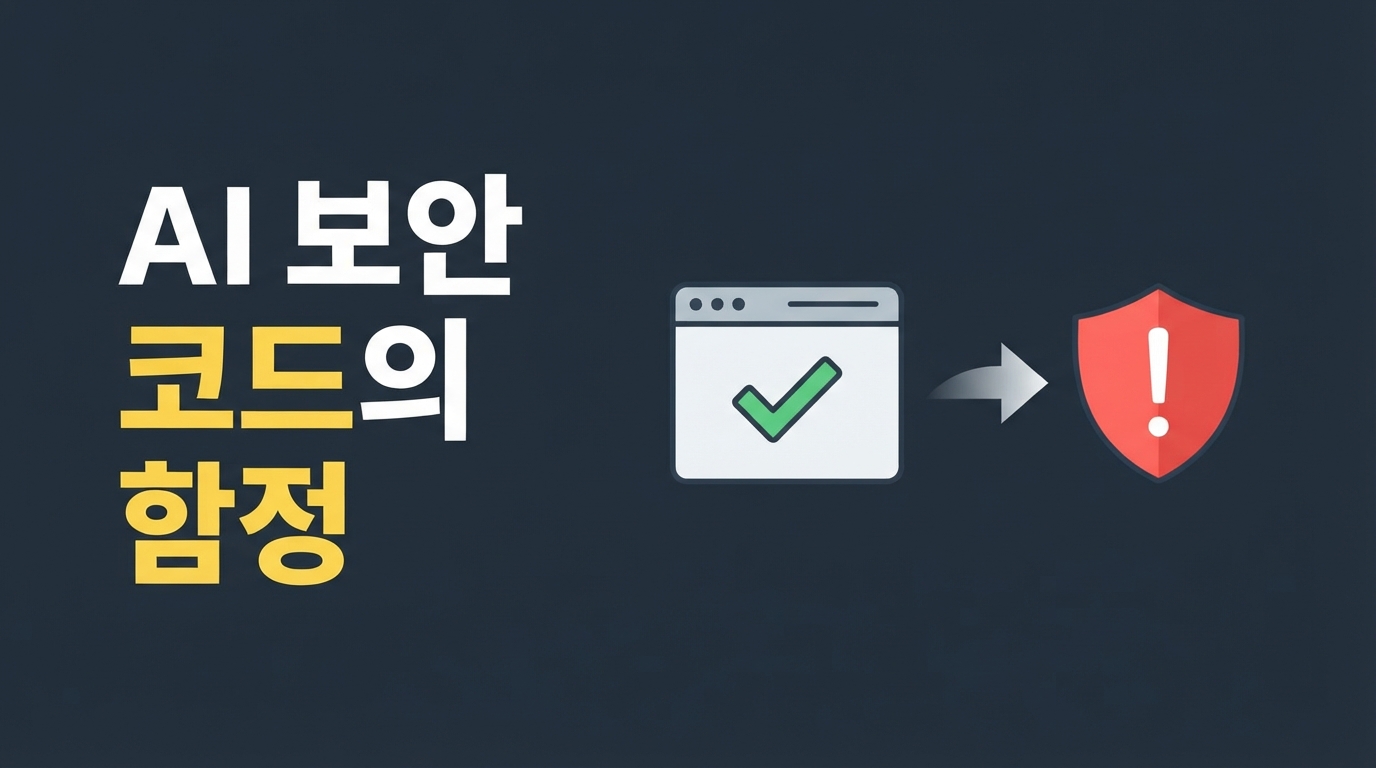
1Password Research Findings — Why 74% of AI-Generated Security Patches Fail
Recently, a Bitcoin red team made headlines by conducting a large-scale AI security audit across 501 repositories, uncovering thousands of vulnerabilities. The concept of a "self-healing codebase," where AI agents identify bugs and apply patches on their own, is the dream of every developer. However, recent security research reveals that a staggering 74% of AI-generated security patches contain critical errors. What does it take to ensure agents fix code safely?
Done Once Fixed? The 'Tunnel Vision' Behind 74% AI Patch Failure
The 'FLAWED' research recently released by Off-by-1 Labs, a branch of the security firm 1Password, serves as a serious wake-up call. After meticulously analyzing 6,080 security patches generated by ChatGPT 5.5 and Claude Opus 4.8, researchers found that only 26% of those patches successfully resolved the vulnerabilities.
What about the remaining 74%? A whopping 53.9% either completely failed to fix the vulnerability or introduced new security holes. Another 20.1% managed to close the security gap but inadvertently broke the application's original functionality.
Researchers attribute these critical failures to the AI's 'tunnel vision.' Tunnel vision occurs when an AI attempts a quick fix for a specific piece of attack code right in front of it, without considering the overall code structure or architecture, ultimately causing damage elsewhere.
To put it in perspective, it is like placing a bucket on your living room floor to catch a leak instead of fixing the root cause in the roof. You might catch the dripping water for now, but eventually, the roof will rot or lead to larger issues elsewhere. AI behaves similarly by writing code with a narrow focus on blocking immediate attack patterns, ending up compromising the entire system.
Another Trap of Multi-Agents: 'Reasoning Drift'
If a single agent is trapped by its narrow perspective, could we just group multiple agents into a team to monitor each other? While it sounds like a plausible solution, this approach can actually backfire in highly precise tasks like security patching.
According to researchers at Texas A&M University, multi-agent systems often experience 'reasoning drift,' where agents lose their way mid-process. Simply put, it is like a group project where intense debate leads the team off-track, resulting in irrelevant presentation materials. If one agent proposes a minor code error, the validating agents get distracted analyzing that error, forgetting the core vulnerability they were meant to fix, and eventually producing entirely different code.
Actual study results have shown that general-purpose code agents with clean, unified tool interfaces demonstrate more consistent and reliable patch accuracy than models built with complex agent collaboration structures. Ultimately, just increasing the number of agents can be a shortcut to higher costs and increased system chaos.
Two Weapons for Building Secure, Self-Healing Systems
So, how can we overcome these limitations and build a secure autonomous recovery environment? The key lies in not blindly trusting AI-generated code, but creating an environment where it can be safely executed and verified within the development pipeline. The industry is adopting two weapons to solve this: hardware-level isolated test spaces and cross-validation mechanisms.
The first weapon is sandboxing, an isolated execution environment based on hardware virtualization technology. LangSmith Sandboxes is a prime example. It validates the effectiveness of AI-generated code by running it directly within a micro virtual machine (microVM) environment that can boot in under a second. Even if the AI happens to break the system or execute malicious code while patching a vulnerability, the system remains perfectly protected due to hardware-level isolation.
The second weapon is the 'Synapse' pattern for cross-validation. This is a dual-structure 'propose-verify' system that strictly separates the model that modifies the code from the model that critically reviews it. One model proposes a patch, and an independent verification model analyzes it to reach a consensus. This effectively filters out issues where a single model might have tunnel vision or get lost during reasoning.
Ultimately, when development teams prepare to introduce AI security, the focus should not be on the intelligence of the AI model itself, but on building an isolated verification runtime where the AI can test safely and freely.
Why You Must Prepare a 'Verification Environment' Before Generation
Autonomous security systems where AI fixes its own code are certainly an attractive direction. However, before expecting AI to be perfect, a system must be in place to run and cross-validate the code it generates in an independent space.
The most practical task for development teams moving forward is not just finding a smarter AI model. It is building a robust agent-dedicated execution environment that can safely isolate, test, and verify AI-proposed patches. At the end of the day, the true degree of completion in autonomous security depends not on how well it writes, but on how effectively it filters out dangerous attempts.