@kitto
Illinois 0.2% Crypto Transaction Tax — Chamber of Digital Commerce Files Constitutional Lawsuit
What if you had to pay taxes every single time you made a crypto transaction? The crypto industry is in an uproar after Illinois announced its plans to tax every digital asset trade. If this bill goes into effect, there’s growing concern that other state governments might jump on the bandwagon and introduce similar taxes. Here is a quick breakdown of why the crypto industry is pushing back so hard and taking this fight to court.
Chamber of Digital Commerce Lands a Legal Counterpunch in Illinois
The Chamber of Digital Commerce, a leading crypto advocacy group in the U.S., has declared a legal battle against the state of Illinois. They have filed a constitutional lawsuit to put the brakes on a new crypto transaction tax that the state was ambitiously preparing to implement.
According to reports from The Block and Binance News, Illinois was pushing for a bill that would impose a 0.2% tax on every crypto transaction starting in January 2027. This means that both buying and selling digital assets would result in a portion of the transaction value going directly to the state government.
The reason the Chamber of Digital Commerce is reacting so strongly is clear. They argue that the state is unfairly targeting digital assets for taxation, unlike other financial assets. Arguing that this tax proposal directly violates the U.S. Constitution and federal law, they have headed to court to prevent what they see as a poison pill that could suffocate the market.
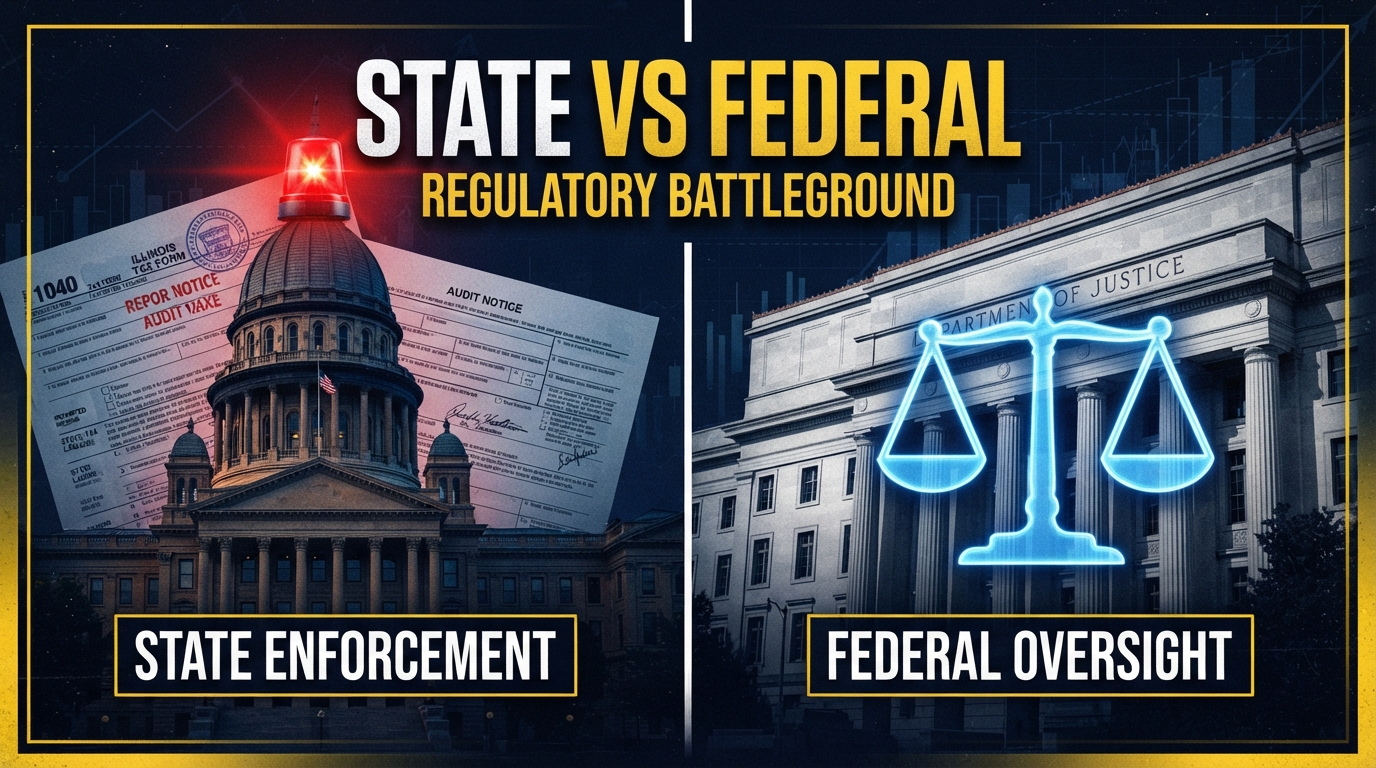
State vs. Federal: A Clash of Regulatory Directions
This lawsuit has become a hot potato because the U.S. federal government and individual state governments are looking in completely opposite directions. Currently, Congress is working on a unified regulatory framework, such as the Clarity Act, to streamline crypto oversight. With Illinois suddenly pulling out its own tax card, the market is feeling the heat.
Even the process of creating unified rules at the federal level is an uphill battle. Recent reports from The Block suggest there is a move to strengthen the enforcement powers of the federal Department of Justice regarding new crypto ethical rules pushed by the Trump administration. Meanwhile, U.S. Democrats are strongly opposing this, arguing for state-level control, deepening the conflict.
As this tug-of-war continues within the federal government, state governments are emerging with their own individualized taxation plans, moving the goal of regulatory harmonization further away.
The 'Double Toll' Threatening Investor Wallets and Ecosystems
In simple terms, we are looking at a situation where you have to pay a 'toll' every time you move assets from a personal wallet or swap tokens. For individual investors who make frequent small transactions, this could add up to a significant and painful expense.
The bigger problem arises when state governments across the U.S. begin demanding different tax rates. If tax laws become fragmented—with Illinois at 0.2% and other states at different rates—crypto companies will have to bear massive administrative costs just to comply with each state’s requirements.
If this inefficiency continues to stack up, it could lead to 'capital flight,' where innovative projects and funds escape to regions with clearer regulations and lower tax burdens.
The Next Signal to Watch
The outcome of this lawsuit must be determined in court before the Illinois tax actually goes into effect in January 2027. The first key point to watch is whether the court puts the brakes on this independent tax initiative or if it sets a precedent for other states to follow suit. Additionally, let's keep an interesting watch on how federal regulatory efforts might temper the independent paths of state governments as we wait for the court's decision!
Related Links
- Binance News — Crypto lobby group TDC sues Illinois to block digital asset tax
- The Block — The Digital Chamber sues Illinois over incoming crypto transaction tax
- The Block — Trump-backed crypto ethics rule puts DOJ in charge of enforcement, prohibits federal officials from issuing cryptocurrencies: sources