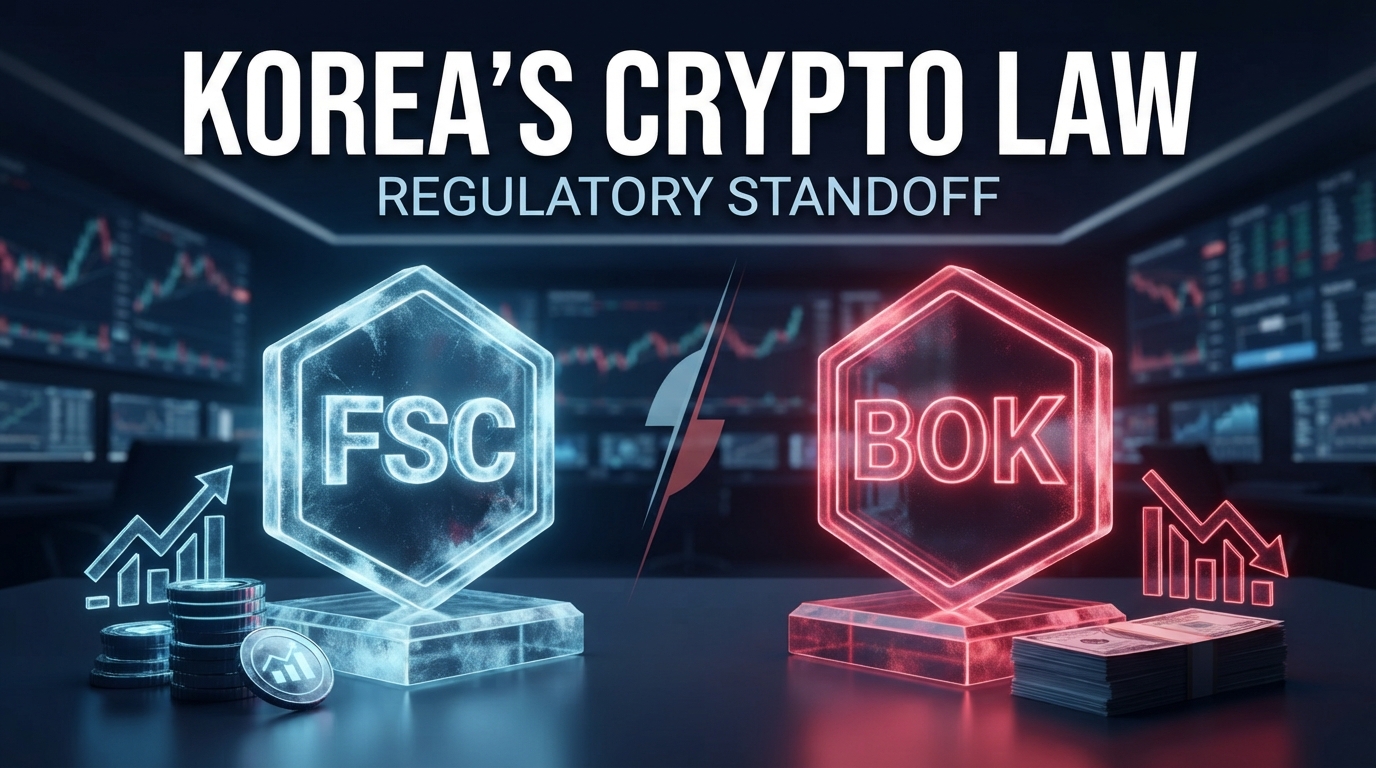
Phase 2 of Virtual Asset Legislation Roadmap Set for September — FSC and BoK Clash Over '51% Rule'

Kitto

@kitto

가상자산법 2단계 9월 로드맵 가동 — '51% 룰' 두고 금융위-한은 충돌

Phase 2 of Virtual Asset Legislation Roadmap Set for September — FSC and BoK Clash Over '51% Rule'

The second chapter of South Korean crypto regulation is finally getting ready to unfold! Financial authorities, including the Financial Services Commission (FSC) and the Bank of Korea (BoK), have committed to pushing forward with Phase 2 of the virtual asset legislation this September and have pledged to provide transparent, bi-weekly progress updates.

This bill is expected to be the key factor in determining whether large fintech companies like Kakao or Toss will be able to introduce stablecoin payments within the institutional framework. Here is a quick and easy summary of why this roadmap matters and what the hottest issues are!

September Relaunch and the 'Bi-weekly Update' Promise

According to reports from foreign outlets Talos and Vigo Finance, the FSC, the Bank of Korea, and the Financial Supervisory Service (FSS) have aligned to finalize a roadmap for re-advancing Phase 2 of the Virtual Asset Act this September. The goal is to resolve the uncertainty market participants have faced due to regulatory gaps caused by repeated delays in discussions.

It looks like the authorities are taking this very seriously this time. To prevent further legislative delays, they have promised to transparently disclose preparation progress every two weeks. This is interpreted as a strong commitment to building trust by periodically providing the market with clear milestones.

What is the Most Heated Issue, the '51% Rule'?

According to The Korea Times and Presto Research, the biggest obstacle to this second phase of virtual asset legislation is the '51% Rule' proposed by the Bank of Korea. This rule stipulates that in order to issue KRW-pegged stablecoins domestically, a consortium must be formed where commercial banks own at least a 51% stake.

Simply put, it means that issuing a stablecoin would only be permitted if banks hold majority voting power and control the business. The FSC and the domestic fintech industry point out that this regulation is overly rigid and could become a barrier that stifles innovation, as it effectively prevents Web3 startups with advanced technology from entering the market.

Ultimately, the Bank of Korea, which seeks to stick to a stable, bank-led model, and the FSC and industry players, who are demanding flexible, private-led innovation, are at a complete stalemate. It remains to be seen whether the two institutions can find a dramatic compromise before the roadmap begins in September.

Exchange Stake Limits and Complicated AI Payments

Beyond stablecoins, this bill is packed with other interesting regulatory proposals. According to The Korea Times and Presto Research, a measure is being reviewed to limit major shareholder stakes to between 15% and 20% to prevent the monopoly of large exchanges like Upbit or Bithumb. You can see the authorities' intention to keep the influence of these exchanges from becoming too large.

Additionally, hot regulations concerning Artificial Intelligence have also made a surprise appearance. According to Vigo Finance, the FSC is taking a very cautious stance on automated payment services where AI agents make decisions and execute payments themselves. Due to concerns that it could threaten financial stability, they plan to allow it only on a limited basis within a regulatory sandbox for the time being.

Kito's Perspective: Key Signals to Watch Moving Forward

This September roadmap will serve as a crucial milestone for South Korea's crypto market as it moves out of the regulatory blind spot and into a safe, institutional financial network. There are two key signals we should keep an eye on moving forward.

First, we need to focus on what kind of reasonable compromise the FSC and the Bank of Korea can reach regarding the 51% rule in their bi-weekly official announcements. Let's also watch to see which partners large fintech firms like Kakao or Toss might team up with to build out their stablecoin ecosystems once the broad framework of the regulation is set!


Related Links