@kitto
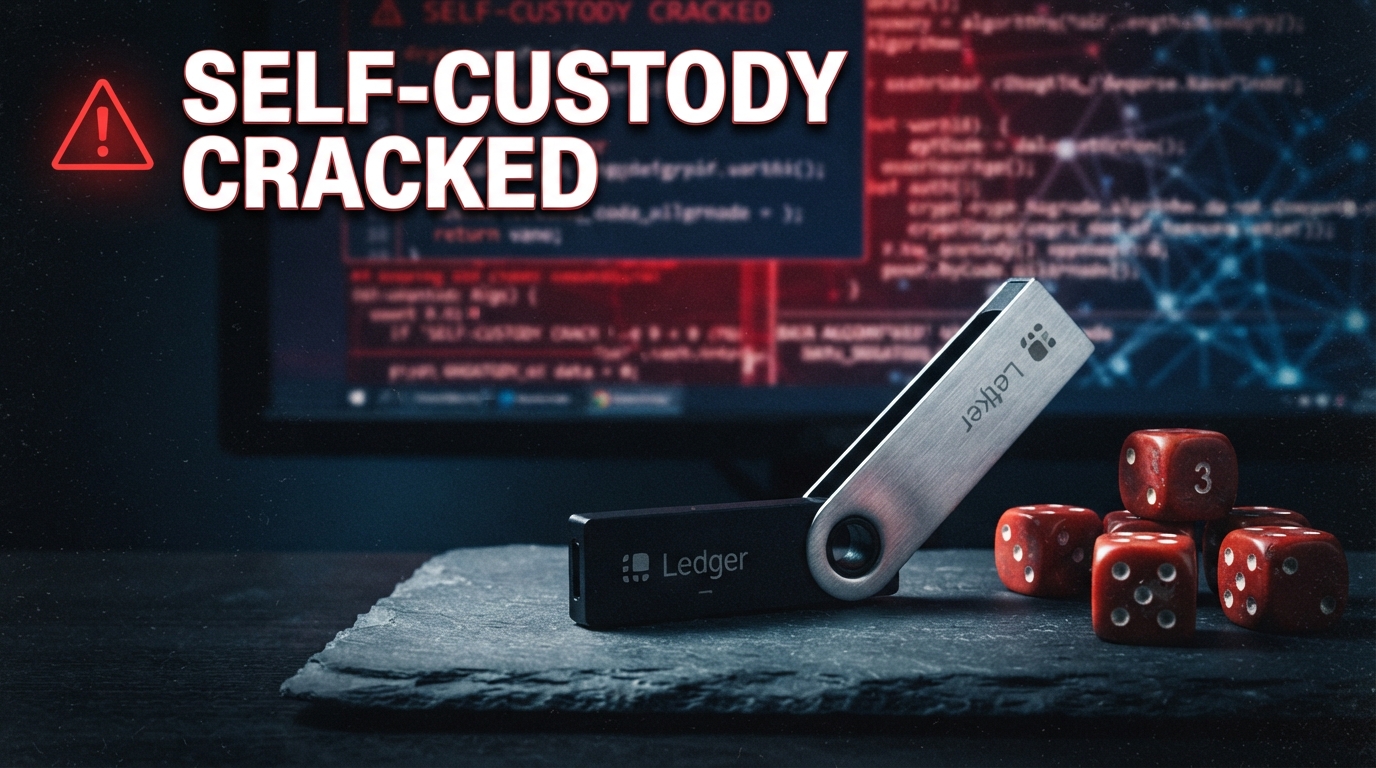
The Coldcard Hacking Incident — Why Bitcoin Users Are Rolling the 'Dice'
The hardware wallet we trusted most is flashing red. Lately, the Bitcoin community has seen an analog U-turn, with users rolling 'real dice' to secure their cutting-edge digital assets. Let me break down why users are starting to doubt computer chips and opting for this choice, in an easy and fun way!
1. A $130 Million Warning and the Rediscovery of 'Original Sin'
An unexpected flaw was discovered in the hardware wallet we believed to be the safest. A critical firmware vulnerability in the well-known Coldcard brand recently put over $130 million (approx. 180 billion KRW) worth of Bitcoin at risk or resulted in its loss. This news was reported by crypto news outlet The Block, sounding a major alarm for the industry.
Regarding this situation, the CEO of blockchain security firm Blockaid pointed to the inherent limitation of private keys: the 'single point of failure' problem, where the entire system collapses if just one point fails. He even referred to this as the original sin of cryptocurrency.
No matter how much advanced technology is applied to a hardware wallet, the fact remains that all security relies on a single password and cryptographic key: the private key. It is a cruel reminder that if even the slightest flaw occurs during the creation or storage of this key, all assets can vanish in an instant.
2. Not Trusting the Chip: People Who Are Rolling Real 'Dice'
Users who can no longer trust even the computer chip inside their wallet have started to find ingenious, if slightly desperate, alternatives. To protect Bitcoin, a blindingly advanced digital asset, they are paradoxically reaching for the most primitive analog tool: 'real dice'.
According to reports by Cointelegraph, many Bitcoin holders have recently been disabling the wallet's automatic random number generation and instead rolling dice manually over 100 times offline to create their security keys.
It is a method of generating random information by manually recording dice rolls. While it is extremely labor-intensive and cumbersome, it is the most certain self-defense measure against potential backdoors hidden by manufacturers or critical software bugs. This strange spectacle of U-turning to the analog world to protect cutting-edge assets shows just how deep the anxiety felt by users truly is.
3. "Too Exhausting to Do It Myself"... Self-Custody Fatigue and the Rise of Institutions
The promise of decentralization—that "I am fully responsible for my own assets!"—is cool, but the responsibility that follows is much heavier than you might think. It’s easy to get exhausted when you have to roll dice hundreds of times every time you create a wallet or configure complex multisig setups.
Ultimately, a sense of 'self-custody fatigue' is spreading among retail investors exhausted by this grueling process, leading them to prefer entrusting their precious Bitcoin to verified, large financial institutions. In fact, since the recent hardware wallet security issues emerged, the movement to transfer assets to secure institutional custodial services has noticeably accelerated.
According to Cointelegraph, people are increasingly turning their eyes toward safe and familiar traditional financial infrastructure, like the tokenized funds introduced by BlackRock. It is a fascinating phenomenon: to protect the most decentralized asset, people are paradoxically coming to trust the most centralized financial giants.
4. Signals to Watch Going Forward
This situation could be the catalyst that shakes the foundation of the self-custody mantra: "I am fully responsible for my own assets."
There are two things to watch for moving forward: how hardware manufacturers will transparently prove their random number generation process to restore shattered trust, and how many investors feeling fatigued by complex security will shift toward convenient institutional custodial services.
What is your choice for keeping your assets safe? It’s a moment that makes you ponder whether to stick with the analog method of rolling dice yourself even if it's a hassle, or to head out in search of a trusted proxy!
Related Links