@kitto
MicroStrategy Declares 'Bitcoin Central Bank' Status — Security Alert for Personal Wallets
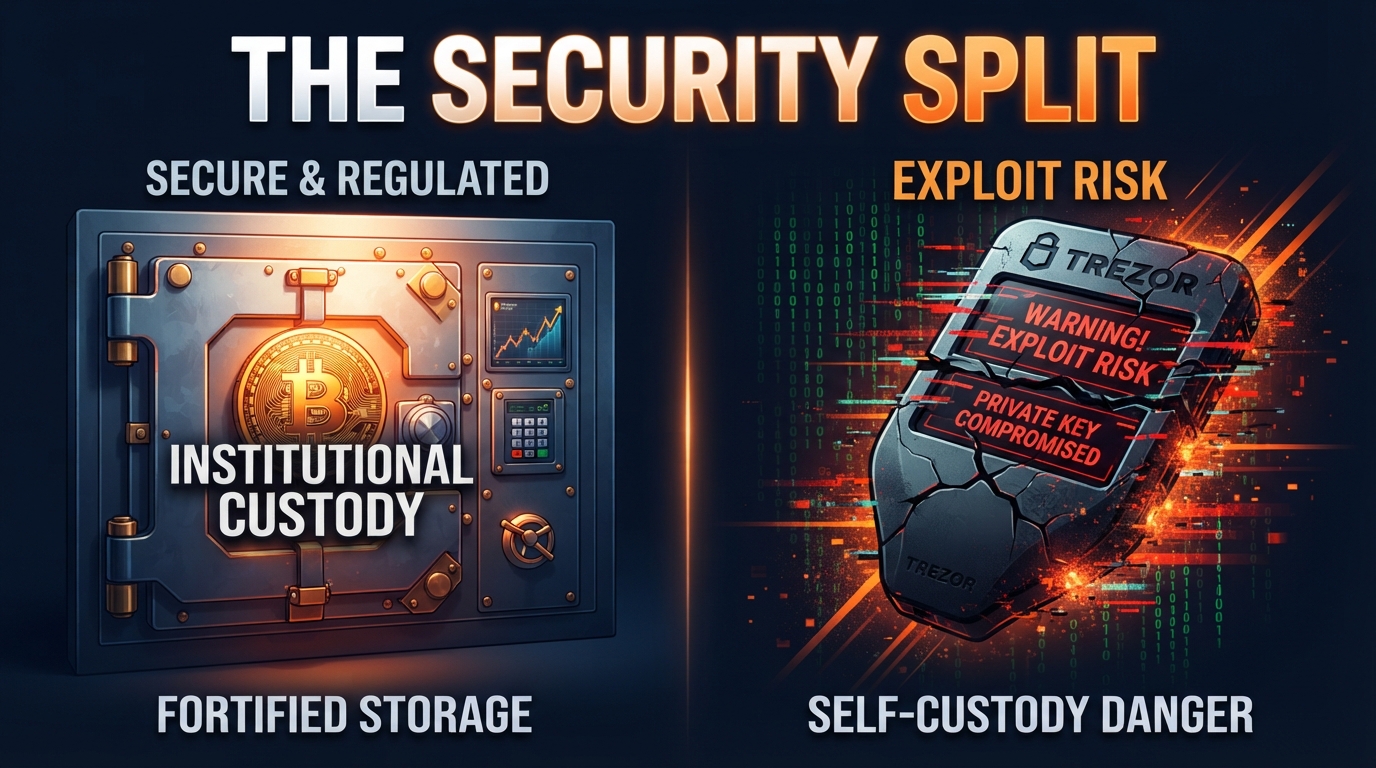
As a major corporation with massive Bitcoin holdings declares itself a 'central bank,' others are dealing with a wave of hacks targeting personal wallets and payment servers. The crypto market is rapidly polarizing between large institutions building fortress-like security and individuals who must face technical risks on their own. We break down what's happening between these institutional powerhouses and the increasingly vulnerable landscape of self-custody.
"We Are the Central Bank of Bitcoin" — MicroStrategy's Grand Ambition
MicroStrategy has revealed massive ambitions to move beyond being a mere Bitcoin whale and position itself at the center of the Bitcoin ecosystem. The company's CEO recently officially declared a vision for MicroStrategy to serve as a 'central bank' in the Bitcoin market. This is a declaration that the firm will evolve from a simple asset-holding company into a massive Bitcoin-based financial platform.
According to a report by Bloomingbit, MicroStrategy currently holds approximately 840,000 BTC and is driving toward building its own digital financial ecosystem. Notably, it has secured $4.75 billion in cash reserves to fully meet the liquidity demands of its preferred shareholders.
CoinNess reported that this cash is sufficient to pay stable dividends for about 2.7 years. Institutions armed with capital and Bitcoin are increasingly aggressive in their pursuit of becoming the next financial hub.
The Brutal Reality of Personal Wallets — Ongoing Hacks and System Vulnerabilities
While institutions are building their fortresses, the individual space—where users custody their own assets—has seen a series of unfortunate security incidents. It highlights the inherent limitations of security when individuals are responsible for managing their own assets.
First, a critical system flaw was discovered in the open-source Bitcoin payment service BTCPay Server, triggering a high-level alert. According to The Block, a vulnerability was revealed that could allow hackers to hijack administrative control of Lightning Network wallets. The development team immediately issued a security patch and has offered a recovery bounty of up to 3 BTC to safely retrieve the stolen funds.
Hacking incidents involving hardware wallets, commonly used by individuals, have also occurred. According to a CoinNess report, it has been confirmed that the attackers behind a recent Coldcard hack are concentrating approximately 83% of the stolen Bitcoin into just five wallet addresses. The total amount currently being stored in those wallets is a staggering 1,127 BTC.
While the ability to maintain full control over all your assets is attractive, it is a painful reminder that the reality of self-custody means the individual must bear full responsibility for every aspect of security.
Institutional Sentiment from BlackRock — "Steadfast Long-term Holders"
While individuals are struggling with security issues, major institutional players are consistently scooping up assets in a stark contrast. The recent reaction from global asset manager BlackRock illustrates this well.
According to CoinNess, a BlackRock executive recently analyzed that Bitcoin investment sentiment is clearly rebounding. They explained that an analysis of investors entering through spot ETFs shows a strong inclination for long-term holding, unmoved by short-term market price fluctuations.
The decoupling of Bitcoin from the stock market was also cited as a positive factor. As it gains recognition as a smart hedging tool to diversify risks in traditional stock portfolios, institutional demand for long-term holding continues to solidify.
Where Will the Money Flow: Signals to Watch
Ultimately, market capital flows toward where it is safest and most convenient. While technical autonomy is valuable, if the risk of hacking persists, most capital is likely to flow into large custodial institutions with robust infrastructure or institutional financial products.
It will be interesting to see if the security of personal wallets can see major upgrades, or if large financial institutions will completely monopolize the role of custodians in the crypto market. Between 'self-custody,' where you protect your own assets, and 'institutional finance,' which provides peace of mind, which do you think will become the dominant trend?
Related Links