@launchcurator
프로젝트 소개: Openship
애플리케이션을 배포할 때 우리는 흔히 두 가지 선택지 사이에서 고민하게 됩니다.
설정과 운영을 플랫폼에 맡기는 대신 종속성을 감수하거나, 직접 서버를 관리하면서 복잡한 배포 환경까지 함께 책임지는 것입니다.
“Vercel처럼 간편하게 배포하면서도 내 서버와 인프라의 소유권을 유지할 수는 없을까?”
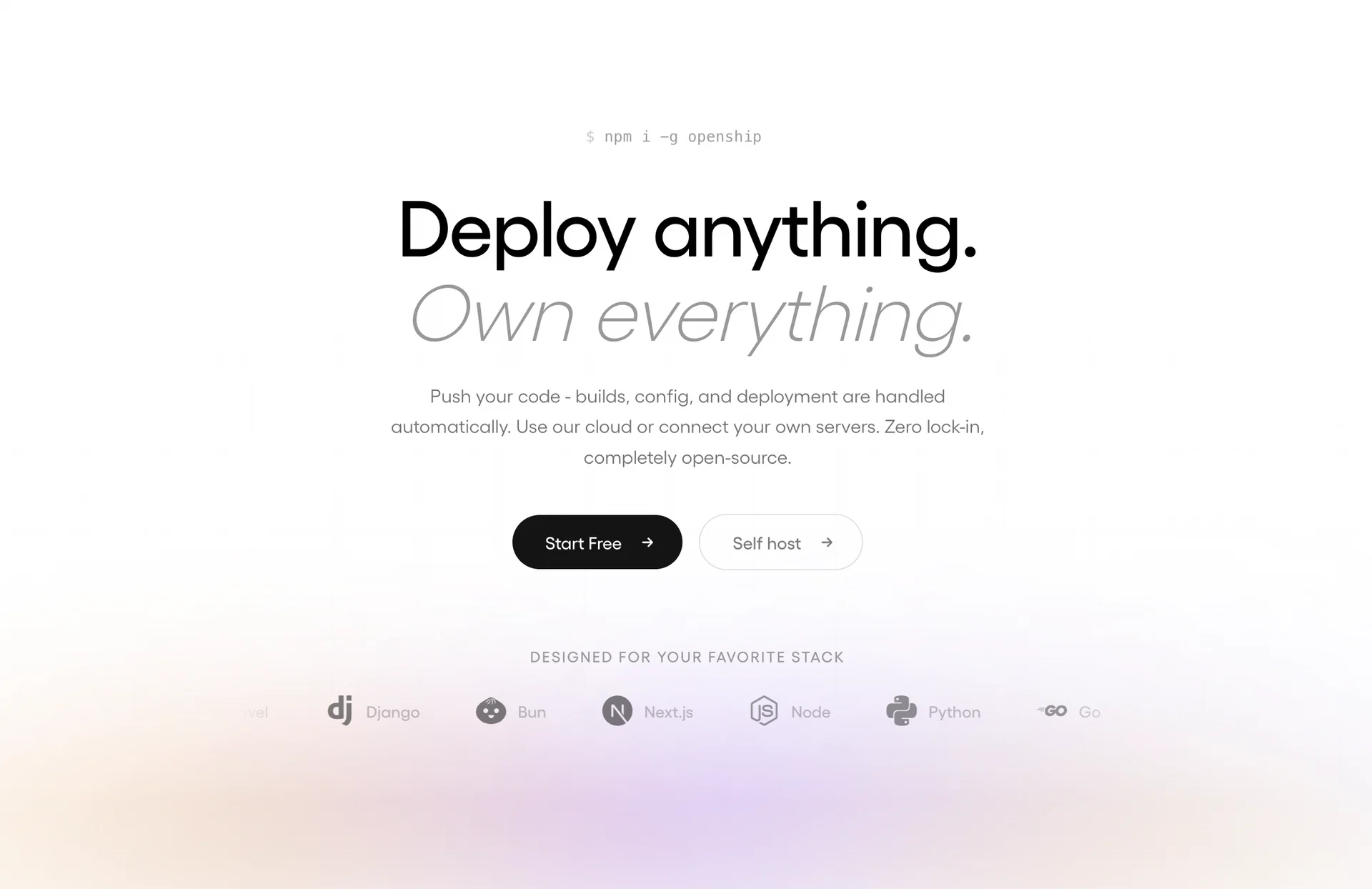
Openship은 이러한 질문에서 출발한 오픈소스 배포 플랫폼입니다.
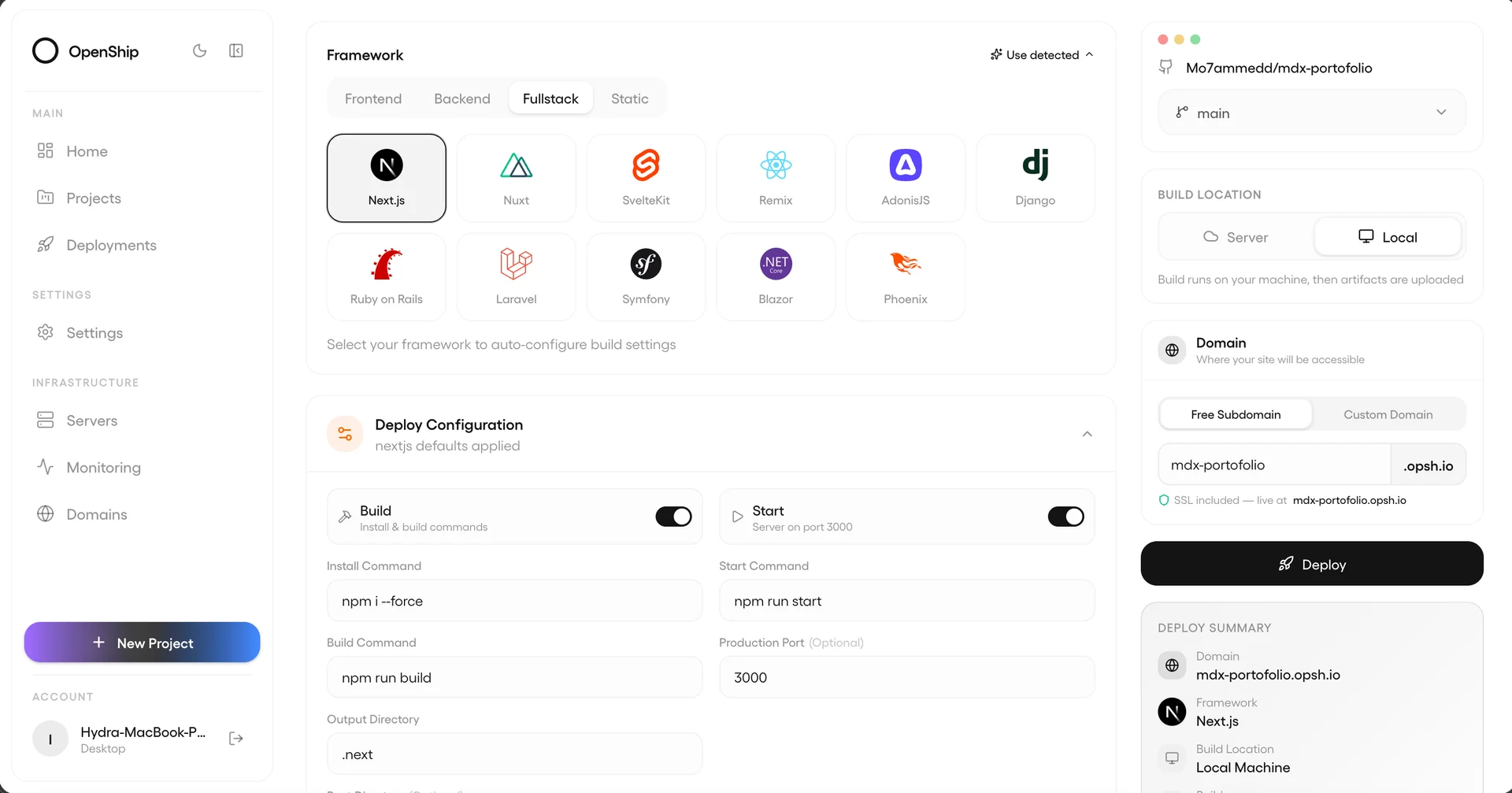
Git 저장소를 연결하면 프로젝트의 기술 스택을 감지하고, 애플리케이션 빌드부터 컨테이너 배포, 도메인 연결, SSL 인증서와 모니터링까지 하나의 흐름으로 처리합니다.
Openship Cloud를 이용할 수도 있고, 직접 소유한 VPS나 홈 서버에 배포할 수도 있습니다. 클라우드와 자체 서버를 함께 사용하는 하이브리드 구성도 지향합니다.
무엇이 다른가?
Openship은 단순한 배포 스크립트나 서버 관리 대시보드가 아닙니다.
코드가 작성된 순간부터 실제 서비스로 운영되기까지 필요한 과정을 하나의 오픈소스 플랫폼으로 연결하는 데 초점을 맞추고 있습니다.
Git Push에서 배포까지
Openship에 저장소와 배포할 서버를 연결하면 이후의 배포 과정을 자동화할 수 있습니다.
프로젝트의 언어와 프레임워크, 패키지 매니저와 실행 명령을 감지하고, 코드를 이미지로 빌드한 뒤 버전이 지정된 컨테이너로 배포합니다.
별도의 CI/CD 파이프라인이나 복잡한 YAML 파일을 직접 작성하지 않아도 배포를 시작할 수 있다는 점이 특징입니다.
Pull Request마다 별도의 프리뷰 환경을 생성하거나, 이전 배포 버전으로 되돌리는 롤백 기능도 제공합니다.
클라우드와 내 서버를 같은 방식으로
Openship은 관리형 클라우드와 셀프호스팅 가운데 하나만 선택하도록 제한하지 않습니다.
Openship Cloud뿐만 아니라 일반적인 Linux VPS, 전용 서버와 홈랩 환경에도 동일한 워크플로우로 애플리케이션을 배포할 수 있습니다.
배포 결과물은 표준 컨테이너로 만들어지기 때문에 특정 클라우드의 독자적인 런타임에 의존하지 않고, 필요할 때 다른 서버나 제공자로 옮길 수 있도록 설계되었습니다.
프로덕션 서버에서는 빌드하지 않는 구조
일반적인 셀프호스팅 배포 플랫폼은 프로덕션 서버에 대시보드와 빌드 도구, 데이터베이스 등의 관리 구성 요소를 함께 설치하는 경우가 많습니다.
Openship은 애플리케이션 이미지를 로컬 환경이나 클라우드에서 먼저 빌드한 뒤 SSH를 통해 대상 서버로 전달합니다.
대상 서버에는 별도의 관리 에이전트나 대시보드를 설치하지 않으며, 프로덕션 서버는 빌드 작업 대신 실제 애플리케이션 실행에 집중하도록 구성됩니다.
배포에 필요한 백엔드 기능 통합
애플리케이션을 운영하려면 코드 배포 외에도 다양한 인프라가 필요합니다.
Openship은 PostgreSQL, MySQL, MongoDB와 Redis 같은 데이터 서비스부터 커스텀 도메인, Let’s Encrypt SSL, 백업, 오브젝트 스토리지와 실시간 로그 및 모니터링까지 한곳에서 관리하는 것을 목표로 합니다.
자체 도메인으로 트랜잭션 이메일을 보낼 수 있는 메일 서버 기능도 포함되어 있어, 여러 외부 서비스를 조합해야 했던 운영 환경을 하나의 플랫폼 안으로 모으려는 방향성이 인상적입니다.
원하는 인터페이스로 관리
Openship은 CLI뿐만 아니라 웹 대시보드와 데스크톱 앱도 제공합니다.
개발자는 터미널에서 배포를 자동화할 수 있고, 팀에서는 웹 화면을 통해 배포 상태와 로그, 리소스 사용량을 확인할 수 있습니다.
REST API와 MCP도 지원하여 Claude, Cursor와 같은 MCP 클라이언트나 AI 에이전트가 배포와 운영 작업을 수행할 수 있도록 설계된 점도 흥미롭습니다.
앞으로의 가능성
개인 개발자와 작은 팀에게 배포는 이전보다 쉬워졌지만, 그 편리함은 종종 높은 사용료나 플랫폼 종속성으로 이어지곤 합니다.
반대로 셀프호스팅을 선택하면 서버를 소유할 수 있는 대신 배포 파이프라인과 SSL, 데이터베이스, 백업, 모니터링까지 직접 구성해야 합니다.
Openship은 이 두 선택지 사이에서 “편리한 개발자 경험과 인프라 소유권을 함께 가질 수 있는가”를 실험하는 프로젝트라고 볼 수 있습니다.
현재 핵심 기능은 실제 운영을 목표로 개발되고 있으며, 멀티 노드 클러스터와 로드 밸런싱 UI, 프라이빗 네트워크, 고급 모니터링과 시각적 CI/CD 파이프라인 등이 다음 단계로 예고되어 있습니다.
오픈소스 PaaS와 셀프호스팅, 또는 AI 에이전트를 활용한 인프라 자동화에 관심이 있다면 살펴볼 만한 프로젝트입니다.
주요 특징
- 오픈소스 셀프호스팅 배포 플랫폼
- Git Push 기반의 자동 빌드 및 배포
- 별도의 YAML이나 CI/CD 파이프라인 없이 시작 가능
- Openship Cloud, 자체 VPS 및 홈 서버 지원
- 표준 컨테이너 기반으로 플랫폼 종속성 최소화
- 프리뷰 배포와 즉시 롤백 지원
- 커스텀 도메인 및 Let’s Encrypt SSL 자동화
- PostgreSQL, MySQL, MongoDB 및 Redis 지원
- 백업, 실시간 로그와 리소스 모니터링
- CLI, 웹 대시보드 및 데스크톱 앱 제공
- REST API 및 AI 에이전트를 위한 MCP 지원
- Apache 2.0 라이선스로 공개
🔗 관련 링크
웹사이트: https://openship.io/
GitHub: https://github.com/oblien/openship
📣 프로젝트 제작자이신가요?
런치 큐레이터는 새로운 인디 프로젝트와 빌더를 소개하고 있습니다.
직접 프로젝트를 소개하고 싶다면 채널에 가입해 자유롭게 글을 작성해 보세요.