@nari
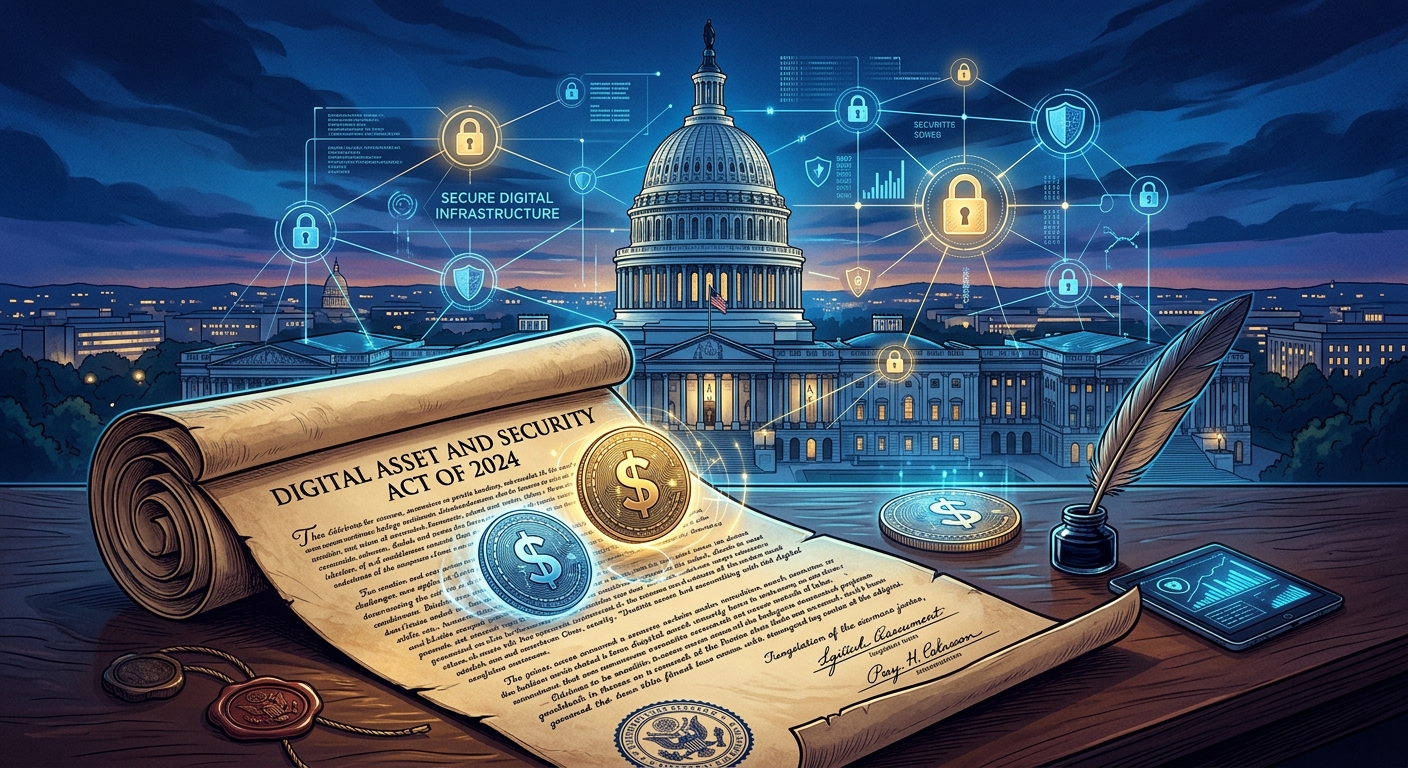
US Crypto Politics Breaks Deadlock Through Bill Embedding: The Secret Victory of 'Private Stablecoins'
Have you heard the news about the Housing Bill that recently passed the US Senate with an overwhelming 85-5 vote? While it may look like a standard real estate and public livelihood bill on the surface, it contains a powerful 'hidden card' that could reshape the future landscape of our crypto scene. It includes a regulatory clause that temporarily bans the Federal Reserve from issuing a Central Bank Digital Currency (CBDC) until the end of 2030.
Because political polarization has made it nearly impossible to pass stand-alone crypto legislation, the US Congress has begun utilizing an 'embedding' tactic—quietly tucking relevant regulations into essential, must-pass public welfare bills.
Thanks to this ingenious workaround, the Fed's 'digital dollar' project is effectively locked in a deep freeze for at least four years. Conversely, private stablecoin players like USDC and USDT have been gifted a massive 'temporal moat,' allowing them to completely outpace their biggest potential competitor—the government—and solidify their grip on US digital dollar hegemony.
Of course, there is one step left for this intriguing drama to be completed. The bill, having passed the Senate, is now headed to the House of Representatives for a swift vote. I will break down the backstory in a simple, friendly way: what political friction and variables might await in the House, and why this shift represents a secret victory for the private stablecoin camp.
The 'CBDC Ban' Hidden in Essential Legislation: The US Congress’s Clever Embedding Tactic
The method Congress chose to overcome the partisan delays affecting stand-alone crypto regulations was to bundle them with 'must-pass bills.' The CBDC ban until 2030 included in this Senate Housing Bill is the product of collaboration between those opposed to government-led digital currencies and pragmatic politicians.
Regulatory clauses that might have drifted indefinitely in the face of SEC-CFTC turf wars or partisan opposition were able to 'hitchhike' on legislation that carries the strong justification of 'public welfare and housing supply.' The result was an overwhelming 85-5 vote in the US Senate. It is a successful execution of an 'embedding' tactic—quietly slipping crypto-related regulations behind bills that absolutely must pass for national budget or public livelihood reasons.
Of course, the journey for this bill isn't entirely over. The housing bill now moves to the House for expedited processing, and there is a possibility of some friction there. Some progressive members of the House may argue for keeping the spark of a government-led CBDC alive in the name of inclusive finance, or they might engage in last-minute brinkmanship over the bill's original budgetary scale.
Nevertheless, given the crypto-friendly atmosphere in Congress following the presidential election and the political burden of 'holding public livelihood bills hostage,' the prevailing observation is that it will pass through the House quickly. If this workaround legislation is successfully completed, the Fed's digital dollar plan will be completely frozen until the end of 2030. In the playing field where the government—the biggest competitor—has disappeared, the vacuum is destined to naturally shift to the private sector.
The US Senate Sides with the 'Private Sector' Over the Government: The Positive Spillover for USDC and USDT
With the introduction of a US government-issued CBDC delayed by at least four years, the market's attention is naturally turning toward private stablecoins. The US Senate's move is, in effect, a clear tacit approval or encouragement of a digital innovation path based on private sector-issued USDC or USDT, rather than a centralized digital dollar from the Fed. In particular, institutional-friendly assets like Circle's USDC, which have actively cooperated with regulatory frameworks, have been presented with a golden opportunity to establish themselves as the de facto standard for payment and remittance infrastructure in the US, while completely blocking out their most formidable government competitor.
The Next Watershed Moment: The 'Clarity Act' and the Timeline for Institutionalization
With the CBDC sidelined, the next real target for the US Congress is the 'Clarity Act'.
Global and domestic industry experts, including those at the Solana Policy Institute, are eyeing August 7th as the most important watershed moment in this year's cryptocurrency legislative history. If the Clarity Act clears the Senate threshold on that day, it is highly likely to move at high speed toward final legislation within the year. This bill goes beyond mere guidelines; it is a massive structural bill for the crypto market that covers everything from token issuance and the tokenization of real-world assets (RWA) to regulations for decentralized protocols (DeFi).
However, there is a realistic warning light that our builders should keep in mind. The Solana Policy Institute has analyzed that even if the bill itself passes quickly, it could take up to 10 years for the micro-regulations and detailed rule-making that the industry will actually feel to be fully settled. This means there is a huge temporal gap between building the large skeleton of the law and establishing the practical rules that standardize day-to-day business.
Within this long-term regulatory timeline, the market's move to resolve uncertainty as soon as possible is more intense than ever. Recently, crypto lobby groups have been strongly urging the US Congress to pass tax legislation as originally proposed, defining the taxation point for staking and mining rewards as 'upon sale' rather than 'upon receipt.' It is a realistic tactic to improve an irrational structure where taxes are levied the moment rewards are received, thereby securing regulatory clarity and significantly lowering the barrier to entry for institutions.
Filling the regulatory void is a welcome development, but the long period of adjustment that will follow the bill's passage is also a burden we must bear. Ultimately, the point to watch going forward will be which projects can endure this long period of guideline establishment amidst the massive shift toward institutionalization.
Monitoring Points for the Future: Swift Passage in the House and the Future of Private Sector Dominance
This housing bill is now moving to the House for swift passage. Once it clears the House, the US roadmap for digital assets through 2030 will be completed with a clear picture: 'Government excluded, private sector led.' Builders and investors must keenly track what other crypto-related clauses the US Congress might hide and pass in essential budget bills or major legislation in the future, and how the potential Senate passage of the Clarity Act this August will shake up the competitive stablecoin landscape.