Coinpedia
Standard Chartered analyst Geoffrey Kendrick predicts tokenization will drive significant growth for four altcoins: Uniswap (UNI), Aave (AAVE), Morpho, and Arbitrum (ARB), with ambitious price targets by 2030.
Use the arrow keys to inspect candles, and + or − to zoom.
Standard Chartered analyst Geoffrey Kendrick predicts tokenization will drive significant growth for four altcoins: Uniswap (UNI), Aave (AAVE), Morpho, and Arbitrum (ARB), with ambitious price targets by 2030.
Standard Chartered analyst Geoff Kendrick is bullish on tokenization and has identified four altcoins—UNI, AAVE, ARB, and LINK—with significant upside potential, while also maintaining targets for BTC and ETH.
AAVE, SAND, and PUMP are highlighted as top altcoins for October due to distinct on-chain signals. AAVE shows DeFi activity and whale accumulation, SAND has explosive whale transactions, and PUMP sees increased social attention.
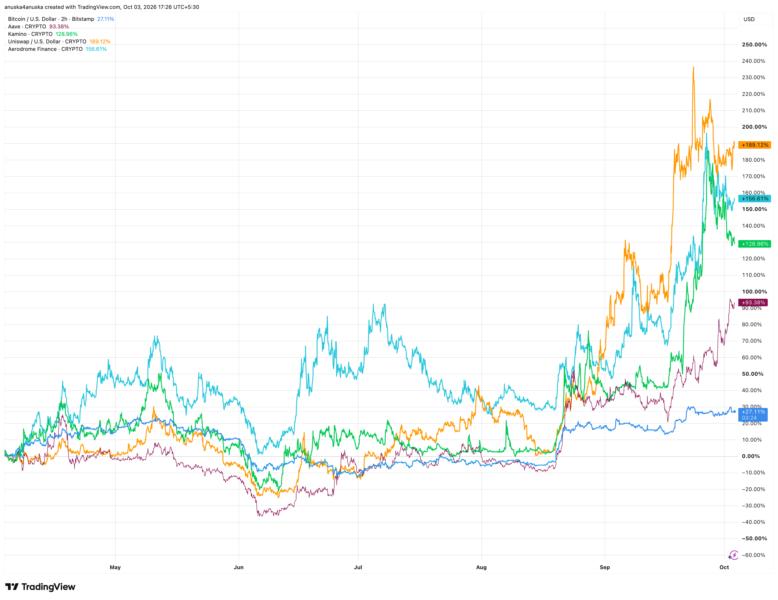
Fundstrat's Sean Farrell suggests a shift to shorter-term US Treasury debt could be an "explosive catalyst" for Bitcoin. He also sees tokenization benefiting DeFi tokens like SOL, AAVE, UNI, AERO, and KMNO.
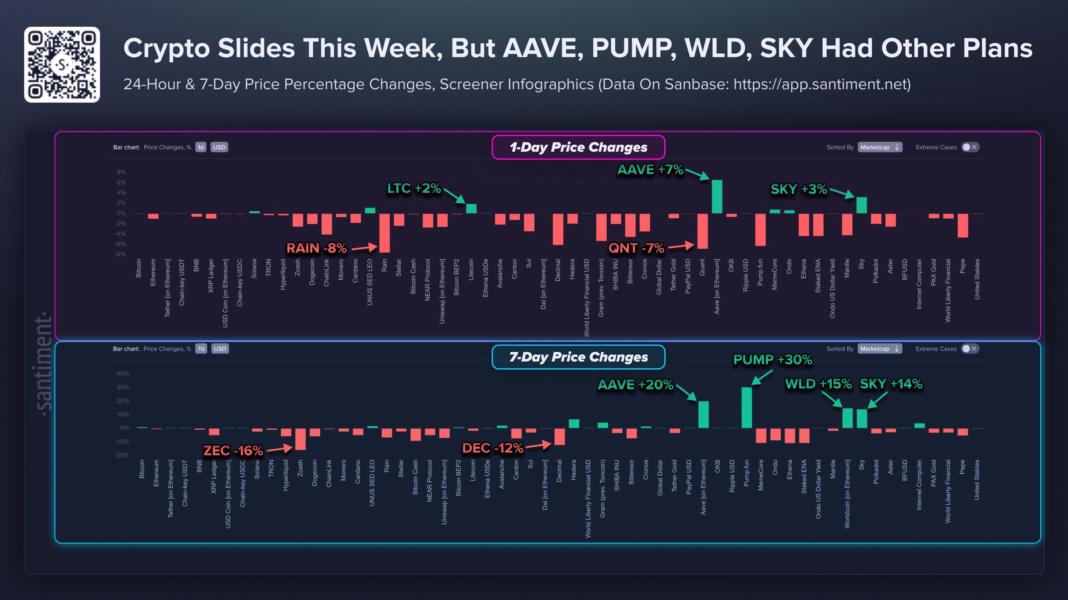
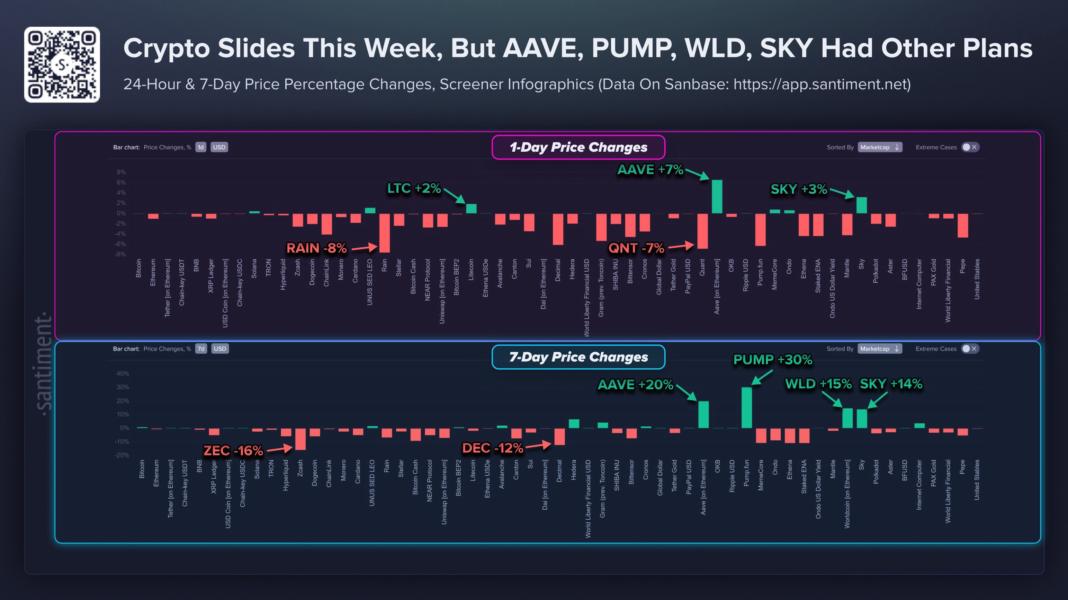
While most cryptocurrencies experienced a downturn, Pump.fun, Aave, Worldcoin, and Sky saw gains. Aave's rise was attributed to loan growth, Pump.fun to token buybacks, and Sky to increased institutional investor demand. Bitcoin and Ethereum, among others, showed a downward trend.
While most cryptocurrencies declined in early October, Aave (AAVE), Pump.fun, Worldcoin, and Sky (SKY) saw significant gains driven by factors like lending growth, token buybacks, and institutional interest. Quant (QNT) experienced a notable pullback after a prior rally.
Aave Labs proposes establishing a Cayman Islands Foundation to hold Aave protocol's trademarks and IP, overseen by Aave DAO. This initial phase focuses on registration and independent directorships, with the DAO retaining governance control.
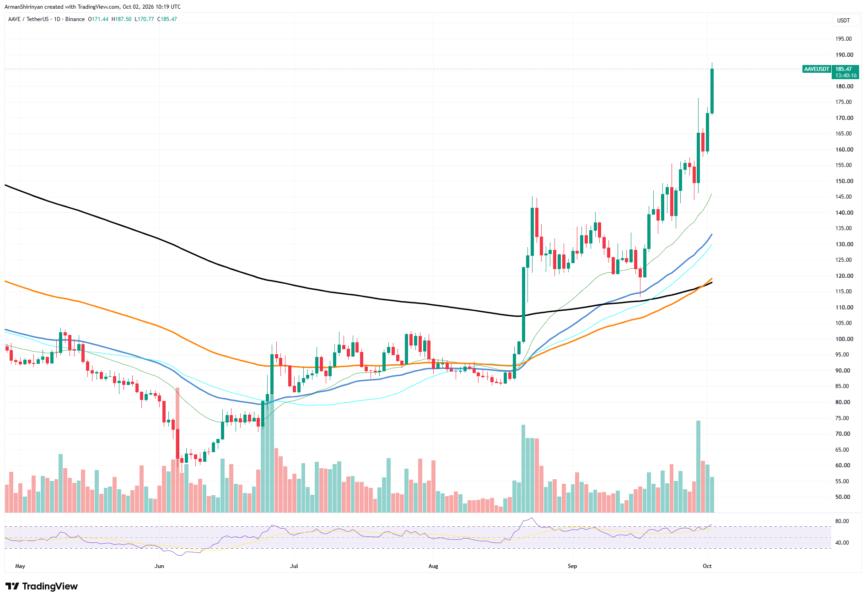
U.Today analyzed the short-term resistance and support zones for Dogecoin, Cardano, Aave, and Bonk. Dogecoin and Cardano are testing resistance zones after a rebound, while Aave may see a correction after a sharp rise. Bonk has recovered, but a long-term downtrend reversal is uncertain.
AbeLabs has proposed the establishment of a foundation for the integration of its brand and intellectual property. The foundation will hold Abe IP under the supervision of a DAO, with an initial legal entity to be established in the Cayman Islands and executives appointed. The transfer of trademarks, domains, and codebases will be decided through governance votes.
Aave Labs proposes a phased plan for DAO oversight of brand and IP. Initially, a Cayman Islands entity will be formed, with full asset transfer contingent on future DAO votes.
The external adapter 'Flash Loop Adapter' related to AAVE V3 was hacked, resulting in the leakage of approximately $305,000 worth of ETH. The attacker bypassed authentication and stole assets from a multisig wallet, but it is reported that the AAVE V3 mainnet was not affected.
A hack on a third-party Aave V3 adapter, FlashLoopAdapter, resulted in approximately $305,000 in ETH losses due to an access-control vulnerability. The Aave V3 protocol itself remains unaffected.
The external adapter of DeFi lending protocol Aave (AAVE) was hacked, and approximately $300,000 worth of Ethereum was stolen. The Aave V3 protocol itself was not affected.
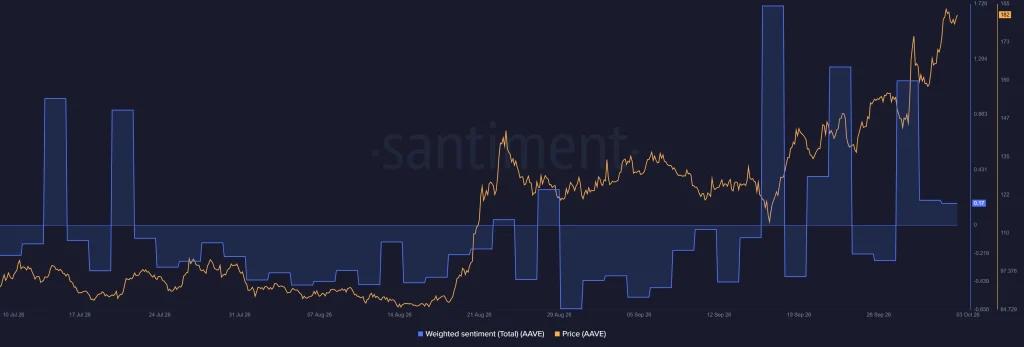
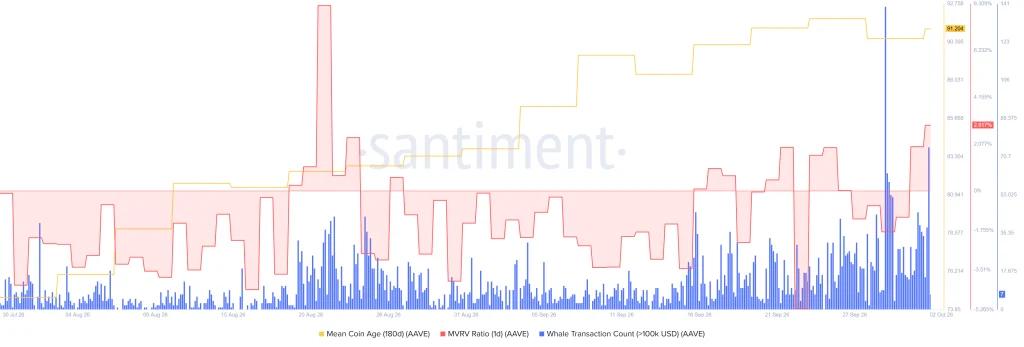
AAVE price is surging towards $200, driven by increased whale activity, rising Mean Coin Age, and recovering MVRV. Protocol upgrades like Aave V4 and potential AAVE burn mechanisms also contribute to positive sentiment.
Kitto@kitto
Crypto Trading
Interesting activity was recently spotted in on-chain data. Wallets presumed to be associated with the Aave development team sold 50,000 AAVE, worth approximately $8 million, over the past week. These wallets still hold 30,000 AAVE, currently valued at about $5.5 million.
Typically, large sell-offs from project team or developer-related wallets are easily perceived by the market as short-term sell pressure or negative psychological indicators. However, it remains to be seen whether this sale is simply for portfolio diversification or to secure funding for ecosystem development.
Aave recently experienced a fund outflow incident targeting vulnerabilities in certain third-party adapters; however, the founder personally clarified that the core Aave V3 protocol was unaffected, demonstrating its robust fundamentals. How this developer wallet activity will truly impact market sentiment, and whether the remaining 30,000 tokens will be moved, are key points to continue monitoring.
Aave (AAVE) has seen a 68% volume increase driven by Aave V4's $1B+ deposits, expansion to Arc and Base, and a $50M buyback program. A short squeeze also contributed to its recent price surge.
A third-party adapter for Aave, FlashLoopAdapter, was exploited for $305,000 due to an access-control vulnerability. The Aave V3 protocol itself remained unaffected by the hack.
The external adapter of DeFi lending protocol Aave (AAVE) was hacked, and approximately $300,000 worth of Ethereum was stolen. However, the Aave V3 protocol itself was confirmed to be secure.
Aave founder confirms Aave v3 is unaffected by a $305K exploit targeting a third-party adapter. The attack exploited an access-control flaw in a module used for leveraged positions via Safe wallets, draining ETH and collateral, but not impacting Aave v3 directly.
Aave founder has revealed that Aave V3 remained unaffected despite a third-party adapter exploit draining $305,000. The attacker exploited the leverage position module of the Safe wallet to steal ETH and collateral.