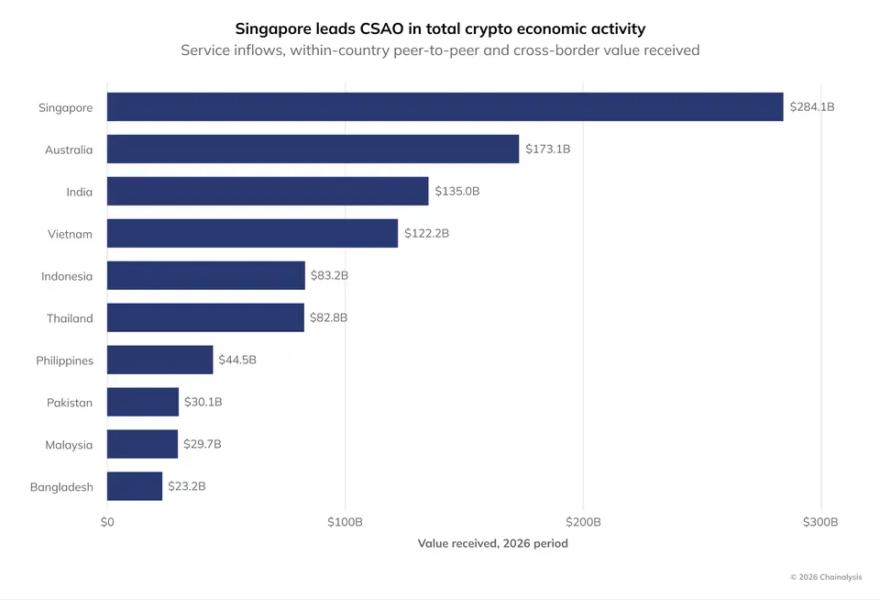
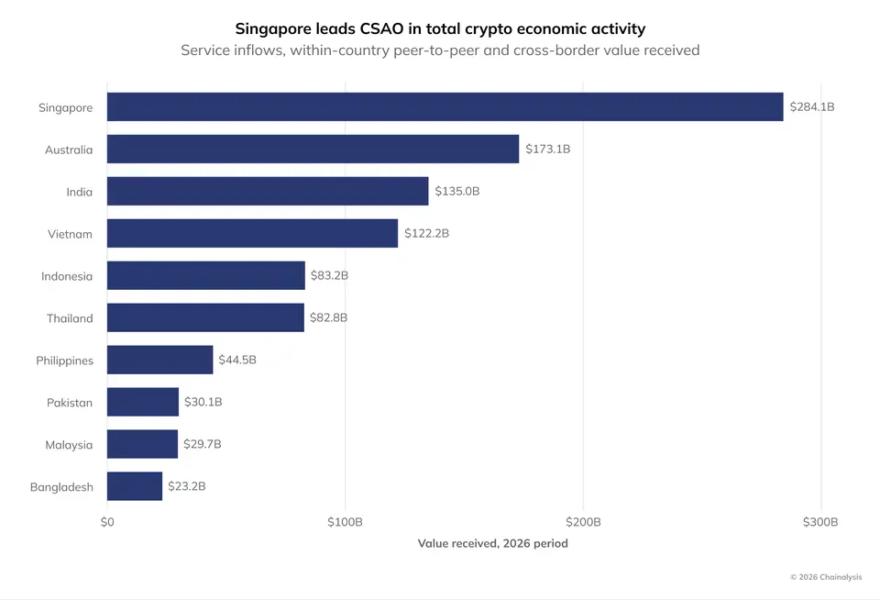
China's Ministry of State Security has warned that cryptocurrencies are being used for espionage and criminal activities. Meanwhile, cryptocurrency transactions in Singapore have increased by 55%, and South Korea is considering the introduction of a market-making system. In Japan, crypto payments are now possible at PayPay merchants. Hong Kong's regulators are strengthening supervision of crypto firms, and HSBC is set to issue a Hong Kong dollar-backed stablecoin.
Use the arrow keys to inspect candles, and + or − to zoom.
China is tightening regulations, warning that cryptocurrencies could be used for espionage. Meanwhile, Singapore has emerged as Asia's largest crypto economy, growing 55% due to increased institutional activity. South Korea is considering introducing market makers, and in Japan, Binance Pay supports crypto payments at PayPay merchants. Hong Kong is strengthening oversight of financial reporting for licensed crypto firms.
Cardano-linked privacy coin Midnight (NIGHT) has surged 86% in a week, driven by anticipation for its upcoming smart contract upgrade (v8) and composability feature (v9). This rally occurred despite a broader market downturn.
As Ethereum privacy technology gains attention, Aztec's zk.money has been relaunched. Aztec provides privacy features on Layer 2, Rail integrates privacy into existing DeFi, and Zama supports encrypted computation. Each project differs in its approach to privacy.
PrimeXBT expands its crypto futures offerings by adding 15 new USDT-paired contracts on PXTrader 2.0, bringing the total to over 170. The new futures cover diverse sectors like DeFi, AI, and privacy, with leverage up to 1:100.
PrimeXBT expands its Crypto Futures offering by adding 15 new assets, including Monero, Kaspa, and various DeFi and AI tokens, bringing the total to over 170. This move provides traders with more options and flexibility.
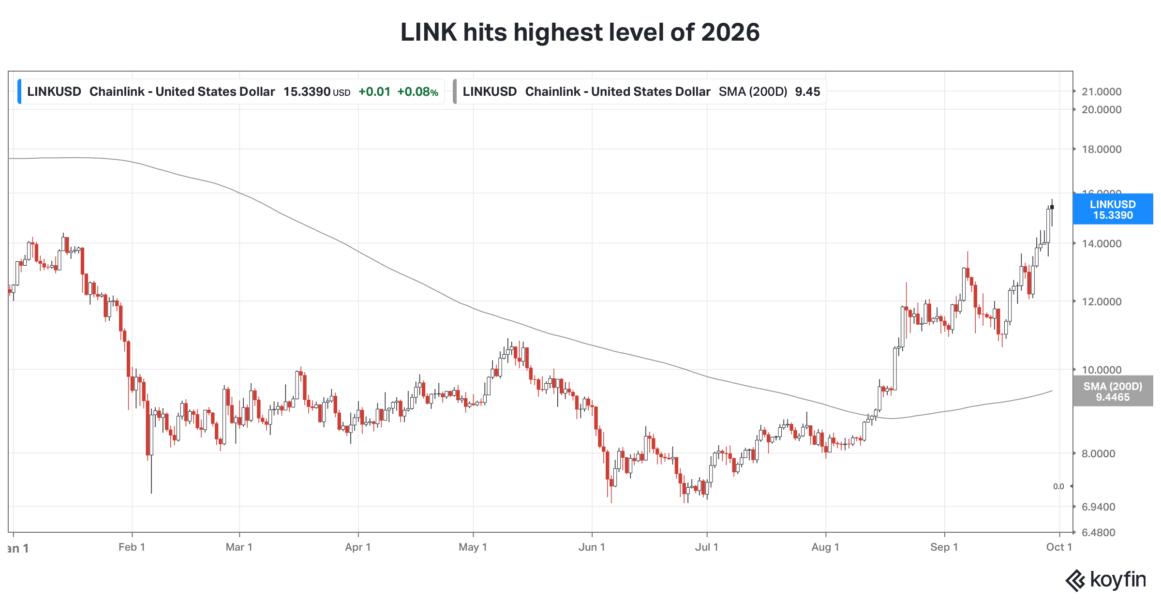
Chainlink's LINK token reached its highest 2026 level after launching CCIP 2.0, outperforming BTC, ETH, and XRP. The upgrade enhances cross-chain communication with compliance features and institutional adoption.
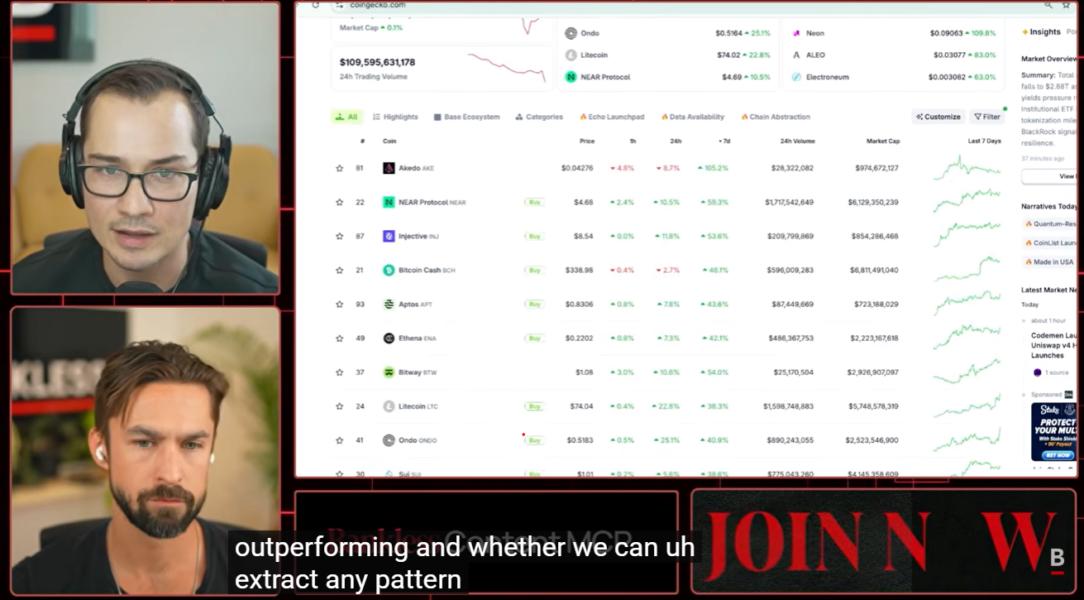
Altcoin markets are seeing broad rotation across DeFi, privacy, AI, and memecoin sectors, with traders favoring utility and revenue-generating tokens over pure speculation. While an official altseason hasn't begun, diverse gains suggest a shift in market dynamics.
Monero has released a new beta stressnet version to test upcoming privacy upgrades like FCMP++, enhancing transaction anonymity by expanding the set of eligible outputs and enabling features like outgoing view keys.
As the altcoin season approaches, traders are focusing on projects generating profits in various sectors such as memecoins, DeFi, AI, and privacy tokens. There is a growing interest in coins with practical utility and business fundamentals rather than speculation, and the market is becoming more selective.
Altseason is showing signs of life with diverse gains across DeFi, AI, and privacy tokens, suggesting a shift towards utility over pure speculation, though memecoins still see some traction.
When swapping USDT to Monero (XMR), ensure the USDT network (TRC-20 on Tron or ERC-20 on Ethereum) matches your wallet and the swap form to avoid costly errors and delays. Tron requires TRX for fees, Ethereum requires ETH.
Since Bitcoin's peak in October last year, only 9 out of the top 50 altcoins have outperformed Bitcoin, with Zcash showing the highest growth at 14.5 times. While recent short-term participation in the rally has increased, the market share changes have been minimal, highlighting the importance of stock selection.
A proposal has emerged to implement privacy features on Bitcoin's L1. It can be implemented without a soft fork and could weaken the differentiation of privacy coins like Zcash and Monero. Technical verification and consensus are required for actual implementation.
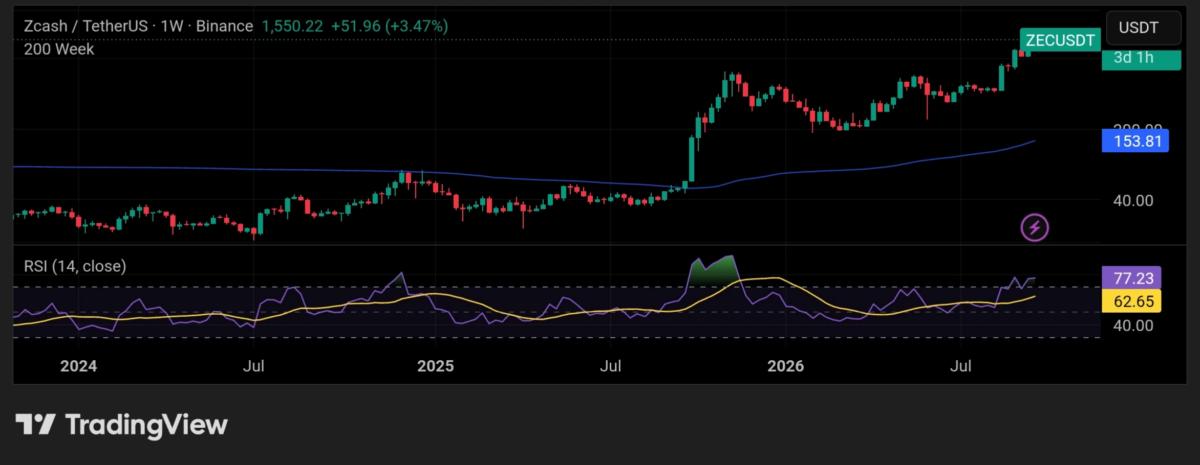
Zcash co-founder predicts ZEC could reach $5,000, citing Europe's first Zcash ETP, Grayscale's ETF success, and ZEC's privacy features outperforming Bitcoin. Technicals show bullish acceleration, though overbought conditions suggest potential pullbacks.
Privacy coin market cap surged 205% in 5 months, with Zcash and Monero accounting for most of it. Institutional investors maintained their investment share even during market downturns. Europe's ESMA designated AI, tokenization, and cyber resilience as supervisory priorities for 2027. The Bank of England kept its base rate unchanged, while Brent crude oil prices rose. The Dualbits hack victim loss was confirmed at $7 million, and Meter Protocol was found to have issued $2.3 million in unsecured MTRG. Arbitrum One is pushing for a transition to a PGA model, and Binance Wallet offers up to 4.75% rewards to stablecoin holders. US DTC plans to launch stock and ETF tokenization services in October 2026.
The market capitalization of privacy coins has increased by $24.54 billion over the past five months, reaching $36.51 billion. Zcash (ZEC) and Monero (XMR) have led this growth, with Zcash in particular benefiting from changes in the US regulatory environment and the listing of spot ETFs.
Real-World Assets (RWA), perpetual futures, and privacy have emerged as the new top three themes in the virtual asset market. The market is now prioritizing actual business performance, such as real sales, cash flow, and user engagement, as key criteria for token value assessment, rather than relying on past narratives. This indicates a shift in the market's valuation structure compared to the past.
Following Bitcoin's new all-time high, only 9 out of the top 50 market cap altcoins showed better performance than Bitcoin. While Zcash stood out with a 14-fold increase, the upward trend was not widespread, concentrating on a few specific assets.
BlackRock's research suggests stablecoins like USDC on Ethereum will power AI agent transactions. This could increase demand for blockspace and boost ETH's value. Privacy coins like XMR and ZEC are also seeing trader interest.