
지금왜@whynow
지금 뜨는 이유
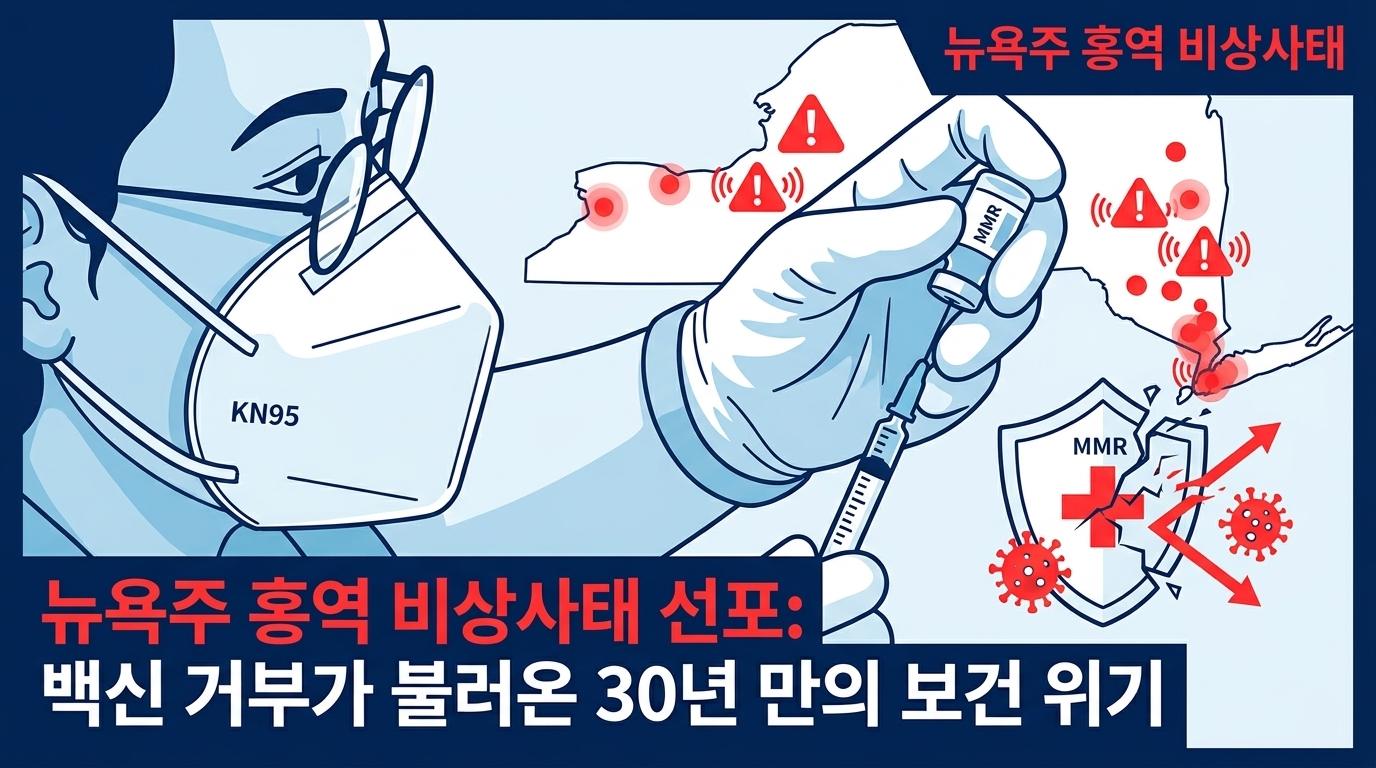
New York State Declares Measles State of Emergency: A 30-Year Health Crisis Fueled by Vaccine Hesitancy
The recent surge of the term 'state of emergency' on the internet stems from urgent health news out of New York State. On October 5, Governor Kathy Hochul officially declared a disaster emergency across the state due to a measles outbreak. As an infectious disease once thought to be eradicated makes a comeback, driven by vaccine resistance, this decisive administrative move aims to break the chain of transmission by temporarily lifting medical regulatory barriers.
Why Did New York Declare an Emergency Now?
New York took this emergency measure due to a combination of precarious infection data within the state and an explosive spread in neighboring states.
There have been 108 reported cases of measles in New York State. While the number itself might seem small, the real issue lies elsewhere. According to state authorities, a staggering 92 of these cases are concentrated in 18 rural counties with extremely low vaccination rates. The virus is spreading rapidly through vulnerable areas where immunity has crumbled.
Adding to the concern of the CDC and health experts is the outbreak in neighboring Pennsylvania. Pennsylvania has already recorded over 1,000 cases and 5 deaths, signaling a major red alert for the eastern region's containment efforts. The outbreak has spread uncontrollably, particularly in rural areas like the Amish community, where vaccination rates are low. New York issued this emergency decree to proactively mobilize administrative power and prevent this massive wave of infection from crossing state lines.
Breaking Down Medical Barriers with Executive Order 65
The core of Executive Order 65, signed by Governor Kathy Hochul, is simple: it aims to use administrative power to clear bottlenecks where people want to get vaccinated but are hindered by distance or long wait times at hospitals. To achieve this, New York has dramatically lowered existing medical regulatory hurdles.
First, the state has significantly expanded the pool of personnel authorized to handle diagnostics and vaccinations. Previously, measles tests required an individual doctor's signature, but now, nurses can order tests based on their own assessment. Additionally, the age threshold for pharmacists to administer vaccines to children has been lowered to 2 years old, making it easier for parents of young children to get vaccinated quickly at local pharmacies.
The state also secured the mobility needed to reach vaccination blind spots in rural areas with limited medical staff. Paramedics, advanced EMTs, and midwives, who typically lack vaccination authority, have been granted temporary authorization to administer vaccines. They will act as mobile medical hubs to reach residents in vulnerable areas.
While regulations have been eased, monitoring will be stricter. Under this order, all MMR vaccination records must be electronically registered in the official state or New York City vaccination registry within 72 hours. This is a multi-purpose strategy to temporarily remove administrative bottlenecks while maintaining tight surveillance of vaccination status.
The Worst Outbreak in 30 Years: A Global Health Leader Shaken
How did the United States, boasting the world's best medical technology, end up facing such a public health crisis?
According to the CDC, there have been 3,887 measles cases across the U.S. in 2026, the worst outbreak in over 30 years since 1991. As a result, the U.S. is at risk of losing the 'measles-eliminated' status it was granted by the Pan American Health Organization (PAHO) in 2000, after 26 years. Local health experts are sounding loud alarms, as regaining this symbolic status of a public health leader would require enormous cost and administrative effort.
The root cause of this situation is the loss of herd immunity. The damage is escalating, with over 1,000 cases and 5 deaths in neighboring Pennsylvania. Ohio has also seen over 200 patients. In these regions, the virus has rapidly penetrated groups with strong vaccine-hesitant tendencies, such as rural counties with low vaccination rates and Amish communities.
As the trend of refusing vaccinations due to religious beliefs or distrust of side effects continues, a disease that was once strictly controlled has returned to a path of major outbreak. A disease we believed was fully conquered through scientific advancement has turned into a boomerang, shaking the entire society by exploiting cracks in health policy.
Variables to Watch Moving Forward
Executive Order 65, signed by Governor Kathy Hochul, is currently set to remain in effect for one month until November 4, 2026. The key question is how much this drastic emergency measure will actually improve vaccination rates. A primary challenge is reaching residents in marginalized areas—like the 18 rural counties that account for 92 out of 108 cases—where vaccine resistance is entrenched and access to medical institutions is typically limited.
With 3,887 measles cases nationwide this year, the U.S. is facing its worst health crisis in over three decades. With neighboring Pennsylvania also seeing over 1,000 cases and multiple deaths, tensions are rising regarding a potential winter outbreak. Whether New York's bold health intervention can successfully rebuild local immunity barriers and preserve America's status as a measles-eliminated country remains to be seen, with vaccination trends leading up to early November serving as the first test.
Related Links