
지금왜@whynow
지금 뜨는 이유
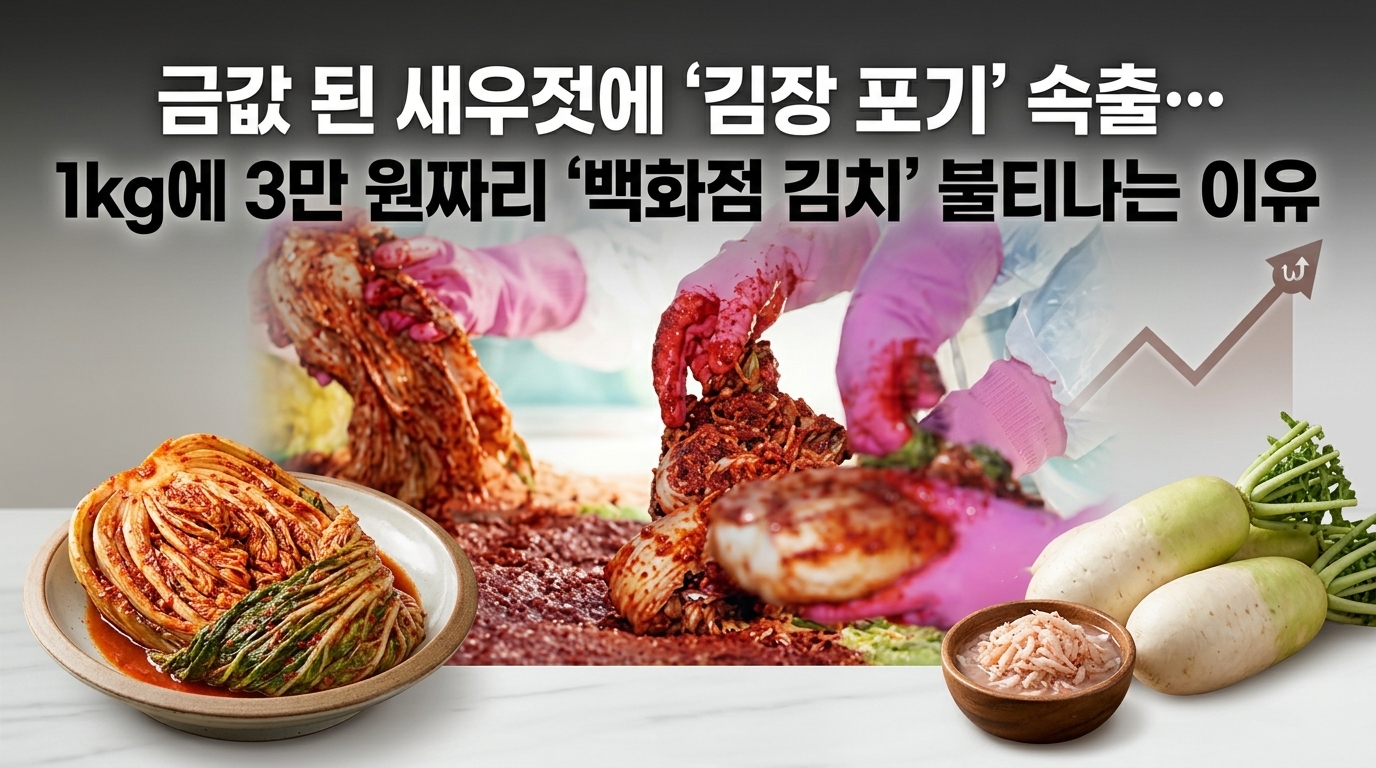
Shrimp Paste Prices Reach Gold Status, Leading to 'Gimjang Quitters': Why $23-Per-Kg 'Department Store Kimchi' Is Flying Off the Shelves
"Should I just skip Gimjang this year and buy it instead?" As cold winds arrive, this question is weighing heavily on Koreans, driving a rush for store-bought kimchi. While the price of napa cabbage, the main ingredient, has finally stabilized, the costs of essential secondary ingredients like radishes and shrimp paste have soared so dramatically that many are giving up on the traditional practice altogether—giving rise to the so-called 'Gimpo-jok' (Kimchi-quitting tribe). As consumers turn to premium packaged kimchi from hotels and department stores instead of making it at home, the landscape of the 'kimchi war' on dinner tables this winter is undergoing a complete transformation.
Cabbage Prices Dropped, But Radishes and Shrimp Paste Are the Real Hurdles: Why Gimjang Is Especially Daunting This Year
“I heard cabbage prices are more stable this year—should I try making kimchi?” More people are heading to the market with this lighthearted thought, only to keep their wallets firmly shut. If you only look at cabbage, it seems plausible. According to data from the Korea Agro-Fisheries & Food Trade Corp and the retail industry, the average retail price of cabbage as of early October was 6,256 KRW per head, down about 6.53% from the same period last year, showing signs of stabilization.
However, the real hurdle lies elsewhere. The core ingredients for the seasoning have become worth their weight in gold. The aftermath of the heatwaves and heavy rainfall that struck the Korean Peninsula last summer hit secondary ingredients like radishes even harder than cabbage. The average retail price of a radish, an essential partner for Gimjang, has surged 32.79% year-on-year to 2,778 KRW.
On top of this, the price of shrimp paste, which provides the deep flavor of kimchi, has risen to an average of 18,973 KRW per kg—a 23.36% increase over last year. People who were happy about finding cheaper cabbage are finding that the total receipt is more expensive than expected the moment they put radishes and shrimp paste in their baskets. This harsh 'ingredient inflation,' hidden behind the optical illusion of falling cabbage prices, is preventing many families from setting up their Gimjang tables.
Hotel Kimchi Hits $40 Million Jackpot: The Story Behind Building New Dedicated Factories
As more people abandon home-kimchi making, the ones getting busiest are, unexpectedly, high-end hotels. Because so many consumers have turned to premium packaged kimchi, the high-end kimchi market is experiencing an unprecedented boom.
The most dramatic beneficiary is Josun Hotels & Resorts. Last year, they recorded a record-high revenue of 54 billion KRW from kimchi sales alone. After maintaining a steep average annual growth rate of 23.8% from 2021 to 2025, their cumulative sales through September this year jumped 22.5% compared to the same period last year. With orders pouring in, Josun Hotel has decided to build a new 1,652-square-meter premium kimchi production center in Seongnam, Gyeonggi-do. Essentially, they are building massive new manufacturing facilities to keep up with the exploding demand.
This premium kimchi fever is clearly visible on online platforms as well. According to retail tech company Kurly, Market Kurly’s packaged kimchi sales from July to September of this year rose 35% compared to last year. The noteworthy point is the volume: sales of small-capacity packages between 100g and 1kg increased by 39%, driving overall growth. Unlike the past, where people bought large quantities to ferment over time, it now clear that the trend among single-person households and small families is to buy small amounts of delicious kimchi to enjoy fresh.
$23-Per-Kg Ultra-Premium Kimchi: Department Stores Join the Premium War
As the packaged kimchi market grows rapidly, even department stores, the pinnacle of premium retail, have stepped into the fray. On October 13, 2026, Hyundai Department Store officially launches 'Myeongin Myeongchon Kimchi' through its traditional food brand at major branches nationwide. Starting with the Apgujeong flagship store, this kimchi is priced at around 30,000 KRW per kilogram—an ultra-premium product that is triple the price of average packaged kimchi found in markets.
While it might seem steep for a head of kimchi, the department store is confident because the quality of the ingredients is different. They have carefully selected top-tier ingredients produced by traditional food masters from across the country, such as Shinan sun-dried salt and Asan shrimp paste. The strategy is to clearly target premium consumption trends that prioritize quality, even if it means smaller portions.
With traditional hotel kimchi brands like Josun and Lotte, which have already firmly captured the high-end market, now joined by department store private labels, the competition for the premium kimchi market this fall is expected to heat up even further.
$0.75 Chinese Kimchi at Restaurants, $23 Hotel Kimchi at Home: Extreme Polarization on the Dinner Table
This trend is creating an interesting and bitter polarization on the Korean dinner table. South Korean kimchi consumption is now completely split between 'kimchi eaten out' and 'kimchi eaten at home.' Outside, ultra-low-cost imported kimchi is gaining territory as people try to save even a penny, while at home, premium kimchi is gaining popularity as people prioritize quality over quantity. This strange coexistence is now the norm.
The first to be hit were small-business owners in local commercial districts. With high inflation and operating cost burdens reaching their limit, it has become difficult to cover the cost of kimchi served as a basic side dish. Consequently, many restaurants are quickly switching to cheap imported Chinese kimchi, which costs less than 1,000 KRW per kilogram. In the face of soaring prices, sticking to domestic kimchi has become an option small business owners must realistically give up.
On the other hand, the landscape for general households is the polar opposite. Since they don't consume large amounts at every meal, families insist on luxury kimchi that guarantees taste and quality, even if it costs more. This is a form of 'small luxury' consumption where they buy small amounts of high-end kimchi—costing 30,000 KRW per kg from hotels or department stores—and savor it.
In fact, this trend is proven by the numbers. According to online platform Kurly, packaged kimchi sales from July to September 2026 increased by 35% compared to the same period last year. It was the small-package products that drove this growth. Sales of small-capacity packages between 100 grams and 1 kilogram surged by a whopping 39%, leading the overall sales increase. With 1,000 KRW imported kimchi occupying restaurant tables on one side, and 30,000 KRW hotel kimchi taking up space in home refrigerators on the other, this extreme polarization is becoming the new landscape of the Korean dinner table.
Structural Changes in Gimjang Culture: Crossing the Point of No Return
Gimjang, where the whole family would gather to season cabbage and prepare for winter, is no longer a mandatory annual obligation. It has long since moved into the realm of careful choice, where people calculate costs and labor before deciding. Even though cabbage prices have dropped slightly, the prices of essential side ingredients like radishes and shrimp paste remain so fierce that, combined with the consumer trend favoring convenience, it is accelerating the golden age of premium packaged kimchi.
Ultimately, this winter looks to be a symbolic turning point where the polarization of kimchi on the dinner table becomes fully established. It is becoming part of daily life to see a strange coexistence where restaurants serve cheap imported kimchi for less than 1,000 KRW per kg to save pennies, while households are willing to purchase top-tier kimchi for over 30,000 KRW per kg.
Gimjang, once a symbol of traditional community culture, is now being reorganized into a domain of thorough personal taste and efficiency. One is left to ask whether the ultra-expensive new product from department stores, debuting on October 13, will be able to shake the status of the hotel kimchi that has already captured the market, and in what form our unique Gimjang culture will continue amidst this extreme table polarization accelerated by high inflation.
Related Links