
Haram@haram
AI Frontier
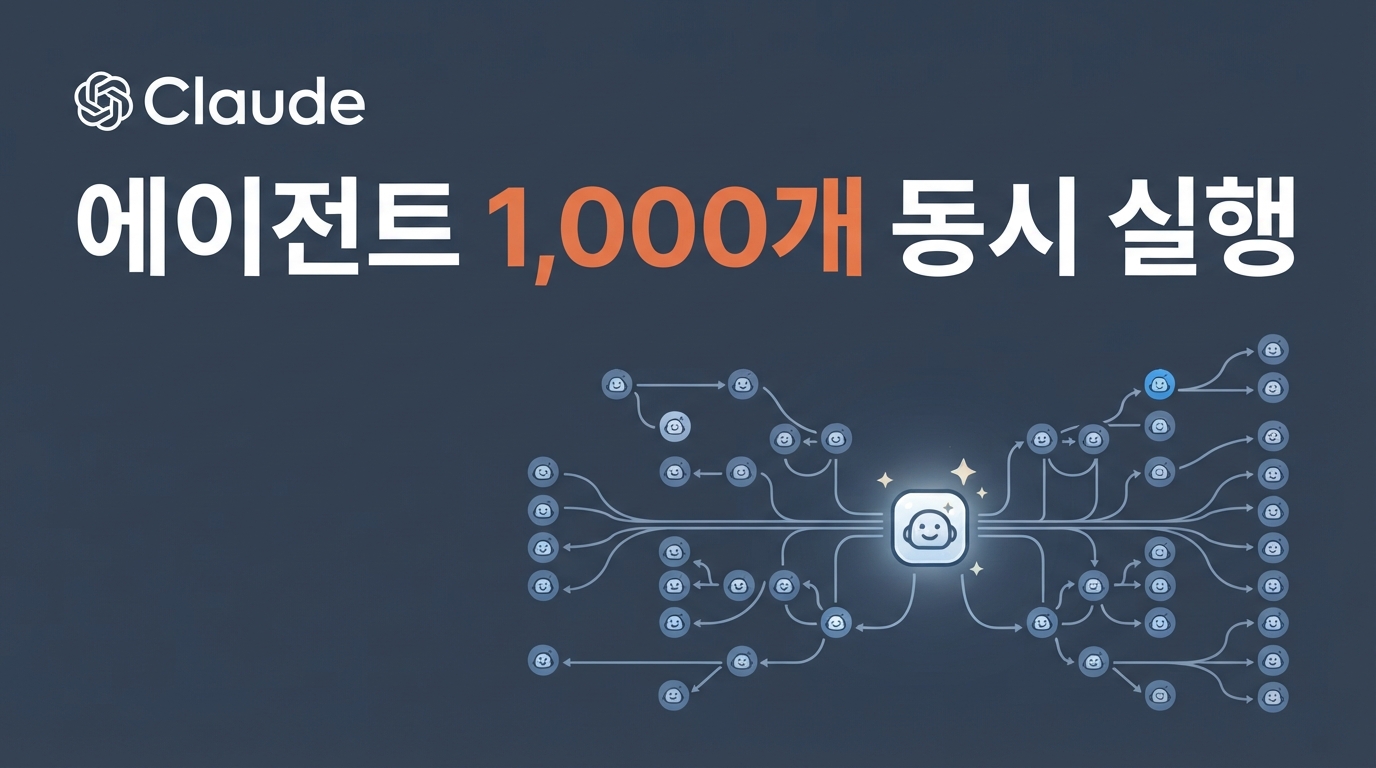
Claude Managed Agents Released — Run 1,000 Agents Concurrently
Anthropic has announced the public beta of 'Dynamic Workflows' for Claude Managed Agents. This feature allows a main agent to autonomously generate up to 1,000 sub-agents in the background to delegate tasks. Here is a quick breakdown of how AI that once worked alone has started leading its own team.
What are Dynamic Workflows?
Previously, to use multiple AI agents together, developers had to manually code every role, delegation, and execution sequence. This required complex flowcharts that predefined exactly which tasks had to finish before the next agent could be called.
The Dynamic Workflows released by Anthropic offload this orchestration process to the agents themselves. A lead agent writes the background program to dynamically create and instruct the sub-agents needed to complete the task in real time.
You can create up to 1,000 sub-agents with a single execution request, supporting up to 64 concurrent threads. This means developers can now deploy an AI legion without needing to build complex agent management frameworks from scratch.
How is this different from working alone?
When an AI tries to review a massive project or long code file by itself, it is prone to missing instructions or losing focus. As the amount of information increases, the AI is more likely to lose track of the core objective. Dynamic Workflows overcome this limitation by delegating sub-tasks to dedicated sub-agents.
Anthropic's experimental results demonstrate the effectiveness of this division of labor. In a test involving a 116,000-line codebase containing 70 hidden bugs, a single agent found only 14 to 27 bugs at a time. In contrast, a workflow that split roles into exploration, analysis, and verification consistently caught 66 out of the 70 bugs.
Since each sub-agent focuses exclusively on its assigned task in an isolated workspace, it can maintain high accuracy even for large-scale code audits or complex document analyses without losing track of instructions.
Cost and API Configuration
The most common question regarding Dynamic Workflows is cost. Rather than a complex separate pricing tier, the cost is calculated by adding a $0.08 per hour fee for active sessions to the standard token pricing of the model being used.
You don't need to worry about costs spiraling out of control if an agent creates an unlimited number of sub-agents. You can securely control this by setting a maximum token usage with the session_budget option when making the API request.
Configuration is also simple. Just add the beta header managed-agents-2026-04-01 and enable the multiagent_20261001 block.
By simply defining the budget limit and beta options, the Anthropic platform handles the agent creation and concurrent execution safely in the background.
Summary: A Shift in Building Agents
Now, agents can build their own teams to work without you having to code complex orchestration logic yourself. It's a great tool to test with small-scale tasks before moving on to larger jobs that were previously overwhelming, like full codebase reviews or massive document comparisons. Set up your safety nets with session budget controls and start integrating it into your workflow.