
소담노트@sodamnote
What if DeFi met your course sales revenue?
When running courses or paid communities, sales revenue often sits in the platform balance for a while. It's money just lingering as a number on your screen before you transfer it to your bank account.
The creator platform Whop has added a different option for this: Whop Treasury. When a user selects this feature, their balance is connected to the DeFi lending market to earn yield.
It’s essentially blockchain finance running behind your sales page. It’s a bit different from creators having to seek out crypto services themselves!
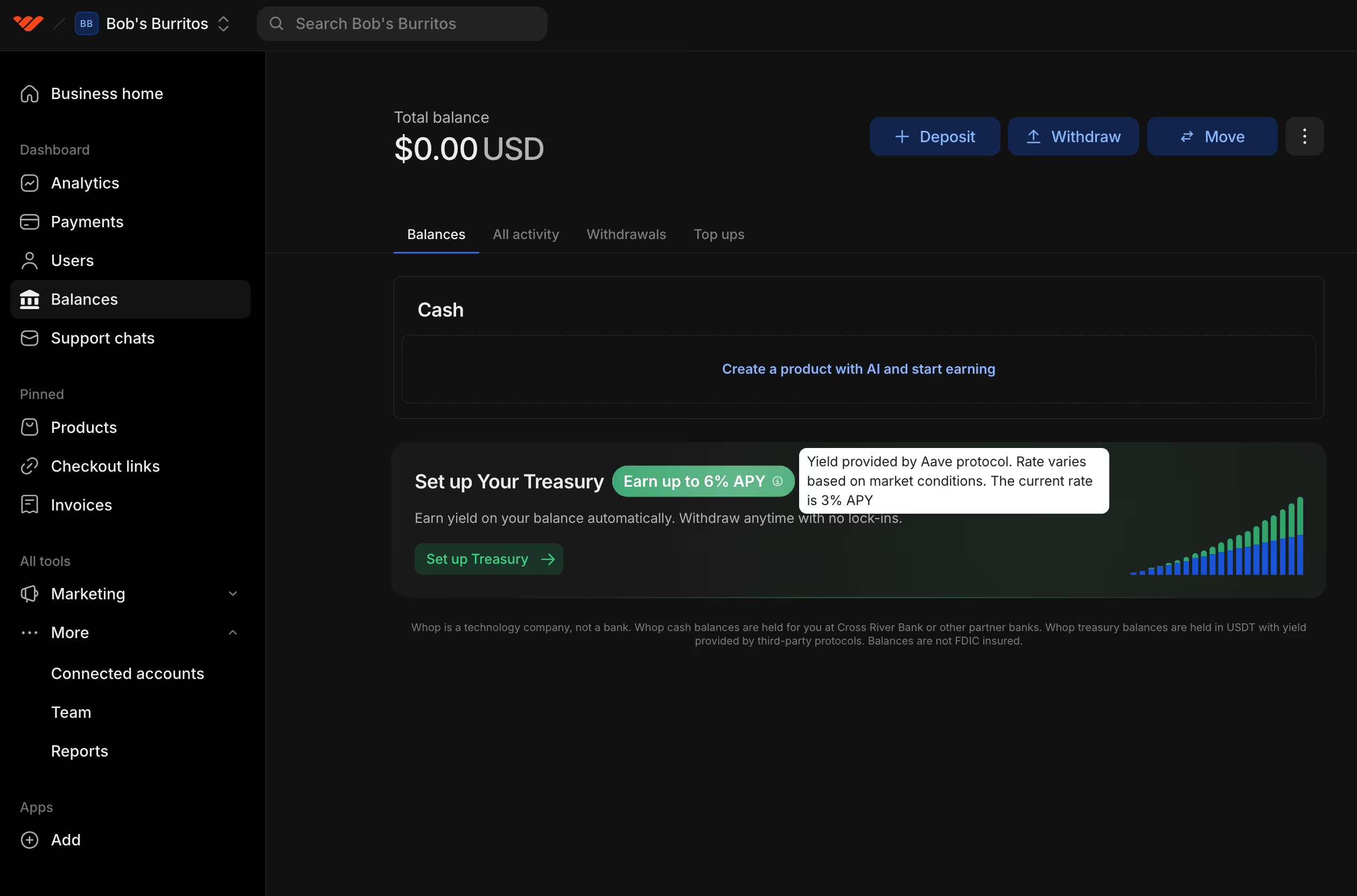
Where does your money go when you toggle the switch?
Not all sales revenue goes in automatically. Users have to manually activate Treasury from their Whop balance screen.
Once enabled, the target balance is converted into a stablecoin called USDT0. It then passes through the Veda Vault on the Plasma blockchain and is supplied to the Aave lending market.
A vault is a smart contract that manages funds in a predetermined way. In this case, you can think of it as the mechanism that connects Whop’s balance to the Aave lending market.
While users select the feature within Whop, the actual money moves through stablecoins, vaults, and lending markets. This connection is designed so you don’t have to visit and process each step manually.
Who is paying the interest?
The source of the yield is the interest paid by those borrowing funds on Aave. Returns generated from the vault are automatically reinvested and reflected in the user's Treasury balance.
However, automatic accumulation doesn't mean the same yield rate is guaranteed forever; it can fluctuate based on loan demand and market conditions. Neither profits nor principal are guaranteed. You cannot determine your future payout based solely on the annual percentage yield (APY) shown on the screen.
Even familiar balance screens carry risks
Although the interface is simple, the process your money goes through involves several risks.
Losses can occur due to smart contract bugs or attacks, or issues within the lending market or connected services. Other factors, such as a stablecoin losing its peg to the dollar, network outages, or regulatory changes, could also impact your usage.
Whop clarifies that Treasury is not FDIC-insured, unlike US bank deposits. Even if it is accessible via your balance menu, it does not carry the same protections as money held in a bank account.
Mind the destination when withdrawing money
According to official Aave documentation, when you withdraw, funds are converted back into cash and returned to your Whop balance. Note that returning to your Whop balance and depositing into your bank account are separate steps.
While official introductions state that instant withdrawals are possible, it’s hard to interpret this as a guarantee that liquidation will occur without delay in all circumstances. Veda’s own documentation for general withdrawals also explains that processing methods can vary depending on vault settings and liquidity available for withdrawals.
Since these general guidelines cannot be applied to individual Whop accounts, you should check the actual withdrawal times and fees directly on the UI.
DeFi integrated into creator services
This isn't a feature that was released just today—it's an existing service case introduced by Aave in June 2026.
It’s interesting that instead of installing another financial app, users can choose DeFi within the same platform they already use for sales and settlements. While it may look like a simple balance-utilization feature to the user, there are several services connected behind the scenes.
Before toggling that switch, you should take a look at where your sales revenue goes, where the yield comes from, and what the risks are. Even if it's inside a familiar screen, the way your money moves has changed quite a bit.