whyNow@whynow
F1 Las Vegas Grand Prix: How Antonelli's Blistering Lap Handed Verstappen Pole
When Andrea Kimi Antonelli flashed across the timing line under the neon glare of the Las Vegas Strip with a 1:33.893, the Mercedes rookie looked like he had just staged the heist of the weekend. He had conquered the coldest, slickest street circuit on the calendar, out-braking veterans along the 1.9-kilometer Strip straight to set the quickest time of the night.
Yet seconds after Antonelli took the checkered flag, Formula 1's starting grid morphed into a completely different picture. A looming five-place grid penalty for changing power unit components dropped the Italian teenager down to sixth on the grid, quietly handing pole position straight to Red Bull's Max Verstappen.
The Technical Penalty That Upended the Front Row
Street circuits like Las Vegas are notoriously unforgiving to technical components. The long full-throttle blasts through low desert temperatures create intense strain on internal combustion engines and hybrid battery packs, forcing teams into strategic equipment decisions.
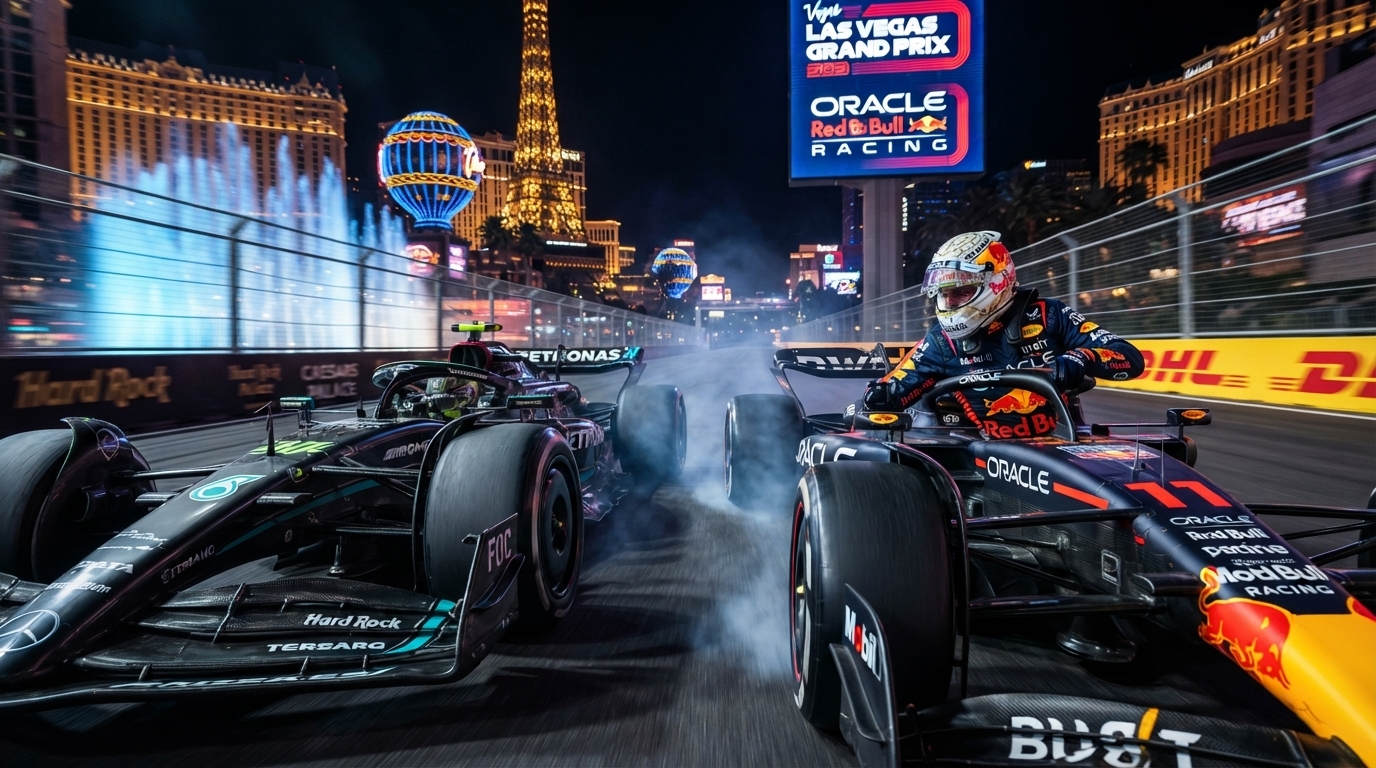
Mercedes rolled the dice by introducing fresh power unit elements into Antonelli's car ahead of the weekend. Under Formula 1 regulations, exceeding the season allocation for power unit parts triggers an automatic grid drop. Antonelli delivered the raw lap time to prove his car was the fastest machine over a single tour of the Strip, but the five-place sanction pushed him back into the teeth of the mid-pack. That shuffled Verstappen onto the inside line of the front row, parked right alongside Antonelli's Mercedes teammate George Russell.
Ferrari Stumbles Into the Cold Desert Air
While Mercedes showed genuine front-running pace, Scuderia Ferrari found itself caught on the wrong side of tire temperatures. Both Charles Leclerc and Lewis Hamilton were eliminated in the second phase of qualifying, logging the 11th and 12th fastest raw times.
Tire preparation in Las Vegas has always been a high-wire act. With track temperatures dipping below 15 degrees Celsius, generating front-axle grip without cooking the rear tires over a flying lap requires pinpoint timing. Ferrari's inability to extract peak grip on their final Q2 runs left their garage stranded outside the top ten shootout. Post-session grid adjustments marginally bumped Leclerc and Hamilton up to 10th and 11th, but starting that deep on a circuit notorious for Turn 1 bottlenecks leaves little room for clean race execution.
Why the Strip Sets Up a Classic Dogfight
A reshuffled grid creates an explosive setup for the Grand Prix. Verstappen holds track position into Turn 1, but without his customary outright qualifying advantage, he faces immediate pressure from Russell off the start line. Meanwhile, Antonelli will have to cut through a congested pack featuring McLaren and Aston Martin contenders on a low-grip surface where lockups into heavy braking zones are costly.
With low tire wear, high top speeds down the Strip, and lingering slipstream benefits, the driver who starts first is rarely guaranteed to finish there. Saturday night's race in the desert is primed to test whether raw engine speed or cool race management ultimately rules the Strip.