
whyNow@whynow
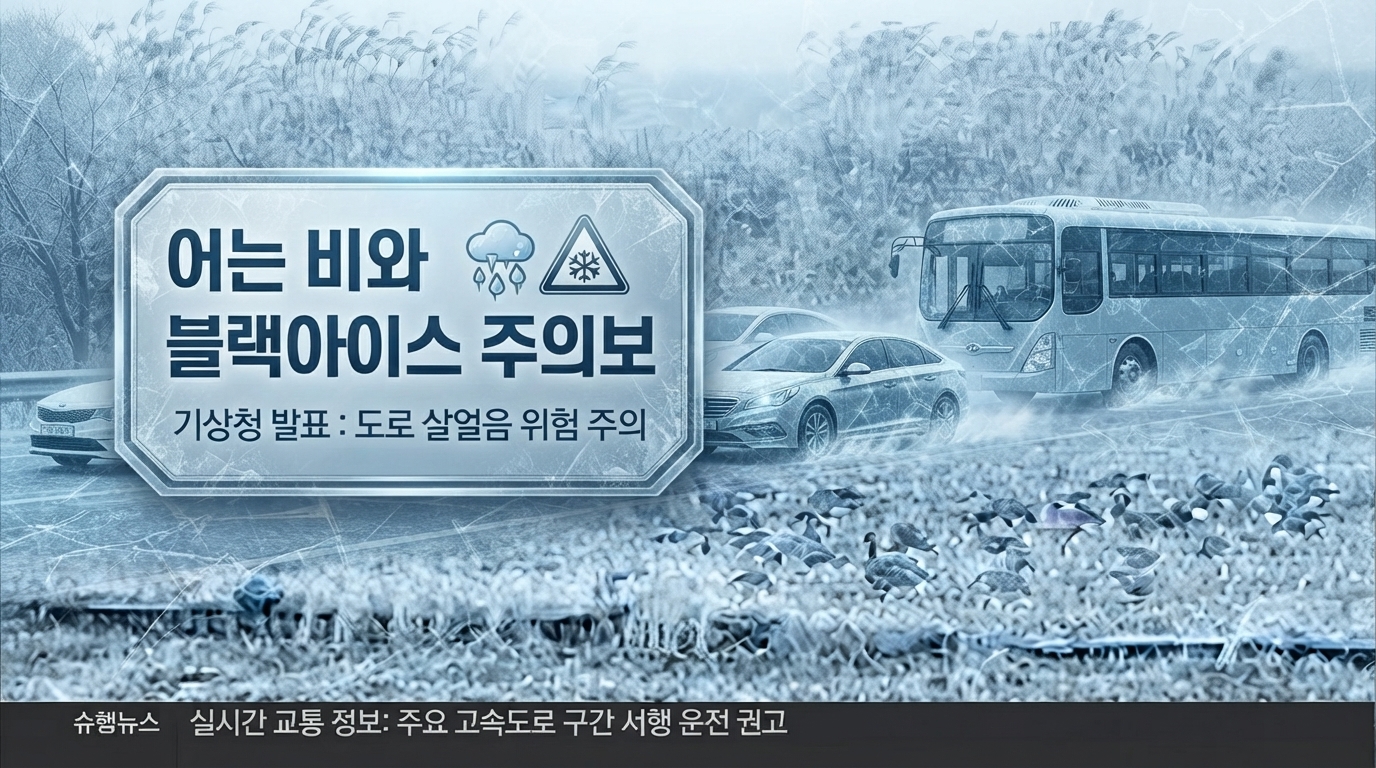
It looks like rain but the ground is an ice rink… The truth behind the morning commute's hidden threat: 'Freezing rain'
Looking out the window, it clearly looks like rain, but the moment you step onto the road, it's as slippery as a skating rink. The culprit behind the tense morning commute in central regions on the 23rd wasn't snow, but 'freezing rain.' According to the Korea Meteorological Administration, most parts of the country started the day below freezing, with morning temperatures in inland Gyeonggi reaching as low as -5.4°C. Yet, instead of snow, raindrops were falling from the sky. As the liquid rain hit the frozen asphalt, it instantly turned into black ice, turning roads across the commute into invisible skating rinks.
Why does 'freezing rain,' more dangerous than snow, occur?
It is easy to assume that it usually snows when temperatures drop below freezing. However, it's a different story when there is a significant temperature difference between the upper and lower layers of the atmosphere. Freezing rain occurs when snow melts into rain while passing through a warm air layer high above, only to encounter a freezing, cold layer of air near the surface.
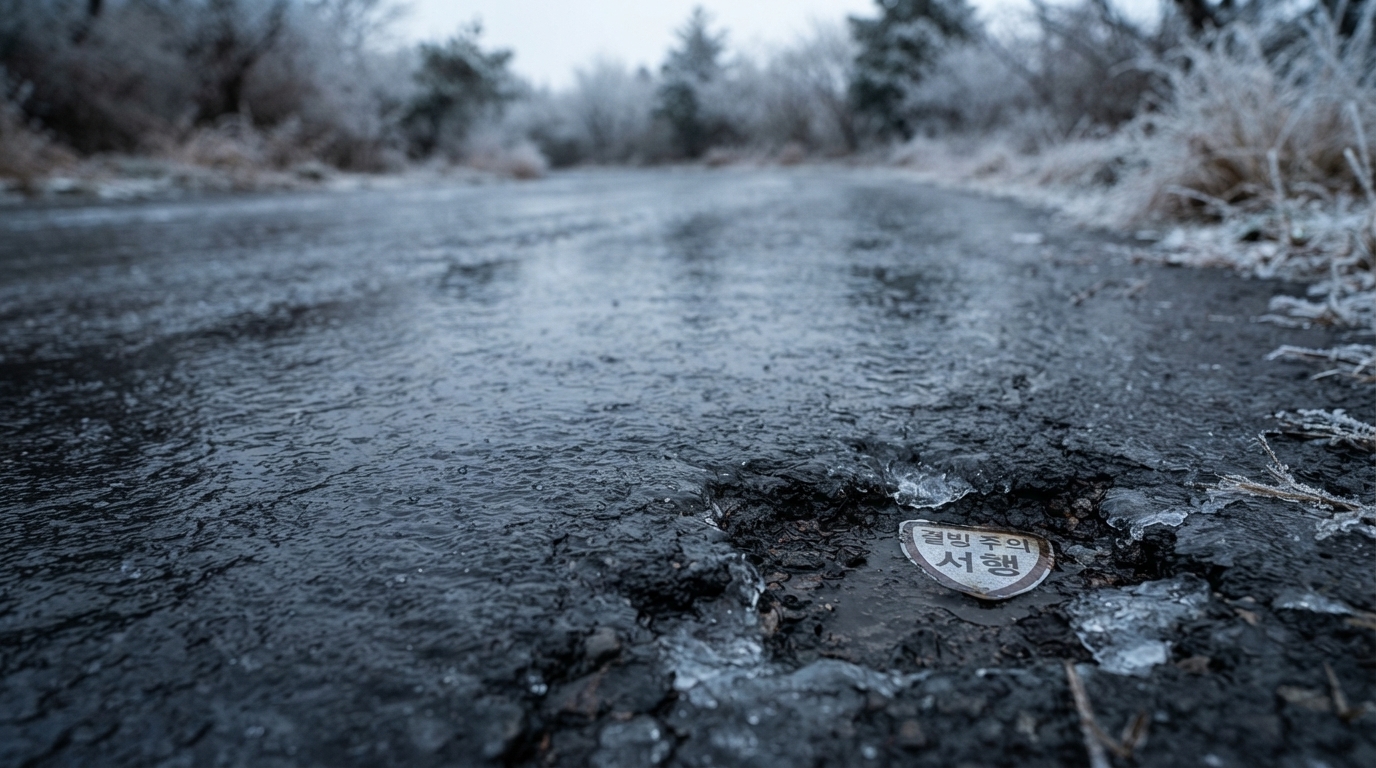
The raindrops enter a 'supercooled' state, remaining liquid even while passing through sub-zero air. These water droplets, barely holding their liquid form, instantly turn into ice upon impact with the freezing road surface, power lines, or tree branches. While snow accumulates visibly, 'black ice'—a thin, transparent sheet of ice created by freezing rain—is indistinguishable from a merely wet road, making it much harder for drivers to detect the danger.
Invisible icy roads: Particularly dangerous sections
Braking distance on roads covered in black ice is five to six times longer than on dry roads. Roads that structurally lack geothermal heat are the most vulnerable.
Bridges and elevated roads are exposed to cold air from both above and below, causing the road temperature to drop much faster than the ground level. Tunnel entrances are also frequent spots for black ice, as they often lack sunlight and are hit by strong canyon winds. High-humidity areas, such as lakeside or riverside roads, also freeze instantly like a coating when freezing rain falls. Because the asphalt looks black—as if it were simply wet from rain—drivers might continue at normal speeds, losing all vehicle control when they attempt to brake.
Weather variables: Combined with strong winds and heavy snow in Gangwon mountains
As 5 to 30 millimeters of rain falls nationwide, a heavy snow advisory has been issued for the colder Gangwon mountain regions, where 1 to 3 centimeters of snow per hour are expected, leading to a total accumulation of up to 8 centimeters or more.
On top of this, gusty winds with speeds reaching 70 kilometers per hour are sweeping across coastal and inland areas. When strong winds are combined with slippery road conditions, vehicle stability decreases, significantly increasing the risk of accidents. Even as temperatures rise slightly during the day, icy surfaces in shaded alleys, tunnels, and bridge sections will not melt easily. If temperatures drop again after the rain stops, any remaining moisture can quickly create thin patches of ice on the road, so it is essential to maintain a wider-than-usual safety distance from the car in front and drive at reduced speeds.