Tether Freezes $131M in Iranian Funds — Institutions on Edge

Kitto

@kitto

테더, 이란 자금 1억 3,100만 달러 동결 — 긴장하는 기관들

Tether Freezes $131M in Iranian Funds — Institutions on Edge

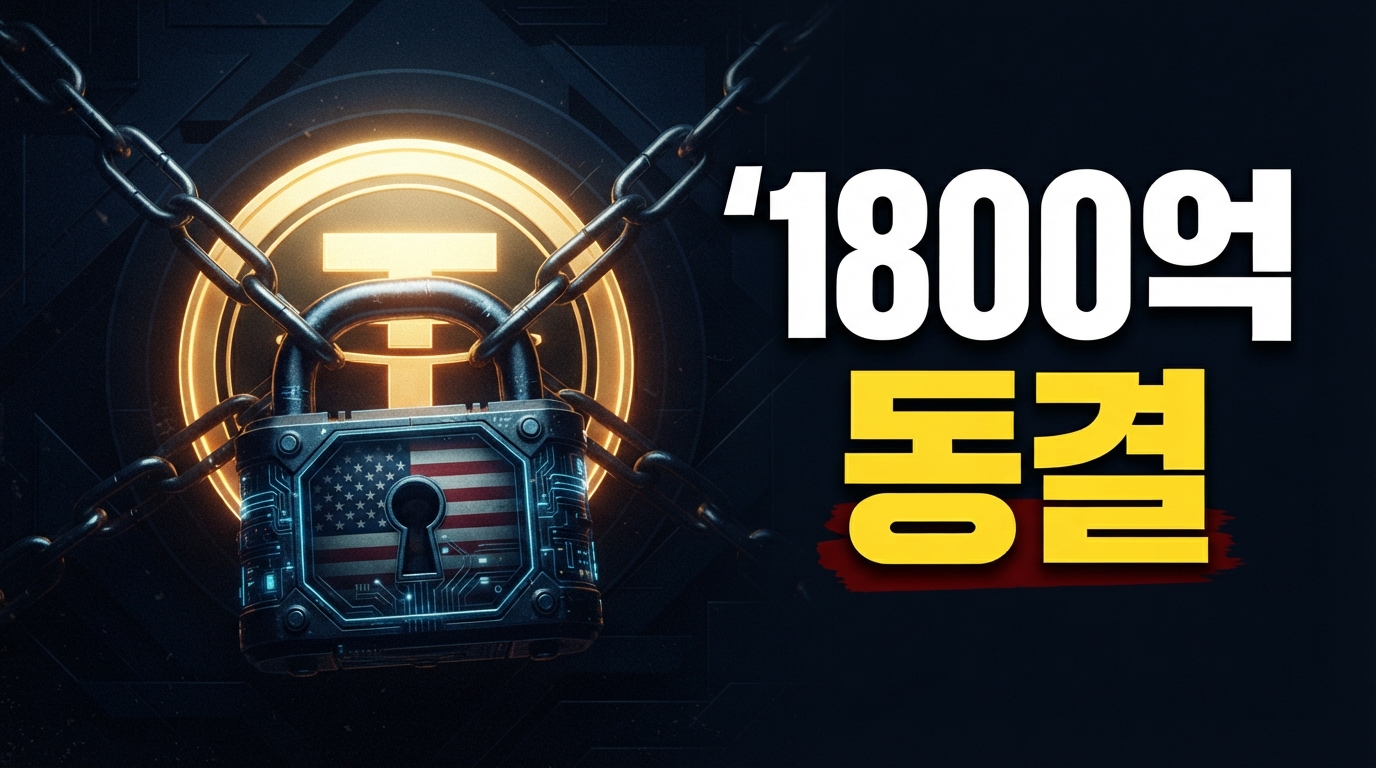
As soon as U.S. sanctions were announced, Tether froze $131 million in Iran-linked funds in just a few hours. It effectively activated a powerful 'kill switch' on USDT, the stablecoin we use every day. We’ll quickly break down why this event is doing more than just freezing funds—it's making global institutional investors nervous and shaking up the market landscape.

$131 Million Frozen in an Instant: Tether Becomes America's 'Long Arm'

As soon as the U.S. Office of Foreign Assets Control (OFAC) sanctioned four TRON blockchain wallet addresses linked to the Central Bank of Iran, Tether reacted at lightning speed. It immediately froze $131 million in USDT held in those wallets. According to reports from CryptoSlate, over $131 million worth of assets was locked up in one fell swoop.

What’s surprising is that this isn't the first time. Just three months ago in April, Tether froze $344 million. Adding this latest action, a total of $475 million in Iran-linked funds has been frozen over the past three months.

BeInCrypto evaluated this incident by suggesting that Tether has effectively become the most powerful weapon for enforcing U.S. foreign policy. In a crypto world that prides itself on decentralization, it’s a stark reminder that the most widely used stablecoin operates under the powerful control of the U.S.

"My money could be frozen anytime?" Institutions on edge

Institutional investors and the security industry are deeply concerned about Tether's robust freezing capabilities. They have clearly witnessed the 'kill switch' risk, where assets can be locked with a single click by the issuer, no matter how securely they are held in a private wallet.

Andy Zhou, CEO of blockchain security firm BlockSec, pointed out in an interview with Compliance Correlated that Tether’s blacklist authority clashes directly with 'settlement finality,' the cornerstone of financial transactions. Settlement finality is the principle that once a transaction is completed, it can never be legally canceled or reversed.

This uncertainty is critical as traditional financial firms push into real-world asset (RWA) tokenization and large corporations look to adopt stablecoins for treasury management. If a transaction can be reversed or frozen at any time, institutions moving large sums are essentially taking on massive risks that could paralyze their entire systems.

DAI (No Freeze Button) vs. USDC (Legal Procedures): A Diverging Market

Given the situation, an interesting trend is emerging in the market. Those who have witnessed their assets being locked by the swipe of an issuer's finger are starting to look for their own ways to survive.

First, those looking to avoid regulation are moving to areas that are entirely beyond control. According to a report by the Financial Action Task Force (FATF), there is a noticeable shift where some sanctioned entities are moving funds into DAI, a DeFi-based stablecoin that lacks a freeze function. They are choosing decentralized coins that run on smart contracts and cannot be arbitrarily stopped, avoiding coins operated by centralized companies like Tether.

On the other hand, mainstream corporate players are seeking a different, more practical alternative: USDC, issued by Circle. According to American Banker, unlike Tether, which makes proactive freezing decisions on its own, Circle follows a strict standard, enforcing freezes only upon official court orders.

Ultimately, to reduce the anxiety of not knowing when their assets might be frozen, companies have started adding USDC to their liquidity portfolios. Ironically, the overwhelming power of Tether, the number one stablecoin, is splitting the market between two alternatives: DAI and USDC.

At the Crossroads of Regulation and Decentralization: Points to Watch

Tether’s ultra-fast asset freezing demonstrates strong cooperation with U.S. regulators, but at the same time, it proves that it is drifting further away from 'censorship resistance,' a core value of the crypto world.

It will be fascinating to see whether USDC, which strictly follows legal procedures, will become a safe haven for institutions, or if the decentralized stablecoin ecosystem that can completely bypass regulations will grow faster. Standing at the crossroads of security and freedom, we’ll need to keep a close eye on the stablecoin market!


Related Links