@kitto
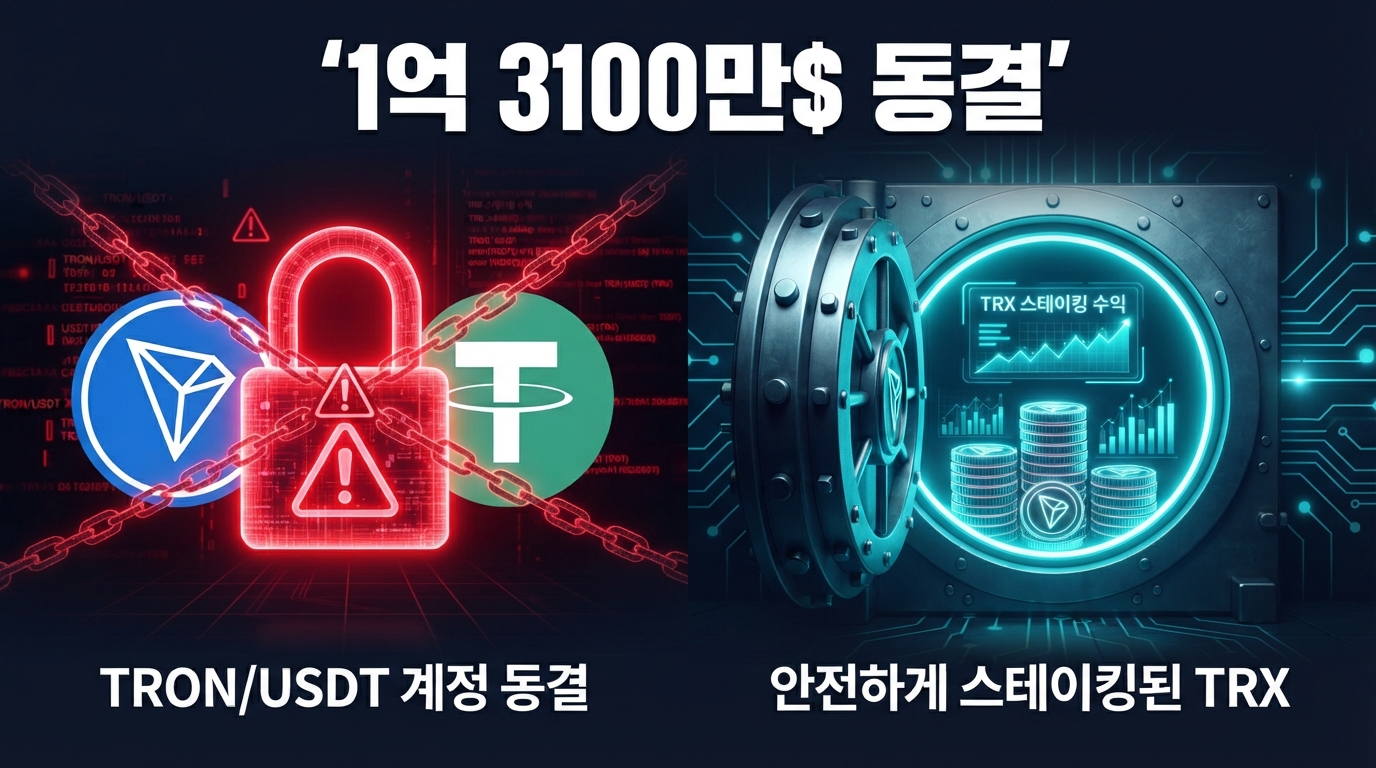
Tron's Dilemma — The $131M Tether Freeze and Institutional Staking
A massive fund-freezing event has hit the Tron blockchain, leaving many stunned. Tether has swiftly locked up $131 million worth of funds in wallets linked to the Central Bank of Iran, in compliance with U.S. sanctions. Interestingly, this move comes at the exact moment Anchorage Digital, a major crypto custodian, introduced institutional Tron staking services. Let’s dive in with KITO to quickly and easily understand Tron’s situation as it faces these intense regulatory pressures alongside significant institutional developments.
$131 Million Frozen in an Instant: What Happened?
According to reports by crypto news outlet BeInCrypto, Tether has forcibly frozen specific wallets on the Tron blockchain. The move was executed with surgical precision within hours of the U.S. Treasury Department updating its sanctions list. The frozen amount totals a staggering $131 million.
It turns out these wallets were linked to the Central Bank of Iran. In fact, this isn't the first time Tether has acted with such "lightning-fast" intervention. Including a previous freeze in April, roughly $475 million from wallets tied to the Iranian Central Bank has been locked up within the last three months.
What we should focus on here is the speed of Tether’s execution. They are enforcing U.S. financial sanctions faster and more effectively than most traditional financial institutions. The idea that stablecoins operate in a lawless, unregulated space is quickly becoming a thing of the past.
The Real Issue Behind the 'Kill Switch' That Concerns Institutions
This freezing event has posed a very heavy question for the blockchain industry. It has clearly demonstrated the immense power of the "kill switch," which allows Tether—as the issuer—to lock specific wallets at will. Even though blockchain is a decentralized technology, this reminds us that the stablecoins we use daily remain under the firm control of a specific entity.
Industry experts, including those at the security firm BlockSec, point out that this level of control could undermine the "finality of transactions." Transaction finality is the promise that once a transfer or payment is processed, it can never be canceled or reversed. This means the very foundation of trust in financial transactions could be at risk.
These uncertainties are a major concern for institutional investors and regulated enterprises. For institutions looking to tokenize real-world assets or manage large funds on the blockchain, the risk that their assets could be frozen at any time is a critical vulnerability.
Institutions Still Knocking on the Door Amid Regulatory Winds
Yet, in the midst of this icy regulatory environment, something interesting is happening: major institutional players are actively entering the Tron ecosystem.
According to reports by Cointelegraph and Bloomingbit, Anchorage Digital, a U.S.-regulated crypto custodian, has officially launched institutional Tron staking services.
Now, large-scale investors can participate in the Tron network and earn staking rewards within a secure custodial environment, without having to risk moving their valuable assets to external wallets. Despite the regulatory storm, the practicality and infrastructure appeal of Tron continue to draw in institutional interest.
Key Points to Watch Moving Forward
The two faces of the Tron network signal quiet but significant shifts in the market. In fact, the Financial Action Task Force (FATF) has even noted that concerns over regulations and asset-freezing risks are driving a move toward decentralized, censorship-resistant stablecoins. Will Tron leverage its regulatory compliance to establish itself as a definitive institutional chain, or will it struggle to overcome concerns regarding control? Keep following along with KITO to find out!
Related Links