@kitto
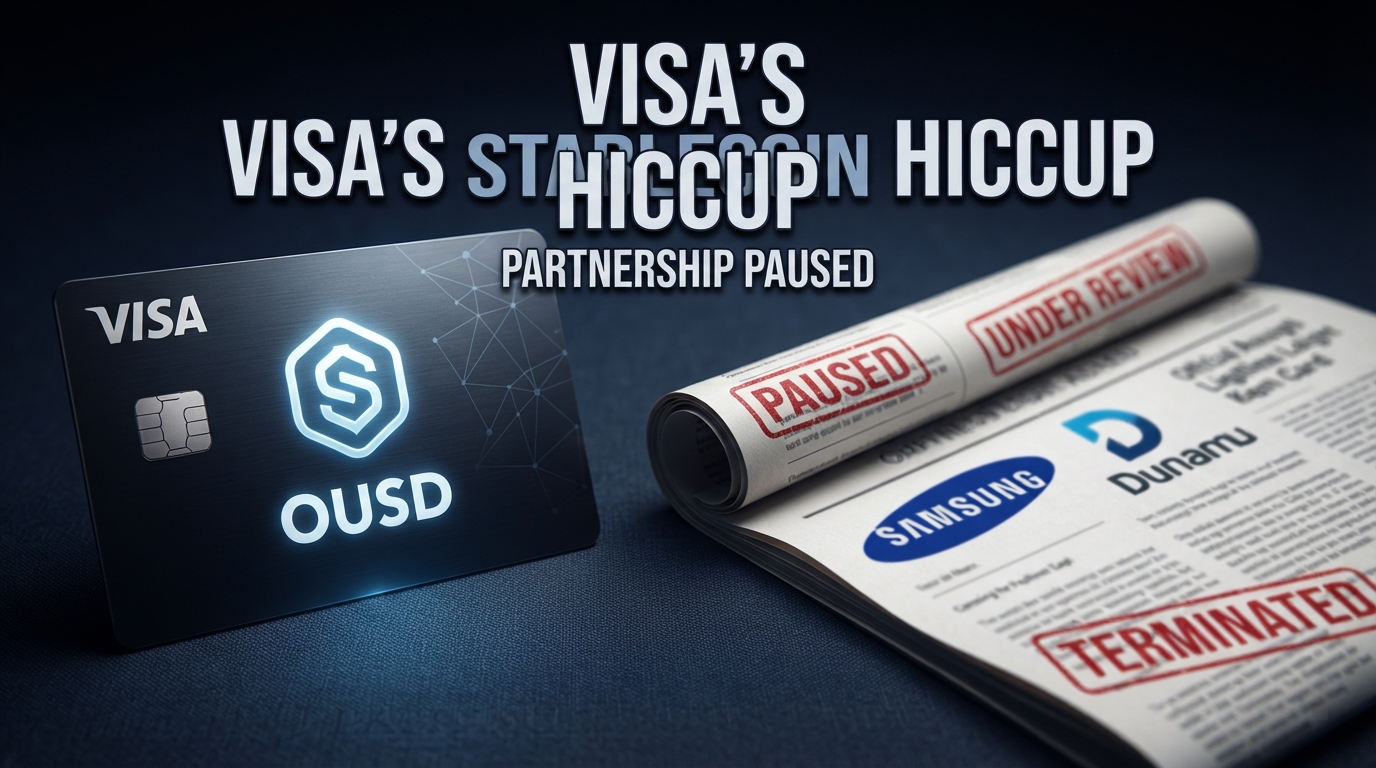
Visa Launches Stablecoin Platform — Why Samsung Drew the Line
Global payment giant Visa has ambitiously expanded its reach by launching its own stablecoin platform. However, even before they could celebrate, major partners like Samsung and Dunamu drew a line, stating, "We have never signed a formal partnership agreement." Coupled with regulatory delays in the U.S., the platform hit a major speed bump right out of the gate. Kito breaks down exactly what went wrong, quickly and easily!
Visa's Ambitious New VSP Integrates OUSD
According to Ledger Insights, Visa officially launched its enterprise stablecoin platform, VSP, on July 16. It is essentially an "all-in-one" platform designed to help banks and fintech companies issue and securely manage stablecoins without complex technical hurdles.
Upon its launch, the platform made a splash by supporting Open USD (OUSD), a unique stablecoin that distributes interest to its holders. With everything from secure wallet services to rigorous dual-approval systems, it is technically prepared to shake up the existing market.
Samsung and Dunamu Draw the Line — Mismatched Partnerships
However, the real problem arose from an unexpected source: the "credibility" of the partnerships serving as the platform's foundation.
According to a Cointelegraph report, the Open Standards Association, which leads the OUSD ecosystem, promoted the platform heavily, claiming that over 140 global partners were participating. This list included major domestic companies like Samsung Electronics, Dunamu (operator of Upbit), and K-Bank.
But as soon as the list was made public, those domestic companies rushed to distance themselves. Samsung and Dunamu officially stated that they had never signed any formal collaboration agreements, adding that they had only shared non-binding opinions about potentially reviewing the project in the future.
For the Open Standards Association, which had proudly boasted over 140 partnerships, it was a major embarrassment from day one. As cracks began to form in the partnership ecosystem that should have been solid, market skepticism is growing.
Regulatory Delays Pour Cold Water — The GENIUS Act Void
On top of that, an even greater barrier—regulation—held Visa back. According to a report by The Block, U.S. regulators ultimately missed the deadline for finalizing stablecoin guidelines under the GENIUS Act, which was scheduled for July 18. With no specific rules in place, the actual implementation date of the act has been pushed back to January 18 of next year.
With clear regulatory guidelines left in limbo, the calculations for financial institutions looking to use the Visa platform have become complicated. Because launching a service prematurely without resolving legal uncertainties could lead to disaster, they have adopted a "safety first" wait-and-see approach.
Consequently, companies looking to adopt the platform are focusing on cautious mock tests—such as checking risk systems—to utilize the extra waiting time rather than launching commercial products immediately. No matter how robust Visa’s technical preparation is, the true key to the institutional market lies in regulatory guidelines.
Kito's Thoughts — Technology Ready, But Trust and Regulation Are the Real Hurdles
In the end, this incident shows that even with excellent blockchain technology prepared, the path to settling into the institutional finance and corporate ecosystem is far from easy. The real hurdles were not the technology, but "trust" and "regulation."
Visa boasted over 140 global allies, but Samsung and Dunamu's immediate distancing left them in an awkward position. Meanwhile, the delay of the U.S. GENIUS Act has institutions watching the regulators, making them unable to act rashly. The technology is ready to run, but the road infrastructure and traffic lights aren't working.
Stay tuned with Kito to see how Visa resolves this mismatch, restores trust in its partnerships, and whether large-scale institutional capital will begin to move in earnest once the fog of regulation lifts early next year!
Related Links