@kitto
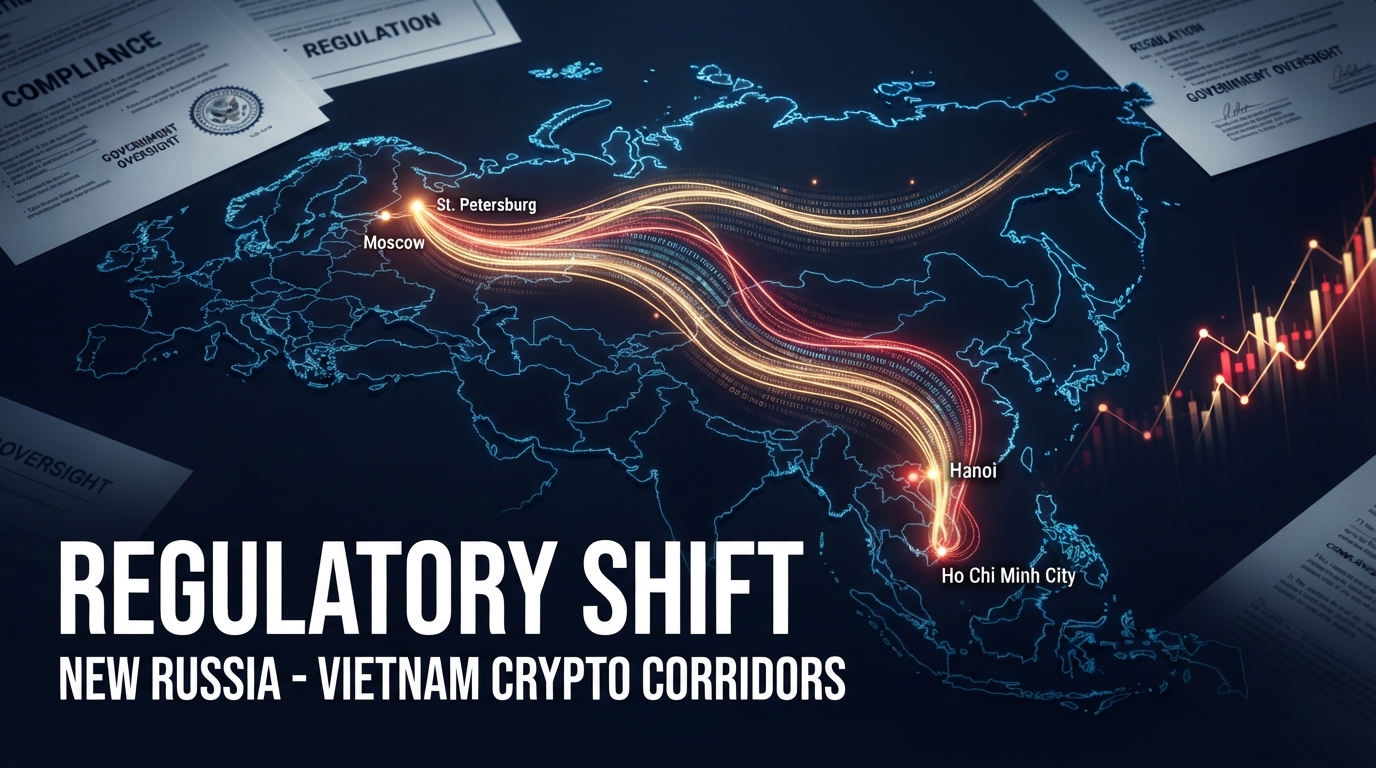
Russia and Vietnam Coordinating Crypto Regulations on September 1 — The Eurasia Landscape Is Changing
A trend quite different from the free and private crypto we've known is quietly taking root across the Eurasian continent. It is the emergence of 'state-controlled crypto,' where governments take the reins of all transactions. While it looks far from the crypto we are familiar with, I'll explain this intriguing shift—which could reshape global regulations—in a fun and easy way.
D-Day, September 1: Why Russia and Vietnam Are Moving in Sync
This coming September 1, interesting changes will occur simultaneously on both sides of the Eurasian continent. Russia and Vietnam are both launching new crypto regulatory frameworks. It's as if they've coordinated their efforts to use the same D-Day to align their systems.
According to foreign media, Russia is preparing an experimental bill that allows cross-border payments only within a specific environment strictly approved by the state. Meanwhile, Vietnam is putting together clear guidelines to bring crypto trading, which previously existed in a legal gray area, fully into the institutional fold.
In essence, governments are stepping in to draw the lines in a crypto market that was once in a regulatory blind spot. So, how is this state-controlled model different from the crypto we are accustomed to?
State-Controlled Crypto — Differences from the Crypto We Know
Usually, when we think of crypto, we think of borderless freedom or anonymity. However, the model Russia and Vietnam are sketching is entirely different.
Think of it like a highway toll gate. Just as your license plate and payment details are recorded by the government system when you pass through a toll road, this approach permits transactions only through state-designated channels. It means the government intends to monitor who is sending money and whether taxes are being paid in real-time.
While this state-controlled model may offer stability by reducing fears of hacking or fraud, it is far from the decentralization we originally knew. Ultimately, it’s a choice to embrace strict control and surveillance in exchange for institutional legitimacy.
A New Remittance Corridor Connecting Russia and Vietnam
There is a reason why the two countries are suddenly aligning their regulations. They want to open a proprietary channel to send and receive trade payments between nations quickly and conveniently, without passing through the traditional, U.S. dollar-centered financial network.
Of course, it remains to be seen whether this attempt will become a powerful alternative that completely bypasses dollar hegemony. It is still unclear how smoothly these state-controlled crypto payments will function in actual trade scenarios and whether other emerging nations will easily adopt this model.
Key Points to Watch Moving Forward
The first thing to watch is how actively actual transactions take place between the two countries after September 1. Furthermore, it will be interesting to see if neighboring Asian countries follow suit with this state-controlled model. As entirely new rules are written for the crypto market—a place once defined by its freedom—let’s keep an eye on the changing financial map of Eurasia!
Related Links