@whynow
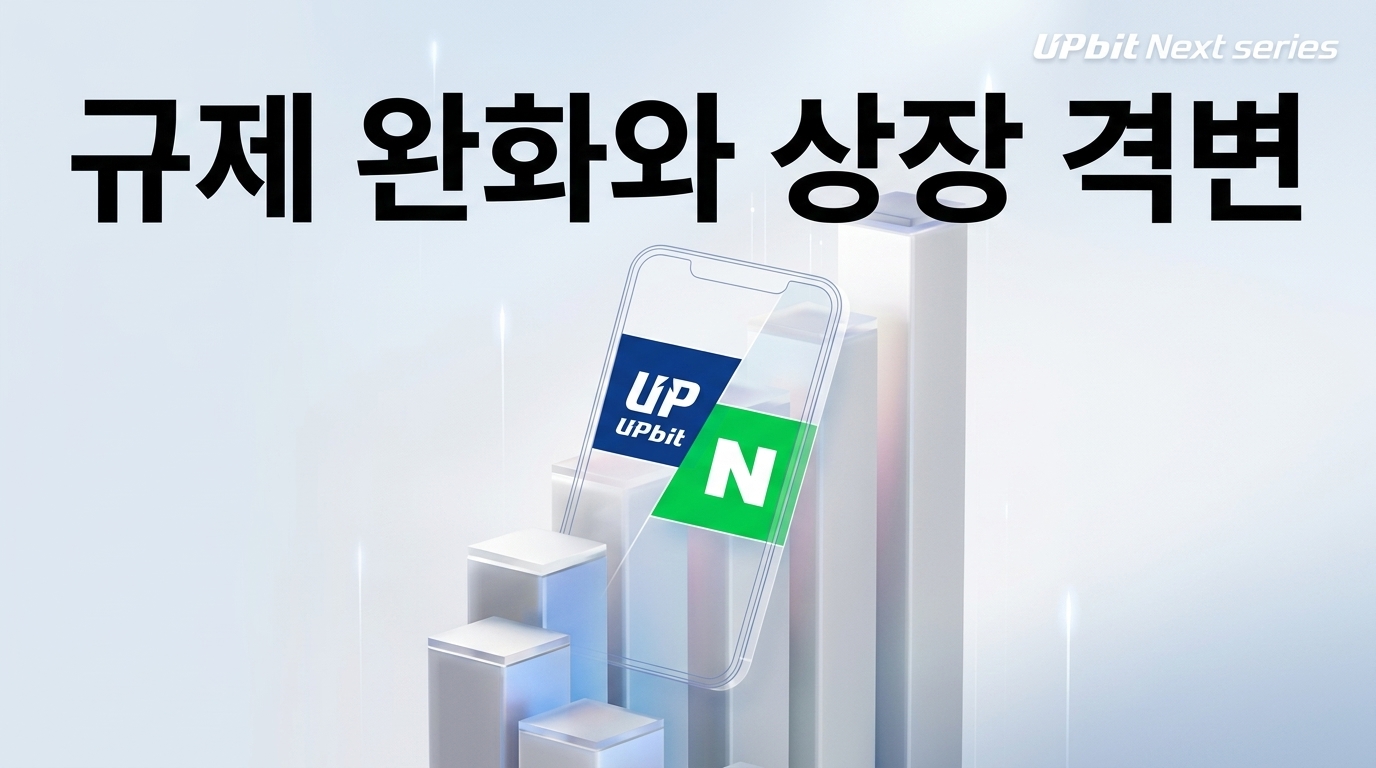
Three Upheavals Surrounding Upbit: From the Green Light for a Naver Alliance to a Listing Rollercoaster
Upbit, the largest virtual asset exchange in South Korea, and its operator Dunamu have been making waves between August 11 and 12, 2026, with major news spanning regulations, the investment market, and corporate social responsibility. The long-standing regulatory hurdle that blocked an alliance with Naver Financial has finally been cleared through a law amendment, while the market is reeling from a whirlwind of new coin listings and a controversy over the delisting of a meme coin. At the same time, the release of successful results from a large-scale credit recovery program that helped nearly 4,000 young people in financial distress has positioned Upbit as more than just a platform—it is currently the most dynamic landscape of the South Korean virtual asset market.
The Naver-Dunamu Union: The Final Legal Hurdle Cleared
Central to this upheaval surrounding Upbit is a significant shift in government policy. During a cabinet meeting on August 11, 2026, the government passed an amendment to the Enforcement Decree of the Act on Reporting and Using Specified Financial Transaction Information. This amendment, which goes into effect on August 20, marks a decisive turning point in clearing the long-standing regulatory uncertainty in the virtual asset industry.
The core of the change lies in the exception criteria applied during the eligibility review for major shareholders of virtual asset service providers. Previously, a history of criminal punishment for violations of laws such as the Fair Trade Act resulted in automatic disqualification. The new amendment, however, provides exceptions for cases where the violation was minor or where a corporation was fined under joint liability provisions. It effectively opens a door for reasonable consideration in the virtual asset market, similar to the banking and capital market sectors.
The biggest winners of this measure are none other than Naver and Dunamu. The two companies have been signaling a powerful alliance through a comprehensive stock swap that would see Naver Financial acquire a stake in Dunamu. However, a past 200 million KRW fine levied against Naver for violating the Fair Trade Act regarding its real estate information service had been a massive obstacle to passing the major shareholder eligibility review. While the big deal between these two giants was at risk of failing due to a single past violation, this enforcement decree amendment has finally provided the momentum needed to move forward.
However, even amidst the market's high expectations, a cautious perspective remains valid. While regulatory risks have clearly eased with this amendment, the actual application of these exceptions will depend on the specific judgment of the Korea Financial Intelligence Unit (KoFIU). Furthermore, with hurdles still ahead—such as the Korea Fair Trade Commission’s business combination review and policy discussions regarding shareholder limits for virtual asset exchanges—it is too early for premature optimism.
New Listing Volatility and the BONK Delisting Controversy
Another pragmatic reason investors are keeping a close eye on Upbit is the drastic change in the listing environment that has directly impacted their portfolios.
On August 11, 2026, Upbit simultaneously introduced dappOS to its KRW, BTC, and USDT markets. However, the asset showed extreme volatility, plummeting more than 30% immediately after listing, leaving investors on edge. The very next day, on the 12th, the exchange continued its aggressive listing spree by adding PROM to the KRW and USDT markets. With new assets pouring in day after day, the trading platform was truly on a rollercoaster.
The hottest topic among investors is the delisting of the popular Solana-based meme coin, BONK. On August 7, Upbit announced that it would delist BONK on September 7, citing security breaches and insufficient disclosures.
The real controversy stems from the fact that every exchange has different criteria. While Upbit and Coinone decided to delist BONK due to risk concerns, their competitor, Bithumb, opted to lift its investment warning and maintain support for the token. Investors are feeling confused by the contradictory moves, as exchanges reach polar opposite conclusions regarding the same asset.
A Stepping Stone for 4,122 Young People Struggling with Debt and Isolation
Behind the red and green numbers fluctuating in the virtual asset market, there was a warmer metric with a different meaning. On August 12, Dunamu announced the cumulative results of the 'Upbit Next Series: Stepping Stone,' a youth credit recovery support program it has been quietly leading in partnership with the Credit Counseling & Recovery Service over the past three years.
This project was designed to help young people aged 39 and under who are in debt or at risk of social isolation due to financial hardship. Over the past three years, Dunamu has provided 1-on-1 in-depth financial consulting to 4,122 young people, helping them develop the skills to manage their own money. For those in immediate financial crisis, the company also provided interest-free emergency living loans totaling 1.15 billion KRW.
The most surprising result is the repayment rate. The average repayment rate for the interest-free loans taken by these young people—many of whom were previously struggling with debt collectors—reached a remarkable 75.8%. It proves that this was not merely a one-time donation; rather, it demonstrated what kind of positive cycle can occur when a company trusts in the potential for self-reliance and provides systematic financial education and the right opportunities.
Regulatory Relief and Market Integrity: The True Test for Upbit
The recent Upbit frenzy is a complex signal that goes beyond mere price fluctuations or individual coin issues. While the easing of major shareholder regulations has opened new expansion opportunities for collaboration with Naver’s financial units, the extreme volatility of new listings like dappOS and PROM, combined with inconsistent delisting criteria across exchanges, continues to place the burden of investor protection squarely on the platform. It is a reality where the warm image of a company supporting youth debt relief coexists with the cold reality of a fiercely volatile crypto market.
Ultimately, the key moving forward will be Upbit’s practical actions and its ability to secure market integrity after the regulatory easing. The real test of long-term trust lies in what specific services will emerge from the partnership with Naver Financial after the Enforcement Decree takes effect on August 20, and how the South Korean virtual asset industry will resolve its inconsistent standards for support and delisting, prompted by the upcoming BONK delisting on September 7.
네이버·두나무 15조 빅딜, 남은 핵심 일정과 변수
1
tUSDC
특금법 빗장 완화 이후 오는 11월 주주총회와 연말 공정위 심사까지, 합병 성공을 가를 핵심 일정과 지배구조의 변화 시나리오를 짚어봅니다.
Related Links