@whynow
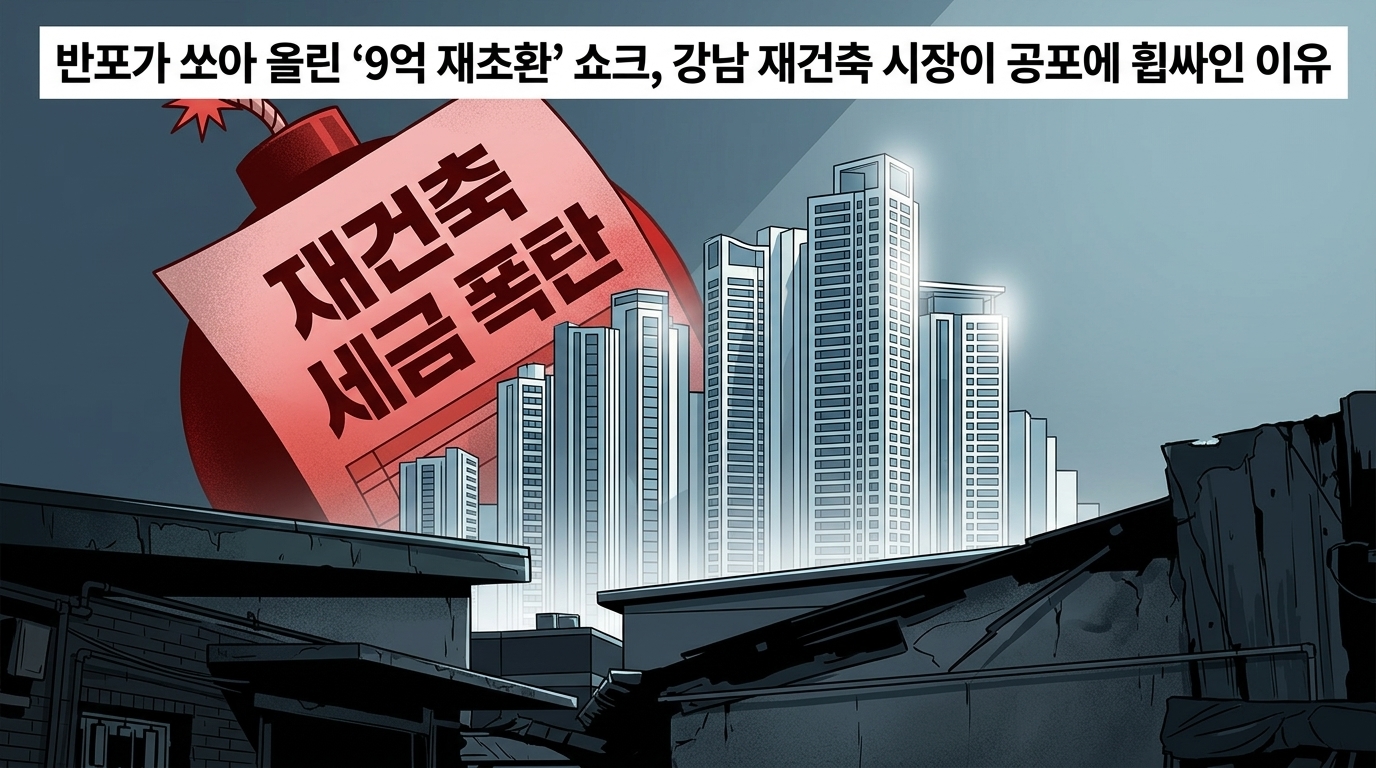
The '900 Million Won' Reconstructive Gain Shock Sparked in Banpo: Why the Gangnam Reconstruction Market is Gripped by Fear
Why is 'reconstruction' currently such a hot search topic on the internet? It's not just people checking market prices or looking for housing subscription information. It is because, shortly after 'Raemian Trinity One' in Banpo-dong, Seocho-gu, Seoul, began move-ins in early August this year, the reality of unprecedented taxes and development contribution bills aimed at union members became an imminent reality. As the Seocho-gu Office officially demanded data submission on July 28 to determine the reconstruction excess profit recovery contribution, the timer for a massive tax bomb that threatens the entire Gangnam reconstruction market has officially started ticking.
"Twice the estimated amount?" The 900 million won terror hitting Raemian Trinity One
What would it be like if you were faced with a bill more than double what you expected? That is the reality faced by the members of the Raemian Trinity One union in Banpo-dong, Seoul. In 2020, the Seocho-gu Office projected the reconstruction excess profit recovery contribution at approximately 402 million won per member. Even at the time, the market was shaken, calling it the highest amount in history, but now that move-ins have begun, there are projections that the final contribution could soar to around 900 million won.
Paradoxically, the reason for this skyrocketing bill is that the value of the apartments has risen so significantly. The reconstruction excess profit recovery system is a mechanism where the government collects up to 50% of the excess profit when the average profit per union member exceeds 80 million won. As the asking price for new 84㎡ apartments in the Banpo area has recently surpassed 6 billion won, the size of the excess profit that union members must pay out according to the legal formula has grown to astronomical proportions.
This fear has entered the realm of reality, moving beyond simple prediction. As soon as Raemian Trinity One started its move-in period in early August, the Seocho-gu Office demanded the union submit official data for the contribution calculation on July 28. As the multi-hundred million won contributions, which were once just numbers on paper, have now turned into real bills that must be paid soon, the pressure felt by Gangnam reconstruction union members has reached its peak.
The surprise of the August 3 tax reform: A lightning strike on non-resident union members
To make matters worse, the government's tax reform plan announced on August 3 has added fuel to the fire for reconstruction union members. The core of this reform is the significant reduction of long-term holding special deduction benefits for so-called 'non-resident owners'—those who owned reconstruction housing for a long time but did not live in it themselves, instead renting it out. It is a stern warning that even if house prices have risen, if they did not live there, the tax benefits will be drastically clawed back.
Looking at how much the tax burden actually increases, it is shocking. According to an analysis by JoongAng Ilbo reporter Ahn Jang-won, for a union member in Banpo who owned a home for a long time but did not live in it, the capital gains tax would have been around 240 million won under the existing system. However, as of 2029, when the new system applies, it could reach up to 940 million won, meaning the capital gains tax alone would surge by nearly 700 million won.
When you add the previously mentioned multi-hundred million won reconstruction excess profit recovery contribution to this, the resulting tax bill is truly unbearable. With the 700 million won increase in capital gains tax added to the reconstruction contribution, the actual tax burden is expected to reach a staggering 1.2 billion won. This is why screams of frustration are erupting among retirees who were counting on long-term ownership to fund their retirement, and those who could not live in their homes due to work or education. While the government cited tax reform focused on real users and preventing speculation as its justification, concerns are being raised from various sides in the market that excessively harsh taxation is hindering long-term, single-home owners.
"Promising more supply while leaving the nails in": The painful silence of the August 13 measures
The 'Housing Rapid Supply Plan for Stabilization of the Jeonse, Monthly Rent, and Sales Market' announced by the government contains an ambitious goal to drastically increase urban housing supply. It includes a series of measures to support the early stages of redevelopment projects, such as lowering the consent threshold for establishing a redevelopment union from 75% to 70% and easing regulations on move-in cost loans. With the market tension already reaching its peak after the Seocho-gu Office demanded data for the Raemian Trinity One contribution calculation on July 28, union members desperately hoped that the August 13 measures would include concrete win-win solutions like easing or deferring the reconstruction excess profit recovery regulations. However, the government maintained the framework of the regulations and remained silent.
This policy inconsistency has created a strange psychological deadlock in the market. The August 3 tax reform announced just ten days prior maximized tax pressure by reducing long-term holding deductions for non-resident union members who held high-priced homes without living in them. According to the simulation analysis by JoongAng Ilbo reporter Ahn Jang-won, the capital gains tax for a non-resident union member in Banpo could soar from the existing 240 million won to a maximum of 940 million won. While they are in a position where they should quickly dispose of their homes to avoid a tax bomb, the restriction on transferring union member status in reconstruction projects was not eased even an inch in the August 13 measures. In the end, it is as if their exit path is tightly blocked while the massive tax burden of the reconstruction contribution remains fully intact.
The government presented a blueprint to rapidly supply over 230,000 homes in the metropolitan area by shortening the licensing and construction period from 68 months to 37 months. The logic is to resolve the 'credit crunch' in maintenance project sites through financial support and administrative mediation. However, on-site experts and the market’s assessment is cold. Many real estate experts point out that no matter how much loans are increased or procedures are reduced, it is difficult to attract voluntary participation from private unions as long as the fundamental 'nails'—the reconstruction excess profit recovery contribution and restrictions on transferring union member status—which determine the project's core profitability, are not pulled out. Amidst the contradictory flow of trying to increase supply while squeezing the very unions responsible for that supply, concerns are growing that the government's housing supply plan may end up as an ineffective policy exercise.
Locked supply and lawsuits ahead: What is the next spark in the Gangnam reconstruction market?
The era when Gangnam reconstruction apartments were an unconditional guarantee of asset growth is ending. Warning lights are on that if you enter recklessly, you could be trapped in a snare of taxes and contributions that you cannot handle. There are concerns that the phenomenon of 'locked supply' will deepen, where people cannot sell their homes due to massively increased capital gains taxes, yet lack the liquidity to pay the hundreds of millions of won in reconstruction contributions, leaving properties frozen in the market.
This confusion stems from a serious disparity in temperature regarding government policies. While the August 13 housing supply measures aimed at increasing urban supply by supporting early stages remained silent on the biggest regulation, the reconstruction excess profit recovery system, the August 3 tax reform targeted the reduction of capital gains tax benefits for owners of high-priced homes who did not live in them. As expected deregulation was bypassed and only the tax burden significantly increased, the psychological anxiety of union members has reached its peak. In fact, local governments such as Gangnam-gu and Jung-gu in Seoul have been busy since mid-August, preparing urgent tax seminars to reduce public confusion caused by tax law changes.
Ultimately, the fate of the future reconstruction market depends on the final contribution amount for Raemian Trinity One to be calculated and notified by the Seocho-gu Office. How much the final contribution will soar from the previously announced 402 million won, and whether union members who oppose it will engage in legal disputes such as large-scale administrative lawsuits against local governments, will be a decisive milestone in determining the future of all maintenance projects in the Gangnam area.
'9억 재초환' 진짜 고지서 날아올 시점과 남은 변수
1
tUSDC
강남 대단지 최초로 시작된 래미안 트리니원의 부담금 산정 일정과, 향후 다른 재건축 단지들의 미래 가치 및 법적 대응 방향을 결정할 핵심 관전 포인트를 짚어봅니다.
Related Links