@whynow
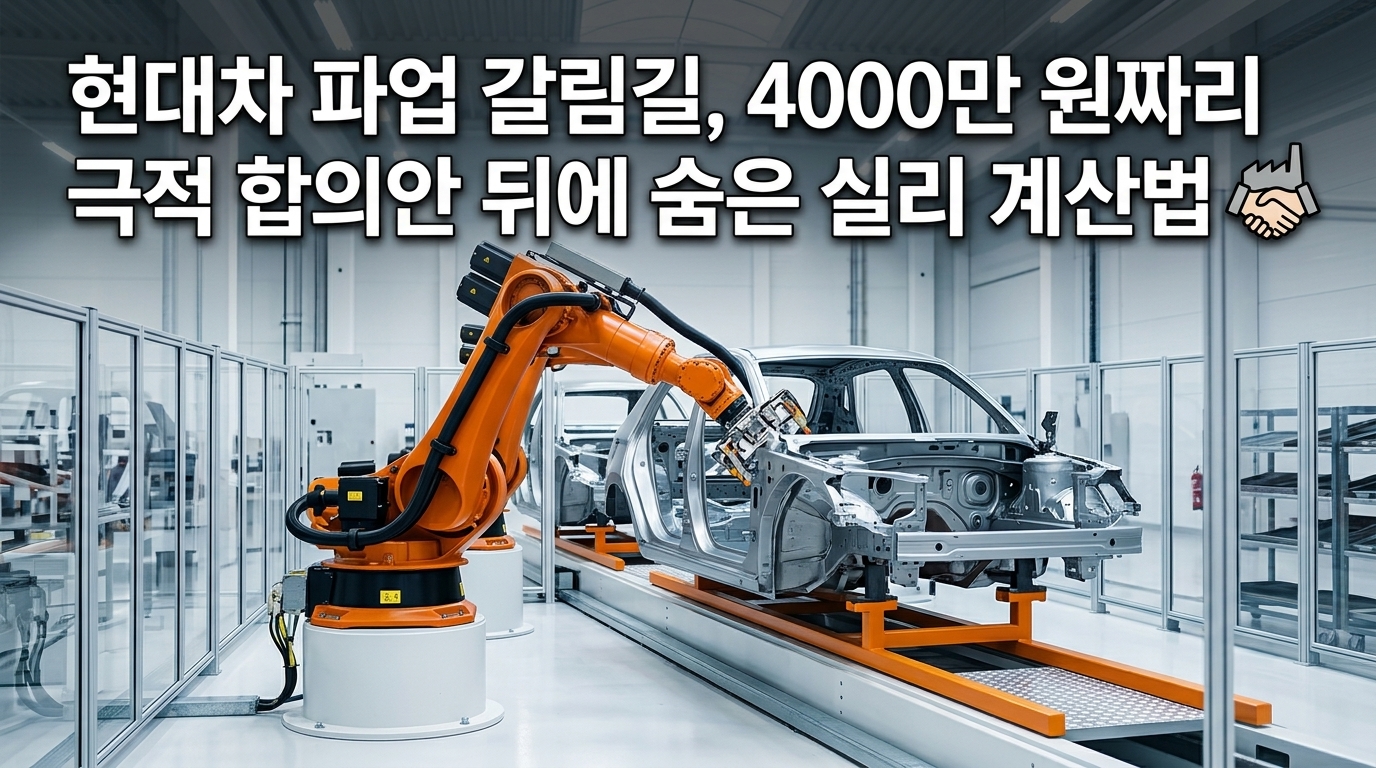
Hyundai Motor at a Crossroads: The Practical Calculations Behind the Dramatic 40 Million Won Settlement
The strike crisis at Hyundai Motor, which sparked fears of trillions of won in production losses, saw a dramatic turn of events in the early hours of August 25, 2026. Following a 111-day marathon of negotiations, labor and management reached a tentative agreement on wages and collective bargaining during an all-night session.
Just four days earlier, on August 21, the first general strike in 10 years had brought production lines at the Ulsan, Jeonju, and Asan plants to a standstill, leaving tensions at an all-time high—making this resolution an even more unexpected twist. The real reason people are searching for this news now isn't simply because the conflict has been patched up. It’s because of the unconventional sums and rare compromise terms hidden behind the agreement they finally reached.
40 Million Won per Person: What’s in the Deal?
What exactly is in the agreement that people are calling it "record-breaking"? The union estimates the average benefit per member is a staggering 40.84 million won. It’s essentially equivalent to an average worker’s annual salary being paid out at once in bonuses and raises. The card management played to get the idle factories running as quickly as possible is truly unprecedented.
The most eye-catching feature is the generous cash compensation. Along with a 100,000 won increase in basic salary, which includes the seniority pay step, employees will receive a performance bonus equal to 400% of their base salary and a lump-sum cash payment of 12.7 million won. On top of this, starting in 2027, summer vacation pay will increase by 200,000 won. The immediate cash benefits alone are massive.
Shareholder rights and welfare benefits are also included. Employees will receive 15 shares of Hyundai Motor stock along with 500,000 internal welfare points. Beyond just giving one-time incentive bonuses, this move clearly reflects the management’s bold strategy to share the fruits of company growth and definitively break the cycle of long-term strikes. The key now is whether these unprecedented carrots can win over the hearts and votes of the union members.
2.3 Trillion Won in Damage and a 3.5 Trillion Won Tab
Behind this dramatic resolution was the pressure of astronomical figures that neither labor nor management could afford to ignore. The union had been conducting partial strikes since July, culminating in a full-scale strike on August 21 that shut down all lines at the Ulsan, Jeonju, and Asan plants for eight hours. While the stoppage lasted only one day, the impact was immense. Over 60 cumulative hours of strikes disrupted the production of approximately 55,200 vehicles, resulting in an estimated sales loss exceeding 2.3 trillion won.
When the factories stop, it’s not just Hyundai Motor that hurts. Countless parts suppliers faced the threat of bankruptcy, causing the entire local economy to waver. As the cries from these desperate suppliers grew louder, the psychological and political burden of prolonging the strike became too heavy for both labor and management to bear. The sense of crisis that "if the strike continues like this, we all perish together" served as powerful lubricant for the all-night negotiations.
However, putting out the immediate fire doesn’t mean the worries are over. The long-term performance report—specifically the fixed cost bill—that Hyundai must shoulder due to this agreement is substantial. Some analysts suggest that this wage increase and the generous performance bonuses will add approximately 3.5 trillion won in additional fixed costs for Hyundai. This means a significant portion of annual operating profit must be spent on labor costs, raising cautious concerns that it could hinder price competitiveness in the global market.
Lawsuit Withdrawals, Job Agreements, and the Real Deal: 'Physical AI'
Beyond the flashy cash bonuses, there is a separate, truly substantive deal between labor and management. Management agreed to drop all legal weapons aimed at the union, including a 21.37 billion won damage suit and 10 provisional seizure applications. By removing the shackles of multi-billion won lawsuits, both sides have cleared away the long-standing bitterness that could have fueled future conflict.
The job replacement formula was also smoothly coordinated. To secure future jobs, management promised to hire a total of 500 new technical staff: 200 in the second half of 2027 and 300 in 2028. This effectively gives the floor a breather as they worry about increasing labor intensity due to more retirees, while providing a solid guarantee for the union’s long-term livelihood.
However, the most interesting part of this agreement is the union’s promise to cooperate on future technologies. The union has agreed to actively support the management’s high-tech innovation plans to boost productivity, such as introducing robots into factories and applying physical AI technology. In exchange for guaranteed new jobs, they have accepted the automation and digital transformation of the factory. Ultimately, this agreement is a clever compromise where both sides traded their practical interests to change the future ecosystem of the factory, going far beyond just preventing an immediate strike.
Is the Strike Really Over? Until the Ballot Boxes Open on August 31
Although the labor and management leadership finally shook hands after all-night negotiations, the embers of the strike have not been fully extinguished. The key to the final conclusion of this year’s wage and collective bargaining agreement remains in the hands of the union members on the shop floor.
The Hyundai Motor union will hold a ratification vote on the tentative agreement for all members on August 31. Only if a majority votes in favor will the agreement officially take effect, bringing this year’s heated wage and collective bargaining negotiations to a final close.
The question is whether these unconventional cards—record-breaking performance bonuses, future job guarantees, and the withdrawal of multi-billion won lawsuits—will meet the expectations of the rank-and-file members. When the ballot boxes open on August 31, the real test begins: will Hyundai finally sigh with relief and get the factories running at full capacity, or will they face new complications?
현대차 파업 갈림길 4000만 원짜리 극적 합의안 이후, 다음 흐름을 가를 신호
1
tUSDC
현대차 파업 갈림길 4000만 원짜리 극적 합의안 의 관심이 이어질지 판단하기 위해 후속 공식 움직임과 반응 지속성에서 무엇을 먼저 확인할지 짚습니다.
Related Links