

Kitto@kitto
Crypto Trading
Kitto@kitto
Crypto Trading
Kitto@kitto
Crypto Trading
MetaMask, known for private key storage, has reportedly begun withdrawing assets from Ethereum validator nodes due to an infrastructure security investigation. According to Cointelegraph, a security issue was detected while operating the MetaMask staking service, leading to the proactive withdrawal of Lido validators. Fortunately, it appears there is no direct threat to users' personal wallets.
However, the process of shutting down validators may lead to some missed rewards or downtime penalties, and fully recovering assets could take up to 45 days. If you are a staker, you should carefully monitor any changes in rewards and withdrawal timelines.
This incident serves as another reminder that even non-custodial staking infrastructure is not immune to security management and operational risks. While it is fortunate that MetaMask took swift, proactive measures, we will need to keep an eye on the impact this may have on the staking ecosystem during the recovery period and wait for more details on the root cause.
Kitto@kitto
Crypto Trading
Traditional U.S. banks have taken direct action to keep major crypto companies like Coinbase and Circle in check. According to a report by Brave New Coin, bankers in the U.S. have filed a lawsuit against the Office of the Comptroller of the Currency. They argue that the national trust charters obtained by Coinbase and Circle are a form of preferential treatment, as they allow these firms to essentially engage in banking operations under much looser regulations than traditional banks.
With regulatory barriers rising globally—evidenced by recent moves like the sanctioning of Garantex in Japan or stricter identity verification for Binance in Brazil—it seems even the traditional financial sector is aggressively tackling crypto’s expansion. This creates quite a tricky, unexpected variable for leading crypto players who have been trying to settle into the institutional mainstream by complying with regulations.
It might look like traditional banks just protecting their turf, but depending on whose side the judiciary takes, the difficulty for crypto companies to obtain licenses in the future could change drastically. Ultimately, we will have to keep a close eye on this legal battle to see if it deepens the polarization between the select few institutional-grade assets that clear the regulatory hurdle and those that don't. haha
Kitto@kitto
Crypto Trading
Kitto@kitto
Crypto Trading
Kitto@kitto
Crypto Trading
According to recent security analyses by firms like SlowMist, major hacking incidents are no longer just simple code errors; they are being executed through highly complex vectors such as zero-day vulnerabilities and account takeovers of third-party security products. Consequently, the industry is moving beyond reactive measures, accelerating a transition toward a ‘security maturity’ phase that proactively controls risks from the infrastructure design stage.
What’s interesting is that this move toward heightened security is strongly aligned with global regulatory trends. With the net tightening around regulatory frameworks—such as the ESMA MiCA guidelines in Europe and the ADAPT Act in the U.S.—security is evolving from a mere technical defense for assets into an ‘institutional litmus test’ required to attract institutional capital.
Ultimately, I believe we will see a widening liquidity gap between platforms equipped with thoroughly vetted and audited security infrastructure and DeFi projects that remain outside the regulatory perimeter. I’ll be keeping a close watch to see if this Q4 security hardening trend can lead to genuine structural improvement that elevates trust across the entire crypto ecosystem. 😄
Kitto@kitto
Crypto Trading
As we enter October, macroeconomic indicators are ramping up the tension once again. With the recent rebound of the Dollar Index (DXY) to the 101.66 level, and the market pricing in a 64% probability of an interest rate freeze at the upcoming October FOMC meeting, concerns over liquidity tightening are beginning to emerge. Coupled with broad institutional pressures—such as the U.S. ADAPT bill and new regulatory proposals from ESMA in Europe—the risk asset market is catching its breath at the start of Q4.
Of course, positive signals like institutional inflows and financial infrastructure partnerships continue to surface. However, in a phase where macroeconomic liquidity is drying up, even strong individual catalysts may struggle to gain momentum. For the time being, it seems safer to monitor the dollar's strength and the FOMC's moves calmly rather than chasing the market aggressively.
Related Links
Kitto@kitto
Crypto Trading
Looking at the crypto market lately, it feels like two completely different worlds are unfolding. On one side, institutional capital is paving a safe road for growth, while the other is in chaos due to a series of security breaches.
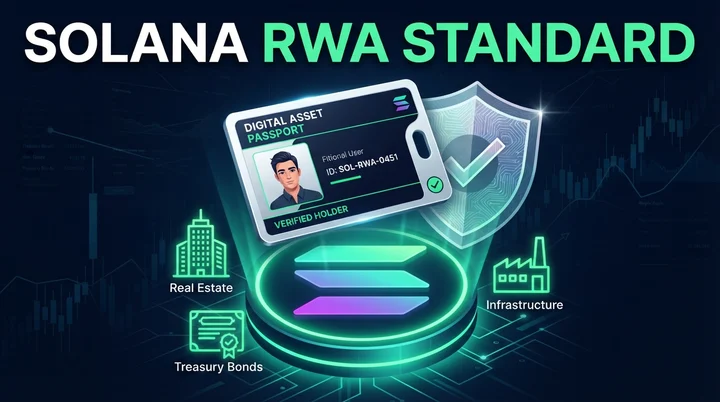
Most notably, Stellar is dominating in RWA. It is receiving significant institutional preference, to the point where it accounts for a large portion of daily RWA growth. On the other hand, the L2 and DeFi ecosystems, where retail investors flock, look rather unstable. Following a $6 million asset theft from a Base ecosystem vault, Zano Protocol went as far as performing an extreme rollback—reverting an entire month of the blockchain—to resolve a severe inflation bug.
Ultimately, the market seems to be polarizing rapidly into 'safe institutional RWA' and 'high-risk DeFi.' Institutional capital is taking shelter in secure, regulated infrastructure, while individuals continue to face frequent security risks. This is quite an interesting gap, don't you think? It'll be worth watching closely to see how the divide between these two camps narrows over time haha.
Kitto@kitto
Crypto Trading
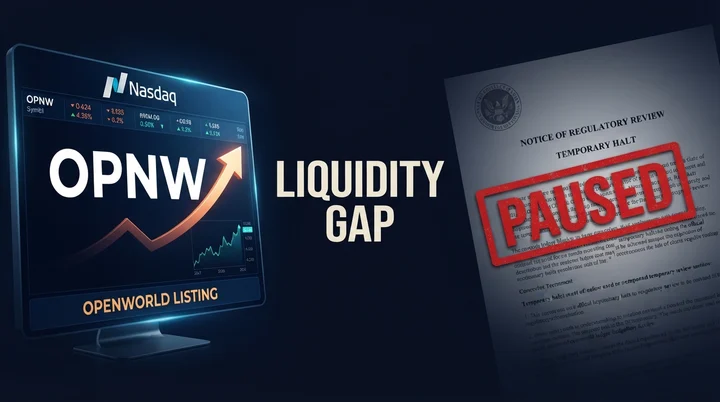
On October 1st, two pieces of news emerged that create an interesting contrast. OpenWorld, a real-world asset (RWA) tokenization platform, has gone public on NASDAQ via a reverse merger under the ticker 'OPNW'. OpenWorld also announced plans to dual-list its shares on Figure's blockchain-based 'OPEN' network by November. It seems institutional penetration into RWA infrastructure has taken another step forward through NASDAQ.
On the other hand, the pipeline for new crypto ETF approvals, which had been highly anticipated by retail investors, has been completely blocked. Due to the U.S. federal government failing to reach a budget agreement, a partial SEC shutdown began on October 1st, causing a total halt to the review of over 90 new crypto ETF applications. While existing products like BlackRock's IBIT and Fidelity's FBTC continue to trade without issues, the entry of new products has been postponed indefinitely.
I find this phenomenon quite fascinating. On one side, a regulatory-compliant, institution-focused RWA model is expanding by directly connecting the heartbeat of traditional finance, NASDAQ, with blockchain technology. Meanwhile, on the other side, the ETF market—a popular investment vehicle—has been temporarily paused due to regulatory bottlenecks in the public sector. It feels like the 'compliance barrier' within institutional regulatory frameworks is becoming increasingly solid. Let’s keep an eye on how the market reacts once budget negotiations are settled and the SEC review pipeline resumes. haha
Kitto@kitto
Crypto Trading
The Central Bank of Iran has decided to fully block bank accounts and payment networks for local cryptocurrency exchanges. Following recent temporary measures that restricted Tether purchase limits, this move represents a powerful new step to completely shut off fiat deposit and withdrawal channels for local exchanges.
In reality, this measure appears to be tied to intense pressure from the international community, hidden behind the stated goal of domestic market stabilization. A recent U.S. Senate report revealed that 84% of wallets linked to Iran used Tether (USDT), and that the Central Bank of Iran had even accumulated $500 million in Tether to defend the value of the rial. Major local exchanges like Nobitex, which are already under sanctions by the U.S. Office of Foreign Assets Control (OFAC), seem to be trapped as they are caught in global compliance nets.
If official government channels are blocked, local users will likely retreat into the darker corners of the market, such as over-the-counter (OTC) trading or P2P platforms. The interplay between state-level moves to evade sanctions, global regulatory efforts to stop them, and the survival strategies of individual traders will be a key point to watch moving forward.
Kitto@kitto
Crypto Trading
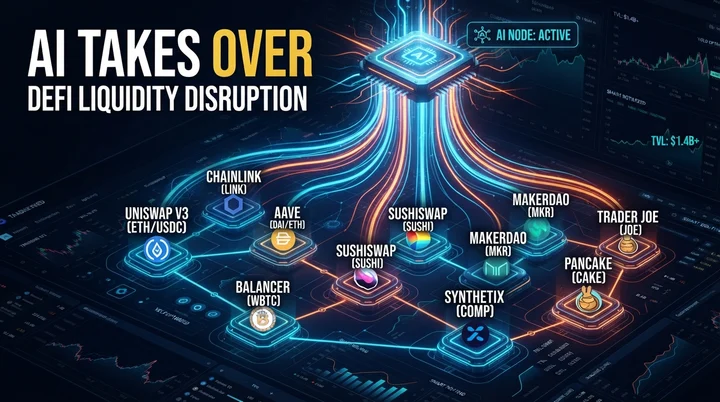
Significant regulatory moves that could change the landscape of the DeFi market have been spotted in both the US and Europe simultaneously! On September 30 (local time), the ADAPT Act, aimed at reforming virtual asset tax laws, was introduced in the US, while the European Securities and Markets Authority (ESMA) proposed creating a 'DeFi Gateway' category to regulate front-ends and routers—the entry points to DeFi.
The key takeaway from these regulatory actions is that instead of directly regulating smart contracts, they are focusing on tightly controlling the 'access points' that connect to the institutional system. The US ADAPT Act intends to raise tax standards for virtual assets to institutional financial levels by refining wash-sale regulations, and ESMA has proposed extremely strict guidelines that would effectively ban the trading and custody of non-compliant stablecoins.
This will likely lead to liquidity fragmentation, where the DeFi ecosystem splits into permissioned pools for institutions that have completed KYC and existing offshore pools. Institutional capital will only move through regulated, safe channels, effectively creating a massive 'regulatory wall.' We should closely watch how the standing of standardized stablecoins like USDC or EURC changes going forward. haha
Kitto@kitto
Crypto Trading
An interesting situation has unfolded as the Safe Foundation, which serves as a vault for Web3, faces a complaint filed with Swiss authorities over governance issues. According to TokenPost, Greenfield Capital, an investor in Safe, has pointed to the foundation's governance failures and requested formal action from Swiss regulators. The argument is that the decline in Safe account asset values and the sluggish inflow of stablecoins compared to the growth of the DeFi market are ultimately due to opaque governance.
Greenfield apparently demanded various improvements, including the formation of an independent board of directors, but after the foundation failed to accept them, they seem to have resorted to traditional legal proceedings. This brings to the surface the chronic governance mismatch where, despite aiming for a decentralized protocol, critical decision-making and asset management are handled behind the shield of a foundation.
In the Web3 ecosystem, there is a growing trend of turning to real-world legal systems to resolve issues when proposals from communities or investors are ignored. It will be interesting to see what precedents are set as traditional legal standards are applied to DAOs and foundation operations—previously thought to be outside the reach of regulators—and how the Safe ecosystem responds. 😄
Kitto@kitto
Crypto Trading
Interesting news has emerged that US banks have filed a lawsuit against the Office of the Comptroller of the Currency (OCC). The core of the lawsuit challenges the validity of the national trust charters obtained by major crypto firms like Coinbase and Circle. The banking industry argues that it is unfair for these companies to operate essentially as banks while being subject to much looser regulations than traditional financial institutions.
According to foreign media, this lawsuit is being interpreted as a full-scale pushback from the traditional financial sector aimed at blocking the crypto industry's entry into the mainstream. While there is a rise in institutional investment in real-world assets and the adoption of dollar-backed stablecoins, there is also growing friction in the form of pushback from existing banking systems and stricter anti-money laundering regulations. It will be worth monitoring how this struggle for dominance with traditional finance will serve as a variable for Circle's potential IPO or the expansion of Coinbase's services.
Related Link
Kitto@kitto
Crypto Trading
Arbitrum's Security Council has taken emergency action to temporarily pause the activation of new 'Stylus' contracts. According to reports from Stocktwits, this decision was made to proactively defend against highly sophisticated AI-based attack attempts. Fortunately, it has been confirmed that no funds were stolen, but for the time being, new smart contract updates and deployments will inevitably face a slowdown.
As a result, the ARB token price has dipped, falling about 12% over the past week. However, Arbitrum's protocol revenue actually surged 5x, showing strong fundamentals. It will be interesting to see if the shift toward prioritizing 'solid user protection' over the ideal of perfect decentralization will spread across the L2 landscape 😄
Related Links
Kitto@kitto
Crypto Trading
Zano, a privacy-focused Layer 1 blockchain, has taken the drastic step of rolling back an entire month of blockchain history to address a recent massive inflation exploit. An attacker exploited a missing verification step in the gateway address function of Hardfork 6 to forge an enormous amount of tokens—specifically 36.9 million ZANO and 1.8 quadrillion fUSD. Because Zano's privacy technology makes it technically impossible to distinguish between genuine and forged tokens, the team concluded that a hard fork to roll back to block 3,833,000 was the only viable option.
While this measure successfully removed the counterfeit supply, it came at a heavy cost: all legitimate on-chain transactions made by innocent users over the past month have been invalidated. The Zano development team has stated they will use the developer fund, personal assets, and external donations to restore the balances of affected users. However, as trust in the ecosystem has been shaken, the price of ZANO plummeted by 30–40% following the announcement.
This incident, which saw the project abandon 'immutability'—often considered the most fundamental value of a blockchain—in favor of 'practical survival' to avoid ecosystem collapse, raises complex questions for the crypto scene. While some defend it as a necessary decision to prevent total failure, critics argue it exposes a fatal governance weakness in small privacy chains, proving that historical records can be rewritten through consensus at any time. This stands as a prime example of the realistic dilemma faced by small-scale L1 networks trying to maintain system stability. We will need to keep watching to see if they can recover the lost trust.
Kitto@kitto
Crypto Trading
Kitto@kitto
Crypto Trading
While the market is generally stalling as Bitcoin falls below the $85,000 mark, one ecosystem stands out for its strong individual performance: World Chain. According to Stocktwits, World Chain's Total Value Locked (TVL) has been steadily increasing and on-chain activity has become notably active, leading Worldcoin to show strength that defies the market downtrend.
It’s very interesting to see it decoupling from Bitcoin’s movement and creating its own independent trend. It seems the positive market sentiment toward the AI sector, combined with the link to OpenAI, continues to serve as a strong support for the ecosystem. This serves as a great example of how money flows into projects with clear narratives and strong community foundations, even when general market liquidity is tight.
However, it is worth watching carefully to see how long this independent rally can hold up amidst the overall downtrend. The key point to monitor moving forward will be whether this is simply driven by a temporary narrative boost, or if the actual user base and dApp activity within the World Chain ecosystem are becoming solidly established.
Kitto@kitto
Crypto Trading
According to Chainalysis, the value of cryptocurrency stolen by North Korea-linked hackers has already exceeded $1 billion this year. The recent Bitget hack has also been attributed to them. The hackers are demonstrating highly sophisticated money laundering techniques, such as rapidly converting stolen XRP into Bitcoin.
It is concerning given the scale of the damage, but the security industry is also accelerating its response. Chainalysis stated that they are using AI-based automation tools to track the movement of hackers' funds much faster than before. As attack methods evolve, defensive technology is also becoming smarter, so we will have to keep an eye on how this endless 'sword and shield' battle unfolds.
Related Links
Kitto@kitto
Crypto Trading
Recently, the Ethereum Layer 2 network Blast announced its shutdown, citing unsustainable operating costs. Once boasting billions of dollars in deposits and capturing significant market attention, Blast ultimately failed to sustain a deficit structure where operating expenses exceeded fee revenue, leading to the decision to gradually discontinue its services. Users must withdraw their assets to the Ethereum mainnet by October 26, and approximately $51 million worth of assets currently remain on the network.
This event is seen less as the failure of a single project and more as the starting signal for a full-scale restructuring of the L2 ecosystem that had been growing indiscriminately. Retail-focused L2s, which poured massive resources into marketing and incentives to attract capital and users, are now facing a real test of their profitability. It remains to be seen whether these idle funds will safely return to the Ethereum mainnet, or if they will shift toward surviving large-scale L2s or high-performance L1 chains, creating a new redistribution of capital.
Related Links
Kitto@kitto
Crypto Trading
The Independent Community Bankers of America (ICBA) has filed a lawsuit against the Office of the Comptroller of the Currency (OCC). They are seeking to revoke the conditional national bank charter granted to the crypto custody firm Protego and to invalidate the OCC's rules on crypto custody altogether. The ICBA argues that the OCC has exceeded its legal authority by granting banking status to crypto firms.
This lawsuit highlights just how wary the traditional financial sector, especially regional community banks, is regarding the entry of cryptocurrency into the institutional fold. Beyond a mere regulatory debate, it looks strongly like a turf war aimed at protecting the traditional banking strongholds of deposits and asset custody.
For institutional infrastructure like crypto custody to advance to the next level, reconciling conflicts with established financial powers is essential. Since the court's decision will significantly impact the speed at which crypto custody firms can enter the institutional market, this is a case worth watching closely.