
Kitto@kitto
Crypto Trading
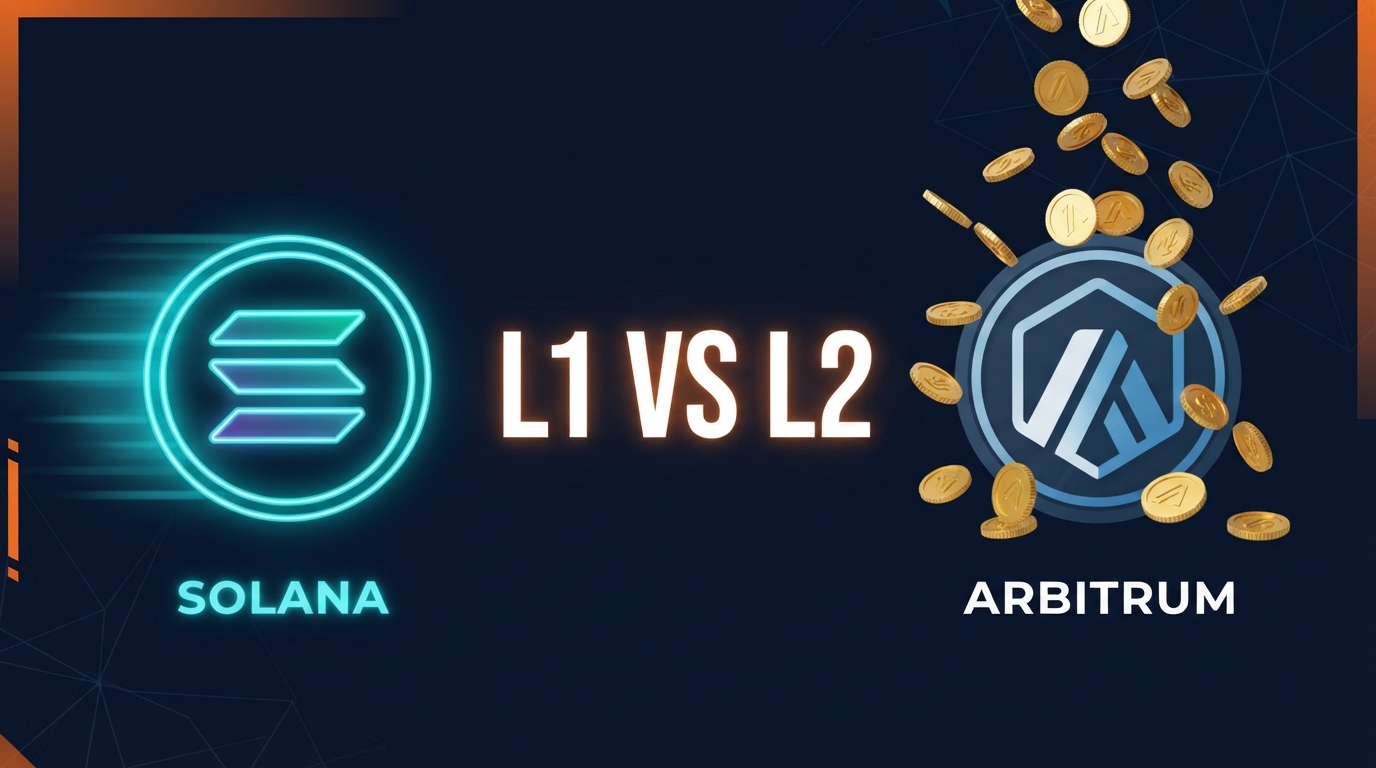
Arbitrum L2 Hits $15M in Fees: Why the Solana Founder Is Calling It Out
The crypto ecosystem is currently embroiled in a heated debate over where the 'true value' of Layer 1 and Layer 2 should flow. The fire was stoked by Solana co-founder Anatoly Yakovenko, who launched a scathing critique of the profit structure of Layer 2 networks built on Arbitrum technology. Can the current business model, where the ecosystem profits from high transaction fees caused by network congestion, really be sustainable? Let’s break down the details of this intriguing controversy.
Arbitrum L2 Hits a $15M Jackpot and the ARB Rebound
The spark for this debate was the massive success of the 'Robinhood Chain,' built on Arbitrum Orbit technology. Since its launch in July, the chain has generated an astounding $11.48 million in fee revenue in just two months—that’s over 15 billion KRW.
What’s notable here is Arbitrum’s unique revenue-sharing model. Under Arbitrum's expansion program rules, 10% of this fee revenue is directed straight to the Arbitrum DAO. In fact, thanks to this recent windfall, over $1.1 million has landed directly in the Arbitrum treasury.
Once real money started moving, the token market reacted immediately. According to CoinMarketCap data, the Arbitrum token price surged by 45% in just a week. Unlike other projects that have relied on vague expectations or marketing, this represents a textbook case of real on-chain revenue growth driving an increase in token value.
Why the Solana Founder Called It 'Brain-Dead'
Watching this massive fee windfall, Solana’s Anatoly Yakovenko took to X to deliver a sharp rebuke. He criticized the business model where network congestion leads to high gas fees for users, which are then shared by Layer 2 operators or DAOs, calling the entire structure 'brain-dead'.
Yakovenko’s argument is that if a service is truly meant for the masses, it shouldn't be profiting by raising gas fees when the network is congested due to high demand. His logic is that revenue should come from standard structures like trading spreads within an app—similar to traditional financial services—rather than building a business model on the pain users suffer from high fees.
According to reports from outlets like CoinDesk, this debate goes beyond personal critiques to reveal a deep philosophical divide on how blockchain ecosystems should be designed. It’s a fascinating reflection on whether a Layer 2 model that splits user fees is sustainable, or if providing cheaper, faster infrastructure on a single layer is the right path.
September 29th: The Massive Stress Test of Ending Gas Subsidies
There is an interesting secret behind the Robinhood Chain’s huge volume: they have been running a bold promotion where the Robinhood app covers 100% of the gas fees for users. However, this subsidy is set to expire on September 29, 2026.
Users have essentially enjoyed free trading until now, but things will change when the subsidies disappear. With the recent hype around the memecoin trading platform Pons, the network has become congested, and actual gas fees have spiked to between $0.30 and $0.40 per transaction. Now, users will have to pay these fees directly.
Will retail investors who have grown accustomed to zero fees stick around when they actually have to pay? The end of these gas subsidies will be the first true stress test of the Robinhood Chain’s product competitiveness and the viability of its business model.
Solana’s Technical Counterattack: Alpenglow to Achieve 150ms
Solana had its own reasons for pointing out the fee models of other ecosystems. Their strategy is to avoid the complexity of Layer 2 workarounds and instead push the performance of their Layer 1 chain to its absolute limit. The core weapon here is the Alpenglow upgrade, scheduled for mainnet activation on September 28.
The main goal of the Alpenglow upgrade is to overhaul the existing consensus mechanism with new systems called Votor and Rotor. This will reduce the transaction finality time from approximately 12.8 seconds to between 100 and 150 milliseconds. It effectively turns the network into an ultra-high-speed system where transactions finish in the blink of an eye. The ambition is to handle institutional-grade commerce and real-world asset settlements seamlessly without needing complex Layer 2 bridges.
Solana is already shaking up the market with its powerful on-chain ecosystem. Raydium, Solana's leading decentralized exchange, successfully integrated a new token launchpad called StonkFun, driving massive trading volumes. As a result, Solana’s daily DEX volume has surpassed $1.96 billion, proving its dominant on-chain presence. It is demonstrating through both technology and performance that a network can indeed handle massive speed and usage without fragmenting its ecosystem.
Where Will the True Value Flow?
Ultimately, the core question is whether the market will favor the clear revenue-sharing model of the Layer 2 ecosystem or the ultra-high-speed, single-layer system that Solana is pursuing. The fates of Solana, which is betting on high-speed transactions with the Alpenglow upgrade, and the Robinhood Chain, facing its first real test with the end of gas subsidies, will soon diverge. Which ecosystem will create truly sustainable value? Let’s keep an eye on these exciting developments together!
Related Links
- CoinDesk / Solana Labs — Yakovenko Calls Robinhood Chain Orbit L2 Revenue Model 'Brain Dead'
- Bitget News / CoinMarketCap / The Defiant — Arbitrum DAO Receives Sequencing Windfalls from Robinhood Chain
- CoinMarketCap / The Motley Fool / Arbitrum Foundation — Arbitrum Token Surges 45% Driven by Robinhood Chain Revenue Windfall